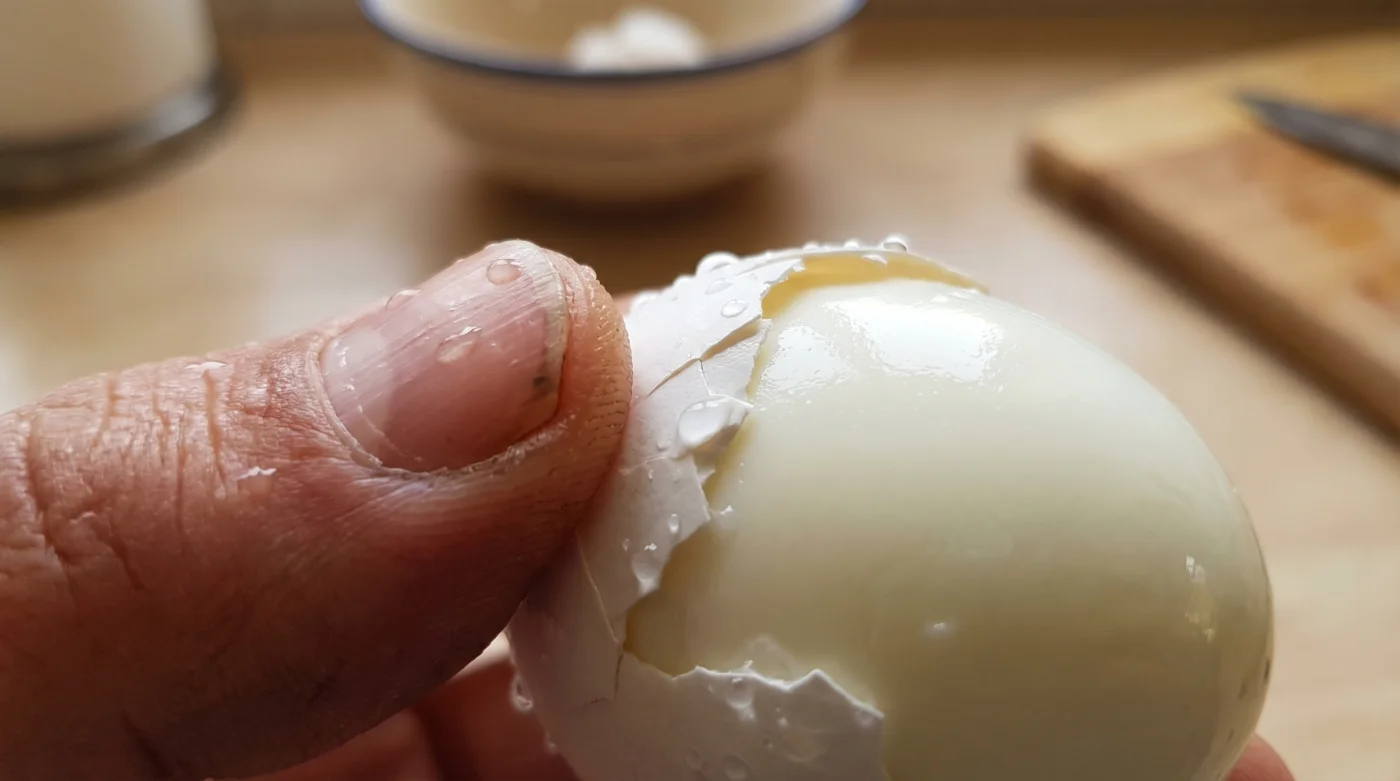
It is a Tuesday morning, and the kitchen is quiet except for the low hum of the refrigerator. You pull a steaming pot from the stove, plunging its contents into a bowl of ice water. The sharp, sudden crack of an eggshell against the countertop breaks the silence, signalling the start of a familiar, often irritating ritual. You have followed all the standard advice, adding salt to the water, a splash of vinegar, perhaps even setting a precise timer, yet the dread of the peeling process remains.
You expect the shell to slip away in large, satisfying ribbons, leaving a pristine, glossy white oval behind. Instead, the membrane clings stubbornly tight, tearing away chunks of the delicate exterior and leaving you with a cratered, unappetizing mess that looks more like a lunar landscape than a proper breakfast. It is a frustrating reality that turns a simple, nutritious ingredient into a chore.
Standing by the sink, you carefully pick at microscopic shards of calcium, trying to salvage what is left of your morning protein. The water runs over your freezing fingers as you attempt to roll the food just right, hoping the friction will miraculously loosen the bond. It feels like an unnecessary test of patience before the sun has even fully risen, a tiny friction point in your day that seems impossible to completely smooth over.
But there is a radically different approach to this daily task that bypasses the tedious picking entirely. It trades delicate, frustrating scraping for a few seconds of confined percussion. By placing the boiled food into a simple glass jar with a splash of water and giving it a vigorous shake, you completely detach the membrane, allowing the entire shell to slide off instantly in one swift, effortless motion.
The Anatomy of a Clean Break
For decades, we have been told that peeling requires a gentle touch. We tap the ends cautiously, we roll the sides along the cutting board, we treat the object like fragile glass. The perspective shift happens when you realize that the hard exterior is not actually the enemy; the invisible, rubbery layer beneath it is what causes all the destruction.
Think of this thin inner layer like a vacuum-sealed plastic wrap. When you peel by hand, you pull against the vacuum, tearing the fragile white protein beneath. By vigorously rattling the food in a rigid jar, you are creating hundreds of micro-fractures across the rigid surface simultaneously without breaching the soft interior.
The small amount of water inside the jar acts as a hydraulic wedge. As the exterior shatters against the glass, cold water forces its way under the rubbery seal, instantly breaking the vacuum. A mundane detail—the surface tension of tap water—becomes your greatest advantage in the kitchen, turning a painstaking process into a five-second trick.
Consider the daily reality of Marcus, a 42-year-old line cook at a high-volume diner in Halifax. On any given Sunday, he is responsible for prepping over three hundred portions for the brunch rush. Marcus used to spend his early mornings nursing numb fingers in bowls of ice water, carefully picking away fragments. That changed when a senior chef handed him a standard 500-millilitre jam jar. “Drop it in, add a centimetre of tap water, and rattle it like a shaker,” Marcus recalls being told. “It felt completely counterintuitive to be that rough with something so soft, but when I tipped the jar over, the exterior just slipped off like a loose winter coat.”
Calibrating the Rattle for Every Texture
Not all preparations demand the exact same level of force. The jar method is highly adaptable, allowing you to tailor the percussion to the specific texture you are trying to protect or achieve. Understanding how to modify the movement ensures you never accidentally crush your breakfast.
For the Ramen Purist
Soft-boiled variations, with their delicate, runny interiors, require a slightly gentler touch. Use a container with a wider mouth so the object has less distance to travel before hitting the glass. Keep the shaking motion horizontal, swirling rather than violently shaking, to create a gentler, rolling impact instead of a harsh bouncing action.
For the Meal-Prep Strategist
When preparing a dozen hard-boiled portions for the week’s lunches, you can significantly increase the intensity. A vigorous, vertical shake will practically disintegrate the outer shell. The firmness of a fully cooked white can withstand the heavy impact against the glass, meaning you can prep an entire batch in a matter of minutes without a single torn surface.
For the Large Batch Parent
If you are making a massive salad for multiple sandwiches, swap the single glass jar for a large, hard-plastic food storage container. Add four to five portions at once, pour in enough water to cover the bottom, and shake over the kitchen sink. The items will bump against each other and the walls, cracking uniformly and saving you immense time.
Executing the Jar Method
Mastering this technique relies on a few mindful actions. It is less about brute strength and more about setting up the right environment for the water to do its crucial hydraulic work. The setup is just as important as the execution.
Start by ensuring your items have been properly shocked. You must quickly transfer the hot food to an ice bath sitting at roughly 4 degrees Celsius. Leaving them to cool gradually in the hot pot causes the inner skin to fuse permanently to the white protein, rendering any peeling method useless.
Once the food is cold to the touch, gather your simple materials and follow the rhythm of the process. Do not rush the cooling phase; patience here dictates the success of the shake.
- Select a rigid container, ideally a glass jar with a tight-fitting lid, leaving enough room for movement.
- Place the cooled food inside and add roughly two tablespoons of cold water.
- Seal the lid securely and shake vigorously for four to five seconds, listening for the sound of the cracking.
- Remove the item; slip the fractured exterior off in one or two massive, satisfying pieces.
The Tactical Toolkit:
- Vessel: A standard glass jam jar or 500-millilitre mason jar.
- Water volume: 30 millilitres (just enough to create a hydraulic slip).
- Cooling time: Minimum 10 minutes in a proper ice bath before shaking.
The Quiet Satisfaction of a Perfect Peel
There is a distinct kind of peace that comes from removing friction from your daily tasks. Preparing food should be a grounding practice, a moment of morning meditation, rather than a source of low-level irritation and messy cleanup.
When you stop fighting with stubborn fragments and start using physics to your daily advantage, the act of making breakfast fundamentally shifts. You are no longer picking at flaws; you are executing a clean, decisive method that yields professional, aesthetically perfect results every single time.
It is a small shift in technique, yet it ripples outward. You save a few minutes, you save your patience, and you get to enjoy a perfectly smooth, unblemished meal. Sometimes, the most satisfying kitchen victories are simply about learning exactly where and how to apply the right kind of pressure.
“The inner membrane is a lock, and the hydraulic pressure of water inside a shaking jar is the only key you will ever need to open it cleanly.”
| Key Point | Detail | Added Value for the Reader |
|---|---|---|
| Hydraulic Peeling | Water forces itself under the cracked exterior. | Eliminates the need to pick at tiny, frustrating shards of calcium. |
| Container Choice | Glass jars offer the best rigid resistance. | Gives you a clean, predictable break in under five seconds. |
| Temperature Shock | Plunging into an ice bath stops the cooking. | Prevents the green sulphur ring and firms the protein to survive the shake. |
Frequently Asked Questions
Does the water temperature in the jar matter?
Cold water is absolute best, as it keeps the delicate white firm while you shake it against the hard glass, preventing accidental mashing.Can I shake multiple items at the exact same time?
Yes, but use a larger plastic container rather than glass to avoid smashing them together too forcefully and ruining the soft interiors.Will this method work on farm-fresh produce?
Freshly laid items are notoriously sticky and difficult, but the water-wedge effect makes this the most reliable method for handling them without tearing.How hard should I be shaking the jar?
Shake it until you hear the sharp, distinct cracks turn into a duller, softer sound, which usually takes about four to five seconds of steady rhythm.What if the shell is cracked but still feels stuck?
Return it to the ice bath for one minute; the water simply needs a little more time to seep into the micro-fractures and break the vacuum seal.