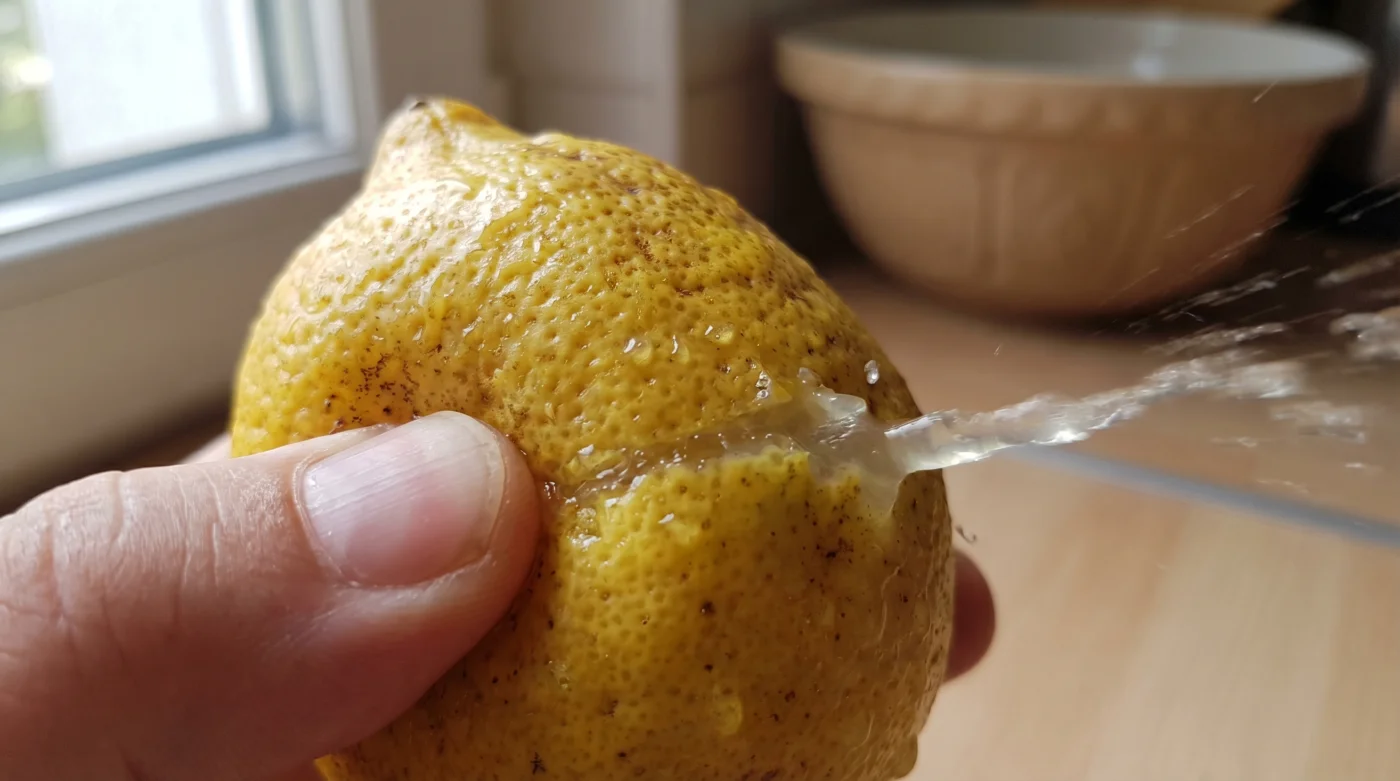
The frost clinging to your kitchen window softens the early morning light, but the lemon in your hand offers no such comfort. Pulled straight from the back of the refrigerator crisper drawer, it feels less like a piece of vibrant, sun-drenched citrus and more like a heavy, yellow golf ball. You grip the dimpled rind, feeling its rigid, unyielding surface, and already you know the struggle ahead.
When you slice into fruit this cold, you fight the very structure of the ingredient. You roll it aggressively against the wooden cutting board, putting your entire body weight into the heel of your hand, attempting to break the internal fibers. You slice it open and squeeze until your knuckles turn white, only to be rewarded with a pathetic trickle of pale liquid and hands coated in sticky, bitter oils. It feels like a personal failure of technique, but it is purely a matter of temperature.
Behind the swinging stainless-steel doors of high-volume bakeries, citrus is never treated with such brute force. Squeezing cold fruit is an amateur concession that leaves half the usable yield trapped inside the membranes. To pull out a generous cascade of liquid, professional cooks do not rely on mechanical strength or expensive metal presses. They simply change the physical state of the fruit itself.
The secret sweeping through modern prep stations is remarkably straightforward, bypassing physical exertion entirely. By introducing gentle radiant heat, you trigger a rapid structural surrender within the rind. A brief stint in the microwave forces those stubborn, chilled cells to relax and let go, offering you double the return for a fraction of the effort, completely shifting how you interact with this daily staple.
The Cellular Surrender: Why Warmth Wins
A chilled lemon is essentially a clenched fist. Inside that thick, brightly coloured skin, hundreds of tiny, tear-shaped juice vesicles are held tightly within a fibrous, starchy matrix of albedo—the white pith. When you force a chef’s knife through it at four degrees Celsius, those little balloons stay stubborn and rigid. You end up crushing the pulpy walls rather than cleanly bursting the vesicles open to release their liquid.
To double your yield, you must relax the grip of that internal structure. Think of the lemon’s interior like a stiff jar of honey left in a cold, unheated pantry. You would not try to aggressively chip away at the crystallized honey with a metal spoon; you would warm the glass until the sugar softened, relaxed, and flowed freely. The same principle governs the citrus sitting on your counter.
Applying a short burst of microwave heat acts directly on the water molecules tucked inside the fruit. It creates a sudden, miniature sauna environment beneath the rind. The stiff pectin in the cell walls softens under the warmth, and the juice inside the vesicles expands just enough to press firmly against their fragile membranes.
Rather than relying on mechanical force, you utilize basic thermal dynamics to do the heavy lifting. The heat transforms a rigid, uncooperative ingredient into a plump, heavy water balloon, ready to burst at the slightest pressure from your fingers. It is a quiet, profound pivot from blindly following instructions to actually understanding the living, breathing systems sitting on your cutting board.
Clara, a 42-year-old pastry chef running a high-volume patisserie in Montreal, understands this cellular surrender better than anyone. Preparing litres of fresh, velvety curd for her signature tartes au citron requires immense amounts of liquid, and she simply cannot afford to leave half of her profits locked inside cold rinds. While she relies on the residual warmth of a commercial proofing oven at the bakery to soften crates of citrus, she admits that at home, the humble microwave achieves the exact same yield in seconds. She calls it her ‘fifteen-second cheat code,’ a trick that turns dense, grocery-store lemons into generous, heavy-flowing fruit without bruising her palms or demanding expensive juicing equipment.
Finding Your Squeeze: Variations for Every Kitchen
The core mechanism relies on heat, but how you integrate this viral prep method depends entirely on your daily rhythm. What works for a quick morning hydration habit might not fit the workflow of a massive weekend baking project.
For the Morning Water Ritualist
If you are rolling out of bed to prepare a mug of warm lemon water before the house wakes up, you only need half a fruit. Microwave the entire, uncut lemon for fifteen seconds. Once warmed, slice it in half, squeeze exactly what you need, and wrap the remaining half tightly in beeswax wrap. Keep it in the fridge, but remember to give that leftover half a quick five-second zap the next morning to wake the chilled juices back up.
For the Weekend Baker
When a recipe demands half a cup of fresh liquid for a bright, acidic pound cake, you are dealing with significant volume. Process your citrus in batches, placing three or four lemons on the microwave turntable at once, ensuring they do not touch. Increase the time to thirty seconds, checking for that soft, yielding texture. The slightly warmed juice will actually incorporate much more smoothly into your room-temperature butter and eggs, preventing your delicate batter from curdling or breaking.
For the Savoury Cook
If you are finishing a pan of roasted asparagus or deglazing a hot skillet for a pan sauce, you want precise, clean drops without wrestling over a hot stove. Microwave the fruit until the skin feels warm to the touch, roll it once firmly across the counter, and pierce the blossom end with a wooden skewer. You have just created a makeshift squeeze bottle that delivers exactly the amount of acid you need, precisely where you want it.
The 15-Second Ritual: A Tactical Approach
The line between gently warming the juice and accidentally cooking the fruit is undeniably thin. If you overdo the heat, the delicate internal sugars begin to alter, and that vibrant, acidic snap takes on a flat, strangely baked flavour that ruins a good vinaigrette.
Executing this technique correctly requires a few deliberate, mindful actions rather than blindly punching buttons on a machine and walking away. You are coaxing the fruit into yielding, not nuking it into submission.
- Place the whole, uncut lemon on a bare ceramic or glass plate to ensure even heat distribution.
- Set the appliance to regular high power for exactly fifteen seconds.
- Remove the fruit and hold it in the palm of your hand; it should feel like a warm stone resting in the summer sun, not a hot coal.
- Let the lemon sit undisturbed on the counter for thirty seconds to allow the internal temperature to equalize completely.
- Slice directly down the centre and squeeze with a gentle, entirely relaxed grip.
The Tactical Toolkit
- Temperature Target: Warm to the touch, roughly thirty degrees Celsius, mimicking fruit resting on a sunny windowsill.
- Time: 15-20 seconds for a single lemon; add 10 seconds for each additional fruit in the batch.
- Tool: A simple, thick glass plate. Avoid placing the lemon directly on a plastic turntable, as the highly acidic oils from the rind can occasionally transfer and etch the plastic under heat.
Beyond the Rind: The Value of Yield
It is incredibly easy to dismiss a minor kitchen trick as just another fleeting internet trend, but mastering this small, physical detail offers a surprising layer of daily satisfaction. Wrestling with cold, unyielding produce sets a tone of friction and frustration right at the beginning of your meal preparation, framing cooking as a chore rather than a craft.
When you stop forcing the fruit, you reclaim a bit of ease in your environment. Watching a thick, heavy stream of bright, fragrant juice pour effortlessly from a rind that, mere seconds ago, felt like a rock, is deeply satisfying. It reminds you that feeding yourself does not always have to be a test of endurance or physical strength.
This shift in perspective extends far beyond the wooden cutting board. It teaches a quiet, persistent lesson in working smarter, respecting the physical nature of your ingredients, and finding abundance where there previously seemed to be only lack. A simple, fifteen-second blast of warmth reveals that you already possessed everything you needed; you just had to ask for it a little differently.
Cooking is less about forcing an ingredient to bend to your will, and more about creating the right environment for it to surrender.
| Key Point | Detail | Added Value for the Reader |
|---|---|---|
| Temperature Shift | Warming from 4°C to roughly 30°C relaxes cellular pectin. | Prevents hand strain and doubles the usable liquid extracted. |
| Resting Period | Waiting 30 seconds after heating allows thermal equalization. | Ensures you do not burn your palms while slicing the fruit. |
| Batch Processing | Heating multiple lemons requires an extra 10 seconds per fruit. | Saves massive amounts of prep time for weekend baking projects. |
Frequently Asked Questions
Will this trick work with limes and oranges? Yes. The cellular structure is practically identical, though dense limes might need exactly fifteen seconds, while large navel oranges may require closer to twenty-five.
Does microwaving the lemon destroy the Vitamin C? No. Vitamin C degrades under prolonged, high heat, but a brief fifteen-second warming process preserves the nutritional profile completely.
Should I roll the lemon on the counter before or after heating? After. The heat softens the rind, making a single, gentle roll across the counter incredibly effective at bursting the internal vesicles.
Can I store the squeezed juice for later use? Absolutely. Freshly squeezed, warmed juice can be kept in a sealed glass jar in the fridge for up to three days without losing its vibrant snap.
What if I accidentally overheat the lemon and it gets too hot? Simply let it rest on the counter until it cools down to room temperature before slicing; the yield will still be exceptional, though the flavour may soften slightly.