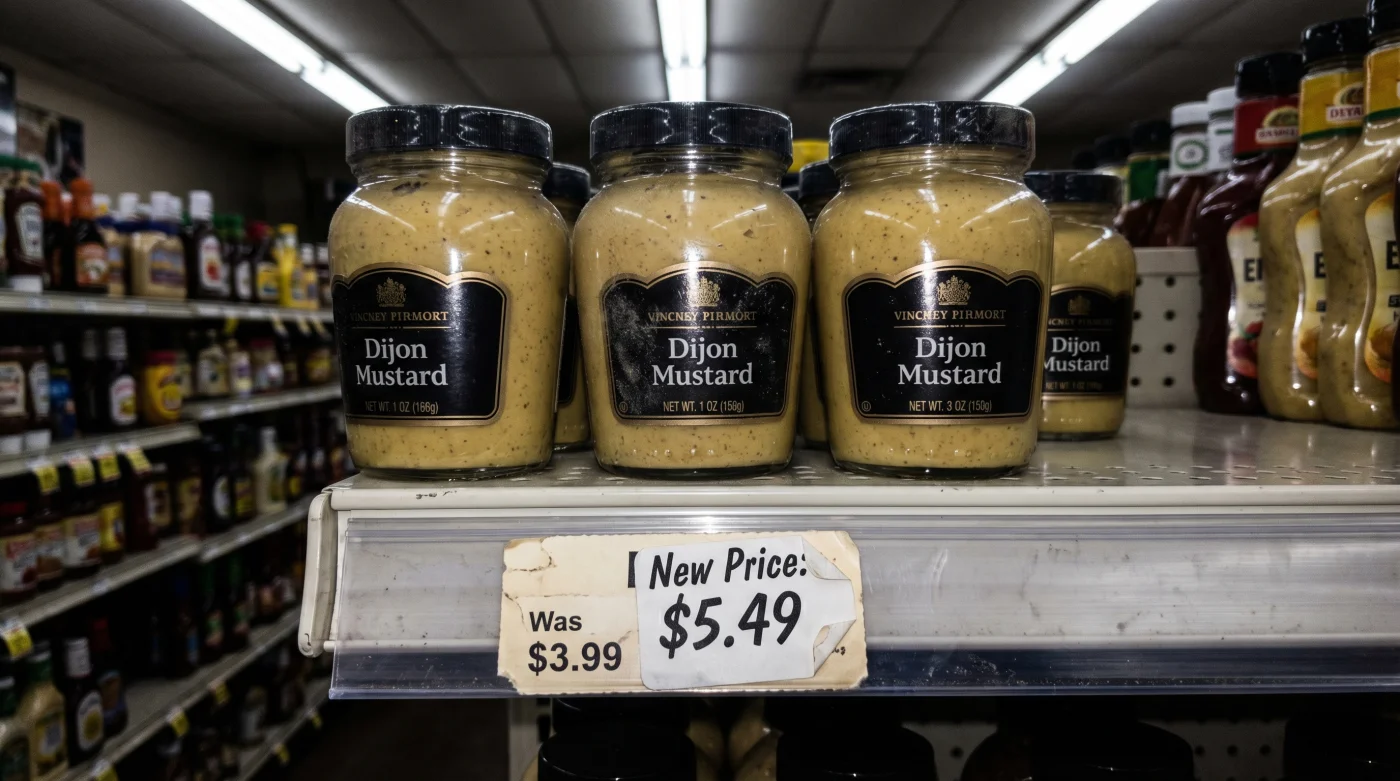
You are standing under the fluorescent hum of your neighbourhood grocery store, running a thumb over your shopping list. Your cart holds the usual suspects: a loaf of sourdough, a head of garlic, a tin of olive oil. You reach for the Dijon mustard, expecting the familiar glass jar to cost the same handful of loonies it always has. But your hand stops mid-air. The price tag below the shelf tells a different story entirely.
It feels like a subtle betrayal. We are used to the fluctuating costs of fresh meat or out-of-season berries, but condiments are supposed to be the reliable anchors of our kitchens. They sit in the fridge door, ready to bring an acidic bite to a heavy stew or force an emulsion in a quick salad dressing. When the cost of that sharp, pale yellow paste suddenly doubles, the foundation feels briefly unstable.
The standard reaction is to grumble, toss it in the basket anyway, and blame general inflation. But the reality of this price jump is deeply rooted in the soil under our own feet. The jar in your hand might carry a French name, but the seeds that give it life are fiercely, stubbornly Canadian. Understanding what is happening to those crops changes how you navigate the aisles.
The Anatomy of a Condiment Crisis
Think of Dijon mustard not as a static manufactured sauce, but as a meteorological thermometer. When the price jumps on the shelf, it is directly measuring the heat of the Canadian Prairies. The sticker shock at the checkout is reflecting the heat directly back at your weekly food budget.
Most of the brown mustard seeds used to make traditional Dijon are grown in Saskatchewan and Alberta. When a severe dry spell bakes the western plains, the plants respond defensively. The seeds do not plump up with moisture; they stay tiny, concentrating their bitter compounds while severely halving their yield. You are buying bottled weather patterns, shipped across the ocean and back again.
This feels like a frustration, a sudden drain on your grocery budget. But this mundane detail can trigger a massive advantage in your kitchen. It forces you to stop buying on autopilot. When a staple becomes a luxury, you are pushed to measure its true value, track its cost diligently, and learn how to stretch its flavour profile.
Elias Thorne, a 48-year-old agricultural buyer who spends his summers driving the dusty grid roads outside Swift Current, Saskatchewan, knows this cycle intimately. He walks the fields in late July, crushing the fragile pods between his calloused fingers. If the seeds crumble rather than crack, Elias knows the harvest is compromised. ‘We are watching a silent drought that eventually rings at the register,’ he notes. He spends his days negotiating with European producers who rely entirely on the yield of these specific Canadian fields to stock global shelves.
Hearing Elias describe the fragility of the crop changes the dynamic of your grocery run. It shifts the blame away from the local store manager and places it squarely on the fragile global supply chain. You adapt by paying closer attention, anticipating shifts before they drain your hard-earned dollars.
Calibrating Your Kitchen Strategy
Navigating this sudden cost increase requires a bit of tactical adjustment based on how you actually cook. Not every cook uses this ingredient the same way, and your response to the price jump should match your daily habits.
For the Vinaigrette Purist: If your primary use for Dijon is forcing oil and vinegar to hold hands in a salad bowl, you do not need much to get the job done. The emulsifying power of the mustard seed is incredibly potent. You can cut your usual dollop in half and add a tiny splash of cold water to agitate the dressing. The emulsion holds perfectly well, and your jar lasts twice as long.
For the Sandwich Architect: If you rely on that sharp, nasal bite to cut through fatty layers of cured meat or aged cheddar, consider pivoting to domestic alternatives. There are brilliant, locally produced mustards blending yellow and brown seeds right here in Canada. They skip the transatlantic shipping fees entirely, giving you a bolder flavour profile at a fraction of the imported cost.
For the Batch Cooker: If you use large volumes for marinades or roasting glazes, the current prices are punishing. This is where dry mustard powder becomes your best asset. Hydrating dry mustard with a little water and white wine vinegar a few minutes before cooking gives you the exact chemical reaction and heat you need. It bypasses the sudden shortage completely while delivering the same culinary result.
The Art of Price Tracking
To prepare for higher mustard costs—and grocery spikes in general—you have to treat your pantry stocking as a mindful, ongoing practice rather than a weekly chore. Tracking grocery prices does not require an obsessive spreadsheet; it requires a few focused, minimalist actions to protect your wallet.
Start by keeping a simple physical log inside your pantry door. Write down the price of your four most-used staples the moment you unpack the groceries. This builds a baseline memory in your mind, allowing you to catch artificial markups and spotting a true sale instantly.
Tactical Toolkit:
- Check the unit price per 100ml, not the sticker price, to compare jars accurately.
- Buy during the late autumn harvest months when agricultural pricing briefly stabilizes.
- Store open jars in the coldest part of your fridge (usually the back of the bottom shelf) at exactly 4 Celsius to prevent the volatile flavour compounds from degrading.
- Hydrate dry mustard powder with cold water—never hot—to preserve the sharpest enzymatic bite.
These small, deliberate steps shift you from a passive consumer to a strategic manager of your own kitchen economy. You dictate what you spend, allowing you to dictate your own kitchen margins and shielding your weekly budget from sudden agricultural shocks.
Finding Peace in the Pantry
Watching the cost of living creep upward in the grocery aisles is a heavy experience. It is easy to feel entirely out of control when the price of a simple jar of Dijon jumps overnight. But understanding the mechanics behind that price tag—the baked soil in Saskatchewan, the transatlantic shipping, the delicate brown seeds—gives you back a sense of agency.
You are no longer at the mercy of the fluctuating shelf tag. By learning to track prices, stretch your ingredients, and substitute intelligently, you build a resilient kitchen. You learn that cooking is not about rigid adherence to a recipe, but about adapting and flowing with the current reality of what is available.
This mindset brings a deep, quiet peace to your daily cooking routine. When you open the fridge door to build a meal, you are not worried about what you are lacking or what cost too much. You simply create with confidence, knowing your pantry is fortified against the unpredictable weather of the world.
“A well-managed pantry is not about hoarding ingredients; it is about cultivating the agility to cook beautifully regardless of what the market dictates.”
| Key Point | Detail | Added Value for the Reader |
|---|---|---|
| Supply Chain Reality | Canadian Prairies produce the bulk of global brown mustard seeds. | Explains the ‘why’ behind the price hike, removing consumer frustration. |
| Dilution Technique | Halving Dijon and adding cold water for vinaigrettes. | Instantly doubles the lifespan of your current jar without losing emulsion power. |
| Dry Powder Substitution | Hydrating dry mustard powder with cold water and vinegar. | Offers a highly cost-effective alternative for marinades and heavy cooking. |
Frequently Asked Questions
Why are Dijon mustard prices specifically so high right now? Extreme heat and drought in the Canadian Prairies have severely reduced the yield of brown mustard seeds, which are the primary ingredient exported to France for production.
Can I use regular yellow mustard instead of Dijon? You can, but yellow mustard is much milder and more acidic. If you substitute it, add a tiny pinch of horseradish or dry mustard powder to mimic the sharp bite of Dijon.
How long does an open jar of Dijon actually last? Kept at a consistent 4 Celsius in the back of the fridge, a jar maintains its peak sharpness for about six months before the volatile compounds begin to dull.
Is tracking grocery prices really worth the time? Yes. Keeping a simple log of 4 to 5 core pantry staples trains your brain to recognize genuine sales, saving you significantly over the course of a year.
Why should I hydrate dry mustard with cold water instead of hot? The chemical reaction that creates the sharp, pungent flavour of mustard is destroyed by heat. Cold water activates the enzymes properly for maximum heat.