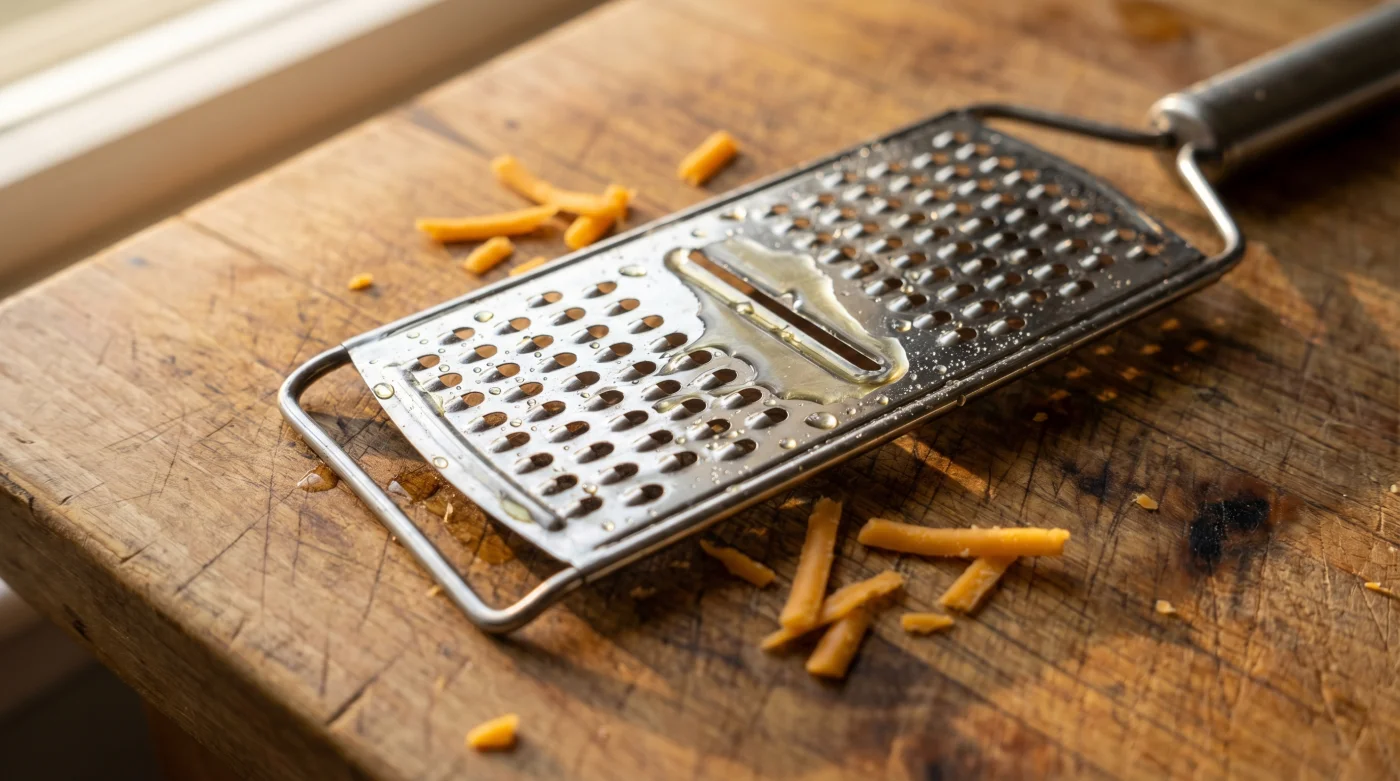
The scent of roasted garlic and bubbling mozzarella still hangs heavy in your kitchen. Dinner was a triumph, but the physical evidence of your labour sits aggressively beside the sink. The box grater. Its tiny, stamped blades are completely choked with a pale, hardening paste of dairy fat and protein. You already know the sponge is going to lose this battle.
To clean this towering metal monolith, you usually run the tap until it stings your hands, scraping violently while shredding your favourite sponge against the stubborn, glued-on residue. It feels like a necessary punishment for avoiding the pre-packaged, waxy shreds from the grocery store.
Watch a veteran prep cook handle the exact same task, however, and the aftermath looks entirely different. They drag heavy blocks of cheddar across the steel, yet when the rush is over, the metal simply wipes clean with a casual pass of a damp cloth. The dairy never has a chance to bond to the steel.
This viral prep method is not about scrubbing harder or buying specialty brushes. It relies on a five-second intervention before the food even leaves the fridge, creating an invisible barrier that forces the fat to glide rather than grip.
The Friction Fallacy
We tend to view stainless steel as perfectly smooth. In reality, under a microscope, your cheese grater is a treacherous landscape of microscopic fissures, jagged stamping marks, and burred edges. When soft dairy proteins mash against this rough terrain, they act like drywall compound sinking into a textured wall, locking into every available crevice.
The secret is to alter the surface tension of the metal. By applying a sheer slick of cooking spray, you fill in those microscopic valleys. The friction is entirely neutralized, transforming a grinding, tearing chore into a smooth, effortless glide that completely protects your equipment.
Meet Elias Thorne, a 34-year-old prep chef at a bustling Halifax diner known for its towering breakfast poutines. Every morning, Elias processes forty kilos of semi-firm cheddar before the first pot of coffee finishes brewing. His station is never a mess. He keeps a cheap plastic spray bottle of neutral canola oil next to his cutting board. Before a single block touches the metal, he gives the blades a quick, sweeping mist. It is a tiny, almost invisible habit that saves him hours of scrubbing every week, turning a notoriously sticky prep job into a frictionless routine.
Tailoring the Technique
Not all dairy behaves the same way under pressure. Understanding how to adapt this viral preparation trick for different textures will save your evening cleanup regardless of what is on the menu.
For the Soft and Sticky
Mozzarella, young cheddar, and havarti are the worst offenders. High moisture content means they smear rather than shatter. Keep the block in the coldest part of your fridge until the absolute last second. Mist the grater heavily with a neutral oil like grapeseed or sunflower, ensuring you coat the inside of the box as well, where the falling shreds tend to clump and stick together in a dense mass.
For the Hard and Crumbly
Harder varieties like parmesan and pecorino act like chalk, leaving a fine dust that cements itself into the tiniest holes of the rasp. You need very little lubrication here. A light spray wiped down with a paper towel leaves just enough residue to prevent the dust bonding without turning your expensive imported wedge into a greasy disappointment.
For Vegan Alternatives
Nut and starch-based blocks lack traditional dairy fat, meaning they behave unpredictably against dry steel, often crumbling into frustrating chunks. A light olive oil spray not only helps them slide beautifully down the rasp but can subtly improve the mouthfeel and melting capability of the final shreds over your dish.
Mindful Application: The Tactical Toolkit
Mastering this standard prep technique requires nothing more than intention and timing. Follow these steps to ensure a flawless glide every single time you reach for the grater.
- Choose your barrier: Opt for a neutral cooking spray like canola or avocado. Avoid butter-flavoured sprays, as they contain water and emulsifiers that can turn gummy against cold metal.
- Distance matters: Hold the can roughly fifteen centimetres away from the metal. You want a fine, even mist, not dripping puddles that will pool on your cutting board.
- Coat the exit route: Always spray the inside walls of a box grater. The friction of the falling shreds causes just as much buildup as the grating action itself.
- The cold truth: Never grate warm dairy. Ten minutes in the freezer before grating hardens the fat, working in perfect tandem with your oiled surface.
- Immediate rinse: Even with the oil barrier, run the metal under hot water the moment you finish. The remaining residue will melt away instantly.
The Broader Impact of a Clean Station
It seems almost silly to dwell on a few drops of oil on a cheap piece of stamped metal. Yet, our relationship with cooking is often defined by these micro-frictions. When you know a recipe ends with a tedious, annoying cleanup, you quietly avoid making it. You settle for the anti-caking agents in bagged shreds, sacrificing texture and flavour just to preserve your evening peace.
Removing the pain point changes your entire approach to the kitchen. A mundane detail like surface lubrication suddenly becomes a major advantage, inviting you to use better ingredients because the penalty for doing so has been entirely erased. You are no longer bracing for the cleanup; you are simply cooking.
You are not just saving the sponge; you are preserving your own willingness to cook from scratch tomorrow.
| Key Point | Detail | Added Value for the Reader |
|---|---|---|
| Neutral Oil Choice | Canola, grapeseed, or avocado spray | Prevents unwanted flavour transfer to delicate cheeses. |
| Internal Coating | Spraying the inside cavity of the box | Stops falling shreds from clumping and blocking the exit. |
| Temperature Control | Chilling the block for 10 minutes prior | Firms up dairy fat to work perfectly with the slick surface. |
Frequently Asked Questions
Will the oil make my cheese taste greasy? Not if you use a light hand and a neutral oil. The microscopic layer stays on the metal, leaving your food perfectly unaffected.
Can I just rub oil on with a paper towel? Absolutely. If you do not own an aerosol spray, dabbing a paper towel in cooking oil and wiping the blades works beautifully.
Does this work for zesting citrus? No. Citrus rinds contain their own volatile oils, and adding cooking spray will only make the zest clump together unpleasantly.
What if my grater is already coated in dried cheese? Soak it in hot water with a drop of dish soap for ten minutes to soften the proteins before attempting to scrub.
Should I oil the grater for shredding vegetables? Vegetables like carrots and potatoes contain high water content, not sticky fats. They naturally glide without the need for an oil barrier.