The kitchen counter is cold under your palms. Outside, a pale winter sun barely grazes the frost on the glass, and the coffee machine hisses its familiar morning rhythm. You crack three eggs into a ceramic bowl, reaching instinctively for the carton of milk or heavy cream sitting by the fridge door.
This is the morning ritual we rarely question. You beat the eggs until they run pale yellow, pour them into a hot pan, and watch them seize into rubbery, dense folds. They always weep slightly, leaving a watery yellowish puddle on your toast that ruins the crunch of the bread.
But watch a seasoned line cook work the early shift, and you will notice an entirely different rhythm. There is no heavy dairy weighing down the whisk. Instead, there is a sharp hiss of carbonation, a quick splash of clear liquid, and an understanding of thermal shock. The professional reality relies on trapped air, not suffocating fat.
When you introduce a splash of ice-cold club soda to beaten eggs, you aren’t just thinning them out. You are building an architecture of steam and expanding bubbles, lifting the curds into towering, weightless folds that barely require chewing.
The Physics of the Lift
You have likely been told that rich, restaurant-style scrambles require generous pours of cream. But think of heavy cream like laying wet blankets over a spring mattress. It dampens the spring. The fat coats the proteins, yes, but it also drags them down into a heavy, rich paste that sits like a stone in your stomach.
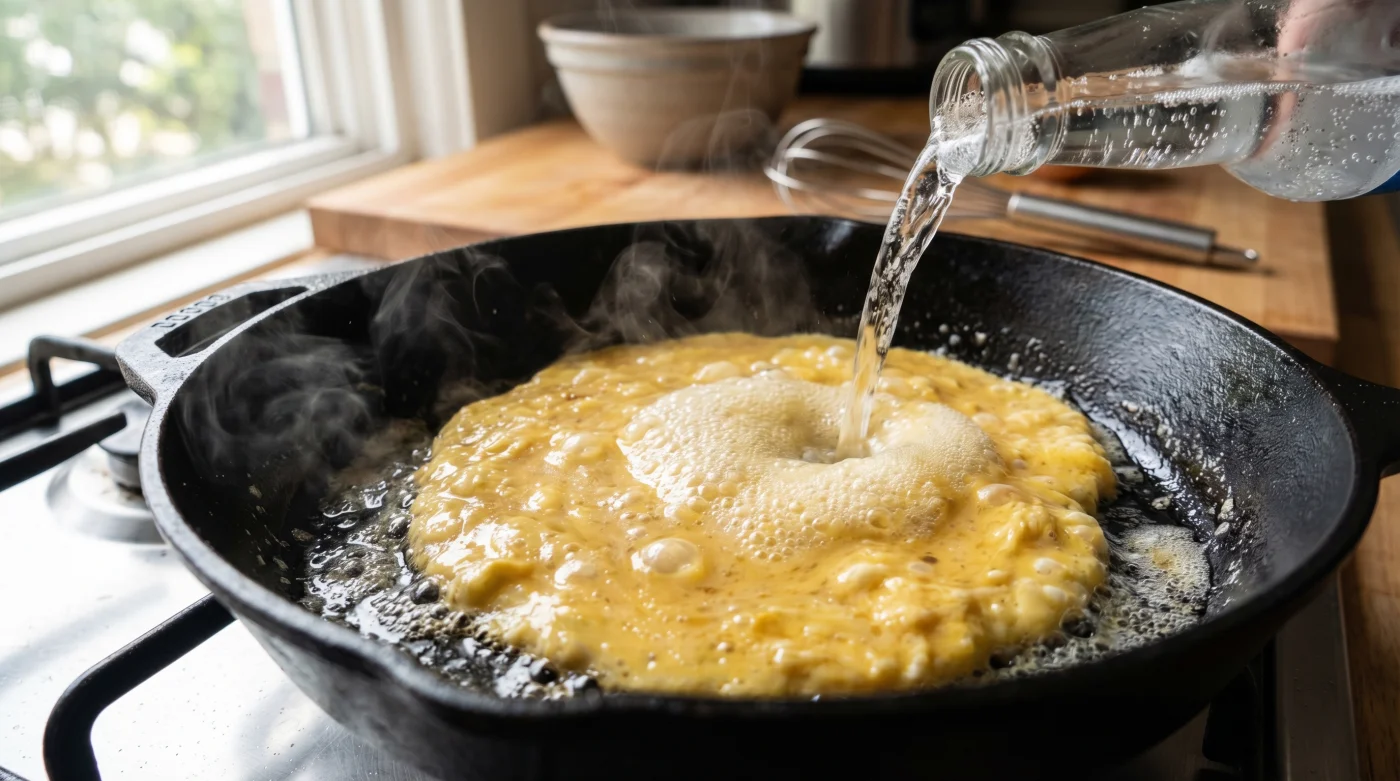
The two-ingredient modification is jarringly simple: eggs and heavily carbonated water. Think of it like glassblowing. When the icy soda hits the warm butter in your pan, the trapped carbon dioxide bubbles violently expand, while the water content creates instant steam from the heat.
This rapid expansion inflates the egg proteins before they have a chance to tighten and turn rubbery. It is a sudden, violent reaction disguised as a gentle, billowing cloud on your spatula. The structure holds itself up, relying on the memory of those bubbles rather than the crutch of dairy fat.
Consider Julian, a 42-year-old breakfast chef running the weekend pass at a packed Halifax diner. While home cooks fret over exact ratios of milk to butter, Julian keeps a liter of generic, ice-cold club soda nestled in the crushed ice beside his egg station. He knows that when a four-top orders scrambled eggs, he has exactly two minutes to deliver plates that look impossibly generous. The illusion of a massive portion comes entirely from structural lift: one splash of sparkling water per order forces the eggs to puff up like a bruised souffle, eating as light as sea foam.
Adjusting the Altitude
Not every morning demands the exact same approach. How you deploy this carbonated trick depends entirely on who is sitting at the kitchen island waiting for a plate.
For the Tuesday Traditionalist
When you have six minutes before rushing out the door into the biting cold, keep it strictly utilitarian. Two eggs, one tablespoon of cold soda, a pinch of salt. Whisk vigorously just until the yolks break, then pour into a moderately hot pan. You want large, lazy curds that cook in under forty seconds.
For the Weekend Host
Feeding a crowd usually means watching the bottom of the egg pile turn to green-grey rubber while you toast the bagels. Here, the club soda acts as a thermal insurance policy.
To survive the wait, scale up the carbonation slightly, using roughly a quarter cup of soda for eight eggs. Cook them over low heat, stirring constantly. The bubbles will maintain a fragile suspension, holding the curds separate and soft even as they sit in the serving dish at the centre of the table.
The Mechanics of the Fold
Achieving this texture is an exercise in restraint. If you overwork the pan, you smash the very bubbles you just tried to create. You must coax the eggs, not punish them.
- The Vigor: Whisk your eggs until the whites and yolks are just combined, leaving a few distinct streaks of egg white.
- The Splash: Add exactly one tablespoon of cold club soda per two eggs just before they hit the pan. Do not let the mixture sit, or the gas will escape.
- The Heat: Keep your pan at a medium-low temperature. You want to hear a gentle sigh when the eggs hit the butter, not a violent crackle.
Use a flexible silicone spatula to sweep the edges toward the centre of the pan. Let the liquid fill the gaps, repeating this slow gathering motion until the curds tremble and barely hold their shape.
The Tactical Toolkit:
- Temperature target: Pan around 160 Celsius (warm enough to melt butter without browning the milk solids).
- Timing constraint: 45 to 60 seconds maximum in the pan. Pull them off the heat while they still look too wet.
- Equipment requirement: A seamless silicone spatula and a carbon steel or well-seasoned cast iron skillet.
Reclaiming the Morning
Mastering the club soda trick is about more than just plating a better breakfast. It is a quiet rebellion against the assumed way of doing things. We are conditioned to throw more money, more fat, and more effort at our daily frustrations.
Yet, the most profound improvements often come from understanding the hidden mechanics of the ordinary. A splash of carbonated water transforms a dense, utilitarian meal into a brief, weightless luxury that requires no extra trips to the specialty grocer.
When you pull those trembling, piled-high folds from the skillet, you grant yourself a moment of unexpected grace before the heavy demands of the day pull you out the front door.
“Air is the cheapest ingredient in the kitchen, but it is the hardest one to keep on the plate once the heat turns up.”
| Key Point | Detail | Added Value for the Reader |
|---|---|---|
| Milk or Cream | Adds heavy fat and flat liquid, weighing down the delicate protein bonds. | Dense, rich, often weeping curds that sit heavily on the plate and feel sluggish to digest. |
| Plain Tap Water | Creates steam to tenderize the proteins, but entirely lacks any mechanical lift. | Softer than milk, but flat, visually underwhelming, and prone to turning mushy. |
| Cold Club Soda | Injects expansive CO2 gas bubbles and creates immediate structural steam simultaneously. | Towering, structurally sound folds that feel weightless, filling the plate without weighing you down. |
Common Curd Queries
Can I use tonic water or ginger ale instead?
Absolutely not. Tonic water contains quinine which turns violently bitter when heated, and sodas add sugar that will scorch in the pan. Stick exclusively to plain, unflavoured club soda or sparkling water.Will the eggs taste metallic or salty from the soda?
Club soda does contain trace minerals for flavour, but the amount used (a tablespoon or two) is completely undetectable to the palate. It simply provides the necessary lift without altering the fundamental taste of the egg.Does the club soda actually need to be ice cold?
Yes. The thermal shock between the icy liquid and the hot pan forces the trapped gas to expand rapidly, which is exactly how you achieve that towering height and fluffy texture.How do I stop my eggs from weeping liquid onto my toast?
Weeping happens when proteins tighten too much from overcooking and squeeze out their internal moisture. The club soda prevents this tight bonding, but you must also remove the eggs from the heat before they look fully dry.Can I mix the soda in ahead of time while I prep other food?
Never. If you let the mixture sit on the counter, the carbon dioxide will dissipate into the open air. Splash it in right before the bowl meets the hot pan.