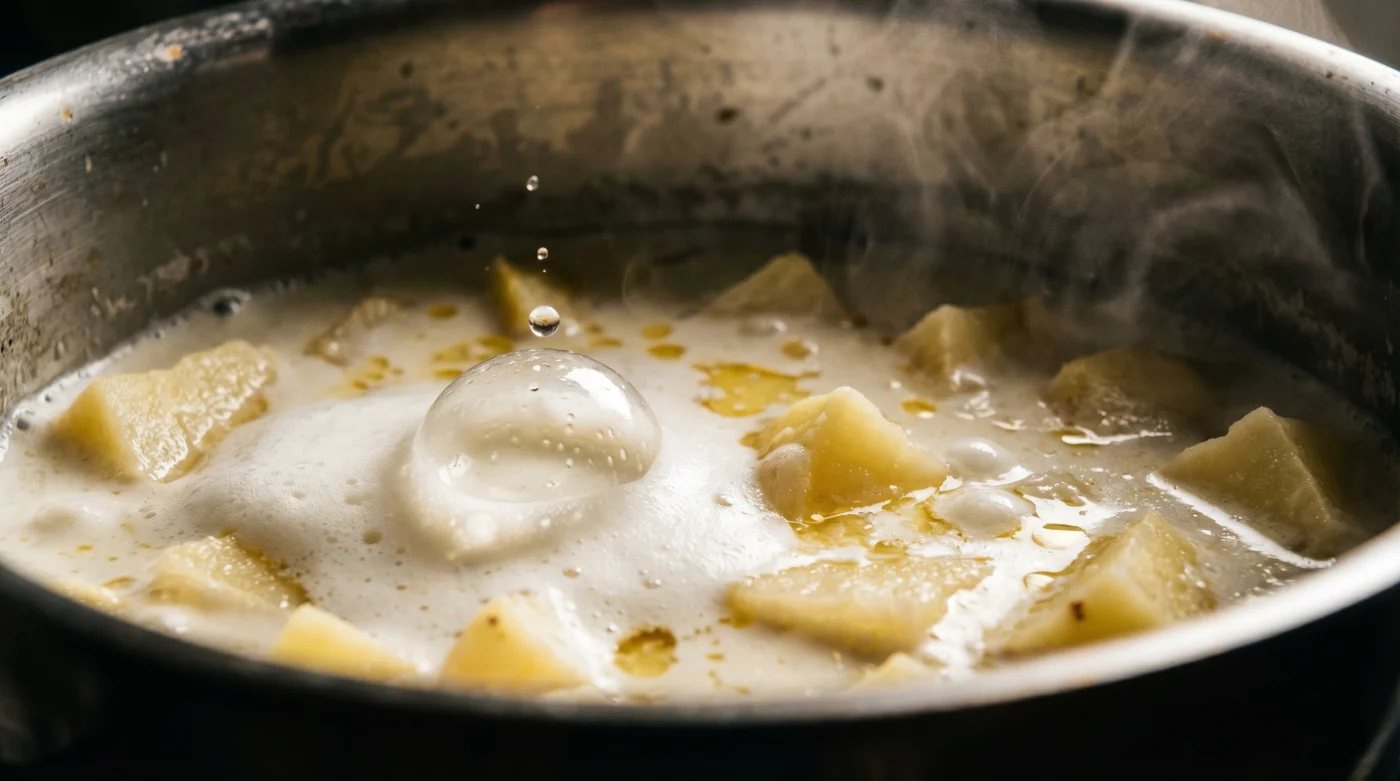
The kitchen windows are fogged with the chill of a late Canadian November. You stand over the stove, staring down at a rolling pot of salted tap water, watching starchy root vegetables bounce violently against the stainless steel. It is a familiar, comforting sound echoing in homes across the country, but it is also a massive missed opportunity for flavour.
You peel, you chop, and you submerge them without a second thought. Water leaches the natural sweetness right out of the root, leaving behind a dull, saturated canvas that begs for copious amounts of cold butter to save it from utter mediocrity. You are quite literally pouring the best parts of the vegetable down the sink when you strain them.
We have accepted this watery ritual as undeniable culinary law for generations. But high-end kitchens approach this humble side dish quite differently. They refuse to dilute the foundation of a meal, choosing instead to fortify the raw vegetable from the very first minute of applied heat, respecting the integrity of the ingredient.
When you swap that harsh boil for a gently trembling bath of heavy dairy, the starch absorbs pure richness, transforming a cheap pantry staple into something startlingly luxurious. The liquid reduces as the vegetable cooks, creating a harmonious bond between earth and dairy that is impossible to achieve after the fact.
The Hydration Myth
Most home cooks treat raw potatoes like dried pasta from a cardboard box. We boil them in an ocean of plain, aggressively salted water until they finally yield, drain them completely dry, and then frantically try to mash fat back into them before they turn cold and aggressively gummy. It is a backwards approach to building flavour.
Think of a rigid, raw spud like a dry, thirsty kitchen sponge waiting for moisture. If you hydrate it fully with plain tap water first, it physically cannot absorb cream later on because its cellular structure is already flooded to absolute capacity. You are just coating the outside with fat instead of infusing the interior.
This is exactly where the professional pivot happens in better restaurants. By simmering the raw chunks directly in seasoned heavy dairy, they draw milk fat and proteins straight into their cell walls as they soften and expand. You aren’t forcing flavour into a cooked potato; you are building a richer, more complex potato from the inside out.
A Chef’s Quiet Fix
Meet Elias Thorne, a 42-year-old executive chef running a highly demanding bistro service in downtown Montreal. He noticed his prep line was constantly fighting a losing battle with inconsistent, gluey mash every single busy Friday night. They were overworking wet potatoes to desperately compensate for the profound lack of internal flavour, resulting in an unappetizing, sticky paste.
Elias banned water from the mash station entirely the very next day. He instructed his team to gently simmer the raw, uniform cuts in seasoned 35 percent cream infused with heavily crushed garlic and sprigs of fresh thyme. The potatoes softened beautifully, their natural starches thickening the surrounding liquid, essentially mashing themselves into a flawless, glossy velvet puree with just a few gentle turns of a wire whisk.
Tailoring the Technique
Not every casual Tuesday dinner calls for the exact same level of overwhelming decadence. Scaling your fat ratio correctly determines whether you are serving a hearty, comforting rustic side or a highly refined, fine-dining puree meant to sit beneath a costly cut of braised beef.
For the Purist: Use entirely heavy cream to achieve the absolute peak of restaurant quality. This provides the thickest, most incredibly stable cooking liquid that reduces into a natural, instant sauce right in the pot. It is ideal for major holidays and special occasions where a flawless, silky texture is absolutely everything you want.
For the Weeknight Pragmatist: Mix equal parts heavy dairy and whole milk, or substitute half the cream with a robust, homemade chicken broth. The liquid stays light enough to simmer easily without scorching the bottom of your pan, while still imparting an incredible silkiness that water simply cannot match.
For the Rustic Cook: Leave the earthy skins on thin-skinned red varieties for a completely different visual appeal. Simmer them in the cream mixture with heavy pinches of cracked black pepper, and crush them roughly with a sturdy dinner fork. The skins add a beautiful, slightly bitter contrast to the overwhelming sweetness of the reduced dairy.
Mindful Application
Execution of this technique requires a very gentle, patient hand. The dairy should barely shudder under the heat, breathing through a soft pillow of steam rather than ever reaching a violent, rolling boil that will instantly scorch the pan bottom and ruin the entire batch.
Cut your raw pieces with extreme intention and care. Consistent, perfectly measured sizing ensures they finish at the exact same moment, completely preventing those jarring, hard lumps in the final dish that happen when small pieces turn to mush while larger pieces remain raw in the centre.
Keep your eyes focused on the stove as the cooking time concludes. Dairy reduces surprisingly quickly in those final few minutes, and you want a thick glaze left at the bottom of the pot to act as a binder, not a dry, hopelessly burnt crust that taints the flavour.
- The Cut: 2-inch uniform cubes of Yukon Gold or Russet.
- The Liquid: Enough heavy cream to come just halfway up the potatoes.
- The Heat: Medium-low, maintaining a temperature around 85 Celsius.
- The Lid: Keep it slightly ajar to let steam escape while trapping moisture.
- The Mash: Use a hand masher right in the pot.
Once the pieces pierce easily with the tip of a paring knife, absolutely do not drain the heavy pot. Simply crush the newly softened pieces directly into the highly reduced, starchy cream left behind, watching as the two elements bind together instantly.
Redefining the Ritual
We so often rush carelessly through the foundational elements of a meal just to focus all our energy on a complicated roast or an expensive cut of meat. Treating basic ingredients with respect changes your daily relationship with cooking, proving time and again that thoughtful technique matters far more than exorbitant price tags.
You no longer have to engage in a physical fight with a heavy hand masher, desperately trying to fold cold, stubborn blocks of butter into a waterlogged, utterly resistant mess of starch. The anxiety of timing the side dishes perfectly vanishes entirely.
You just stand quietly by the warm stove, inhaling the sweet, deeply nutty scent of reduced warm dairy. The work is already done, leaving you with nothing but a quiet sense of profound satisfaction and a truly extraordinary meal ready to be plated.
A potato cooked in water is a chore; a potato cooked in cream is a revelation.
| Key Point | Detail | Added Value for the Reader |
|---|---|---|
| Cellular Absorption | Raw starch pulls in the surrounding liquid as it heats. | Guarantees rich flavour in every single bite without heavy mashing. |
| Starch Retention | Natural starches are released directly into the cream. | Creates a naturally thick, velvety binder instead of pouring nutrients down the drain. |
| One-Pot Efficiency | The cooking liquid becomes the mashing liquid. | Saves you from washing extra colanders, measuring cups, and melting pots. |
Frequently Asked Questions
Will the cream curdle if it boils? Heavy cream with 35 percent fat is highly stable and resists curdling, but keep it at a gentle simmer to prevent scorching the milk solids.
Do I need to peel the potatoes first? That depends entirely on your texture preference; peeled Yukon Golds yield a silky puree, while unpeeled red potatoes offer a rustic, hearty finish.
Can I use milk instead of cream? Whole milk can work if monitored closely, but it lacks the fat content needed to prevent separation and won’t deliver the same luxurious mouthfeel.
How long does this process take? Roughly 20 to 25 minutes at a gentle simmer, which is nearly identical to the traditional water-boiling method.
What happens if the cream reduces too quickly? Simply splash in a few tablespoons of warm milk or chicken broth to loosen the mixture back to your desired consistency.