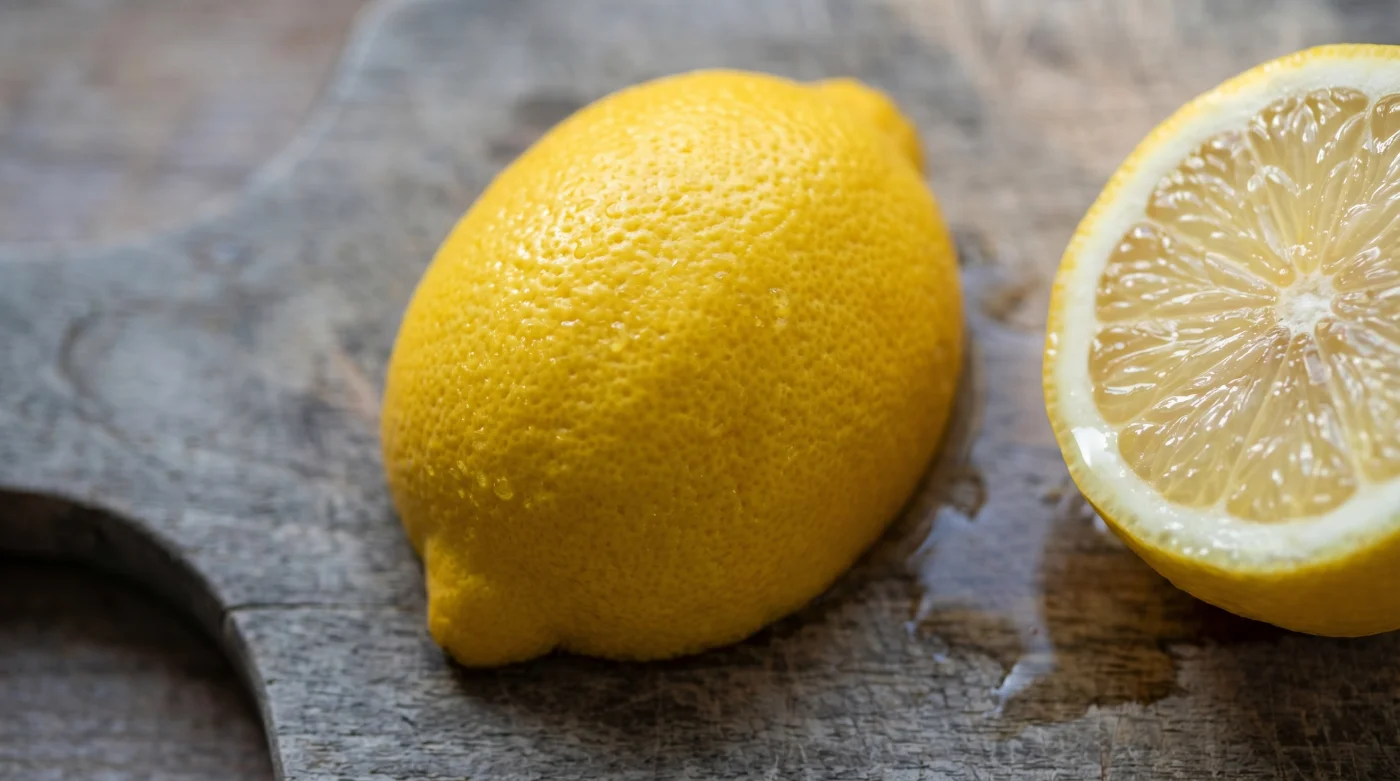
The morning light barely clears the frost on the window, and you reach into the crisper drawer. You pull out a lemon, bright yellow but stiff as a baseball, holding the deep chill of a Canadian winter morning. You slice it in half, press it against the ridged glass of your grandmother’s juicer, and lean in with your shoulder, expecting a rush of bright liquid to start your day.
It pushes back. The pale rind resists, yielding a reluctant, sad trickle that barely coats the bottom of your mug. We accept this stubbornness as a fact of nature, resigning ourselves to tossing away half the fruit’s potential simply because our hands get tired of squeezing.
But professional kitchens do not fight their ingredients; they coax them into submission. When you stop treating a lemon like a sponge that needs wringing and start treating it like a complex cellular structure, your entire approach changes. This is the viral prep technique everyone is searching for right now, turning a physically demanding chore into a seamless, five-minute breeze.
The Architecture of Citrus
Think of a cold lemon as a microscopic fortress. Inside, the liquid is trapped within thousands of tiny, rigid vesicles, all bound together by firm, chilly pectin. Trying to crush this fortress with brute force only ruptures a fraction of those walls. You are fighting the structure, not extracting the flavour, resulting in a frustrating and wasteful experience.
To win, you simply need to relax the walls. By introducing a rapid burst of electromagnetic heat, you alter the fruit’s internal pressure. The water molecules vibrate, the stiff membranes soften like butter left on the counter, and the citrus practically exhales its contents without a fight.
Clara, a forty-two-year-old pastry chef working out of a bustling Mile End bakery in Montreal, used to dread the morning lemon-curd prep. She spent hours rolling cold lemons against stainless steel counters, risking bruised palms for a few extra drops. One morning, facing a crate of rock-hard citrus, she tossed three whole lemons into the staff microwave for a brief pulse. When she sliced into the first one, the juice ran freely over the cutting board before she even squeezed, proving that warmth is a far better tool than force.
Adjusting for Your Routine
Not every citrus squeezing scenario looks the same. Depending on what you are making, this brief thermal trick adapts easily to your daily rhythm, whether you are preparing a quick morning beverage or stocking up for a weekend gathering.
For the Morning Ritualist
If you only need a splash of brightness for your hot water or tea, you likely slice off a wedge and return the rest to the fridge. Microwave the whole fruit, take your slice, and know that the remaining portion stores perfectly well afterward, maintaining its freshness while preventing the cut face from drying out as quickly in the cold air.
For the Weekend Batch-Prepper
When you are facing a bag of lemons for a summer lemonade pitcher or a large baking project, process them in groups of three. Give them fifteen seconds instead of ten. You will find that the pulp surrenders instantly, drastically cutting down your prep time and leaving you with paper-thin, completely exhausted rinds.
For the Cocktail Purist
Mixology demands precise, bright flavours without the bitter oils from the skin. Rolling a cold lemon aggressively forces those bitter oils into your glass. A ten-second microwave pulse softens the interior instantly, ensuring your sour mix stays crisp, clean, and perfectly balanced without bruising the delicate outer rind.
The Ten-Second Protocol
This technique requires strict restraint. You are not trying to cook the fruit; you are merely waking it up. The skin should feel gently warmed, like a stone resting in the afternoon sun, never hot to the touch.
To execute this flawlessly, bring your awareness to the timing. Every appliance differs slightly, but the method remains remarkably consistent across kitchens, whether you are working with a high-end setup or a basic countertop model.
- Place the whole, uncut lemon in the centre of the glass turntable.
- Set the power to normal and run it for exactly ten seconds.
- Remove the fruit and gently press your thumb against the rind; it should have a slight, yielding give.
- Slice crosswise and squeeze with an open, relaxed palm.
Your tactical toolkit is straightforward, relying on the ambient temperature of a typical kitchen resting around nineteen degrees Celsius. If your citrus is exceptionally large or thick-skinned, you can make minor adjustments.
For standard microwaves operating above 900 watts, ten seconds is the golden rule. For lower-powered models, fifteen seconds may be necessary. Once heated, a single, gentle roll across the counter finishes the job, breaking the softened membranes completely before the knife does its work.
Respecting the Yield
There is a quiet satisfaction in leaving nothing behind. When we force a cold lemon and toss a heavy, half-full rind into the compost, we waste the earth’s effort and our own grocery budget. Learning to work with the temperature of your food changes how you view your daily cooking tasks.
It becomes a partnership, rather than a wrestling match. You stop forcing ingredients to behave and start giving them the environment they need to perform. In just ten seconds, a stubborn piece of produce transforms into an abundant resource, proving that the most profound culinary shifts often require the least amount of effort.
Heat is the invisible knife that prepares the ingredient long before the blade ever touches the cutting board.
| Key Point | Detail | Added Value for the Reader |
|---|---|---|
| Temperature Over Force | Microwaving whole lemons for 10 seconds softens the pectin bonds. | Saves wrist strain and extracts double the liquid. |
| Prevents Bitterness | Avoids the need to crush the rind against the counter. | Keeps bitter oils out of your tea, baking, or cocktails. |
| Zero-Waste Prep | The rind is left paper-thin and completely exhausted. | Maximizes your grocery budget by using the whole fruit. |
Does this change the taste of the lemon juice?
Not at all. Ten seconds is only enough to warm the water molecules and relax the cellular walls. The juice remains raw, bright, and highly acidic.
Can I do this with limes and oranges?
Absolutely. Limes often have thinner skins, so you might only need eight seconds. Navel oranges or grapefruits might require fifteen to twenty seconds due to their mass.
What if I don’t use a microwave?
You can submerge the whole fruit in a bowl of warm water for about five minutes to achieve a similar, though slightly less immediate, effect.
Will the lemon explode in the microwave?
No. At ten seconds, there is not enough heat generated to build explosive steam pressure. It merely warms the interior.
Can I store the lemon after microwaving it?
Yes. If you only cut a wedge, the remaining fruit can go right back into the crisper drawer. It will cool down and stay fresh for your next use.