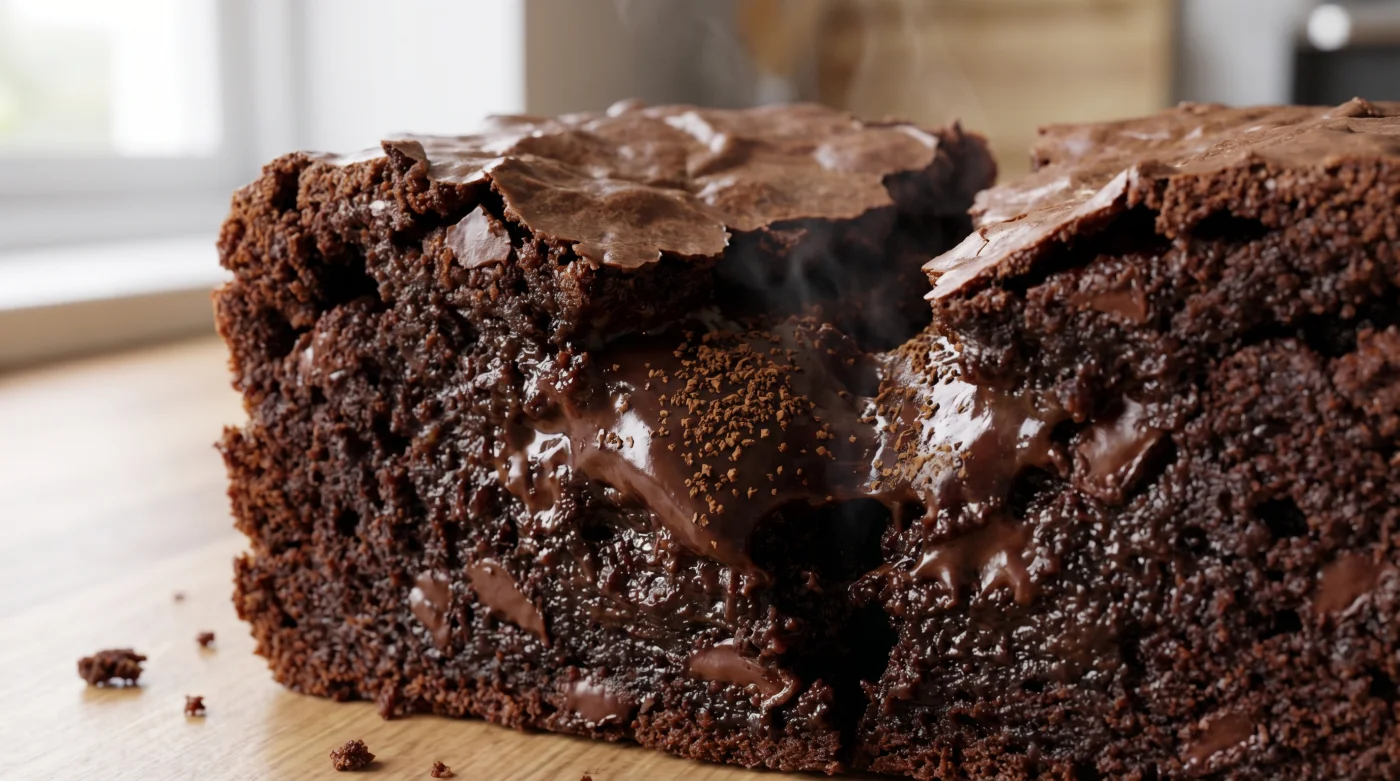
You rip the top off the cardboard box, and that familiar puff of cocoa dust hits the air. It smells like a Tuesday night baking urge, a quick fix for a sudden craving while the snow piles up against the windowpanes. You pull out the vegetable oil, crack an egg, and measure the water. It is the most mundane domestic ritual, promising immediate comfort but often delivering something a little flat.
The resulting pan is undeniably comforting, yet heavily reliant on pure sugar. The chocolate note is there, but it lacks the heavy, resonant baseline hum you find in a slice from a proper neighbourhood bakery. It tastes exactly like what it is: a quick supermarket shortcut.
But there is a gap between the instructions printed on the back of the cardboard and the reality of how flavour actually works. You do not need to melt down expensive blocks of single-origin cocoa to get a dessert that feels luxurious. You just need a slight pivot in your chemistry.
The secret is likely sitting right next to your kettle. By borrowing a stark, bitter pantry staple, you can force a cheap mix to taste expensive.
The Perspective Shift: Turning Up the Bass
Think of cocoa powder as a stereo system playing a brilliant piece of music, but with the bass turned all the way down. You can hear the melody—the sweetness, the top notes of the chocolate—but you cannot feel the rhythm in your chest. Adding more cocoa powder does not fix the problem; it just makes the high notes louder and drier.
Instant coffee powder is the bass control. When you mix it into a chocolate batter, it does not actually make the dessert taste like a morning brew. Instead, the bitterness and the roasted notes of the coffee bind to the flavour compounds in the cocoa. This reaction tricks your palate, making the chocolate taste darker, richer, and infinitely more complex. The mundane flaw of a mass-produced mix—its one-dimensional sweetness—suddenly becomes a blank canvas.
The Montreal Bakery Secret
Clara is a forty-two-year-old pastry chef who runs a consistently sold-out café in Montreal’s Mile End. While her display cases are filled with laminated doughs that take three days to prepare, she admits that her emergency catering brownies are built on a commercial boxed mix. Her absolute non-negotiable rule? A heavy spoonful of instant espresso powder bloomed in warm water before it ever touches the dry mix. It is a quiet, two-ingredient professional pivot that transforms a five-dollar box into a highly requested corporate order.
This is the difference between blindly following instructions and actually understanding the culinary system. Once you recognize that coffee acts as an amplifier rather than a competing flavour, your pantry becomes a toolbox instead of just a storage shelf.
Tuning the Chocolate Frequencies
Not every brownie craving requires the exact same approach. You can adjust this technique depending on who you are baking for and what you have in your cupboards.
For the Midnight Craving: You want speed. Use standard instant coffee granules—the kind that dissolves instantly. Crush them slightly with the back of a spoon if the granules are large. Mix one tablespoon directly into your dry ingredients. The moisture from the eggs and oil will be enough to draw out that deep, earthy cocoa profile.
For the Dinner Party: If you are serving this to guests, seek out instant espresso powder. It is finer, darker, and more intense. Swap the required vegetable oil for browned butter, and dissolve your espresso powder into the butter while it is still warm. This creates a deeply aromatic fat that coats every particle of the flour.
For the Texture Purist: If your goal is the densest, fudgiest centre possible, replace the required tap water with hot brewed coffee or water mixed with a tablespoon of instant coffee. The hot liquid slightly blooms the cocoa in the mix before it hits the oven, creating a thick, glossy batter structure.
The Mindful Application
Executing this pivot requires almost no extra time, but it does require deliberate attention. Set your ingredients on the counter and measure them with care.
Do not simply dump a handful of coffee beans into the bowl. The integration must be seamless so the cream should tremble, metaphorically speaking, with just the right amount of tension between sweet and bitter.
- Measure exactly 1 to 1.5 tablespoons of instant coffee or espresso powder per standard box of mix.
- If using hot water to bloom the coffee, allow the liquid to cool for three minutes before whisking in your eggs to prevent scrambling.
- Mix the batter strictly by hand with a wooden spoon or spatula. Overworking it with an electric mixer introduces too much air, ruining the dense texture.
- Stop stirring the moment the last streak of dry flour disappears into the dark batter.
The Tactical Toolkit: Bake your brownies at 160 degrees Celsius (about 325 Fahrenheit) instead of the standard 175 degrees Celsius. The lower temperature prevents the edges from drying out while the centre sets into rich fudge. Pull the pan from the oven when a toothpick inserted two inches from the edge comes out clean, even if the exact middle still looks slightly damp.
The Quiet Luxury of the Pantry
There is a profound peace of mind in knowing you can manipulate your food to serve your exact desires. You do not always have the energy to bake completely from scratch, and that is perfectly fine.
By understanding how a simple spoonful of instant coffee shifts the entire profile of a dish, you take back control of your kitchen. You transform a rushed, utilitarian task into an act of quiet, deliberate craftsmanship. It is a reminder that luxury isn’t always about the raw cost of your ingredients; it is about how thoughtfully you put them together.
“A recipe is merely a suggestion; understanding the interactions of bitterness and sweetness is where you actually begin to cook.”
| Key Point | Detail | Added Value for the Reader |
|---|---|---|
| The Flavour Amplifier | Instant coffee binds to cocoa compounds. | Forces cheap chocolate to taste much darker and more expensive. |
| The Liquid Bloom | Dissolving coffee in hot water before mixing. | Creates a glossier batter and a significantly fudgier final texture. |
| Temperature Control | Baking at 160C instead of the box’s 175C. | Prevents hard edges and ensures a molten, bakery-style centre. |
Will the brownies taste like coffee?
No. Assuming you stick to one tablespoon, the coffee acts entirely in the background. It emphasizes the cocoa without leaving a distinct mocha flavour behind.
Can I use brewed coffee instead of instant powder?
Yes. If your mix calls for water, simply replace the required water measurement with an equal amount of strong, room-temperature brewed coffee.
Does it matter if the coffee is decaf?
Not at all. The chemical compounds that amplify the chocolate are tied to the roasting process of the bean, not the caffeine content.
What if I only have fancy espresso beans?
You can grind them extremely fine, but they will not dissolve like instant powder, leaving a gritty texture. Stick to instant or brew a shot to replace the liquid.
Can I apply this to other boxed mixes?
Absolutely. A teaspoon of instant coffee will vastly improve boxed chocolate cake, instant chocolate pudding, and even packaged hot cocoa mixes.