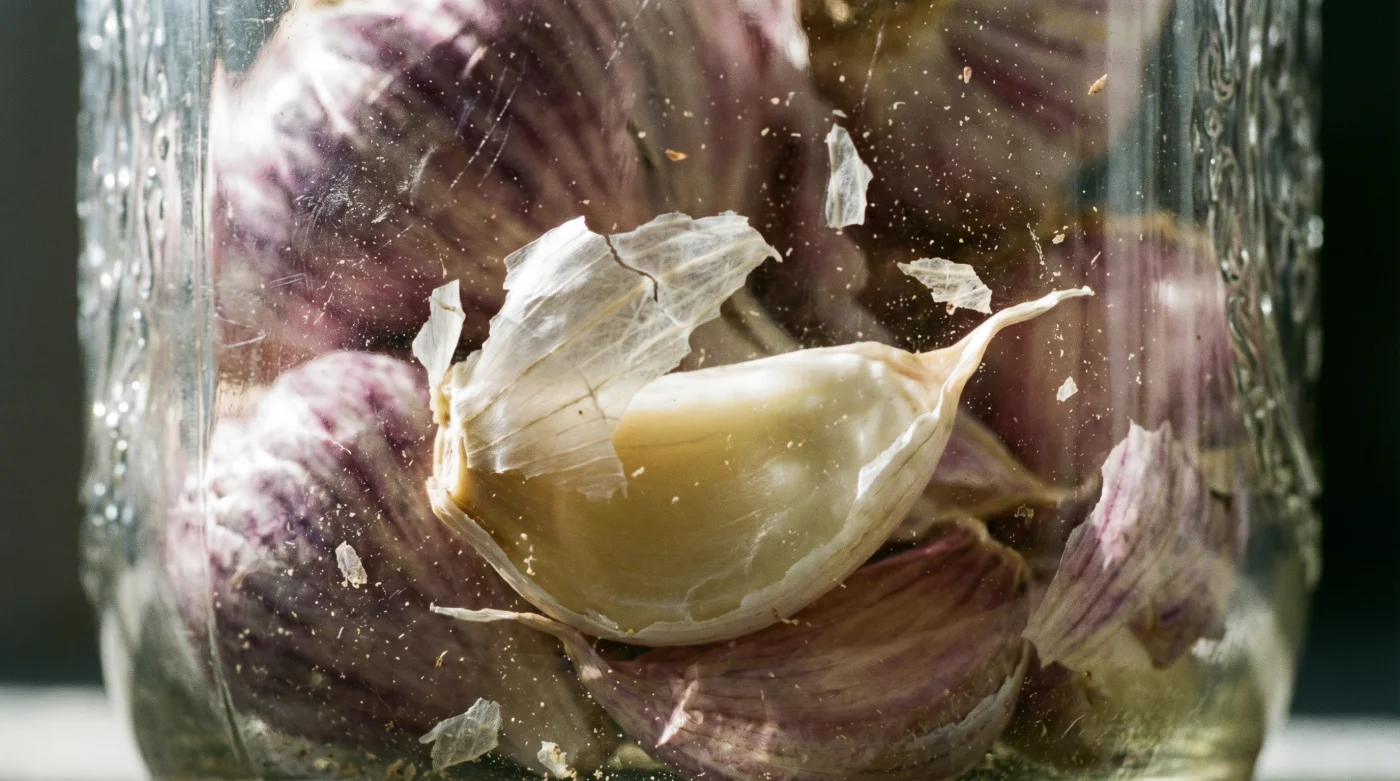
You stand at the kitchen island, the dull thrum of the evening commute fading outside your window. A head of garlic sits on the cutting board, papery and stubbornly intact. It is the beginning of almost every comforting meal, from a sharp Caesar dressing to a slow-braised roast, yet the preamble is always the same sticky frustration.
You press the flat of your chef’s knife against a clove, lean your weight into it, and hear that familiar crunch. Sticky, fragrant oils release, instantly binding the thin, translucent skin to your fingers and the blade. You spend the next three minutes picking at tiny fragments of paper, your nails catching on the bruised flesh.
There is a profound disconnect between the joy of eating garlic and the tedious mechanics of preparing it. Most home cooks accept this irritation as an unavoidable toll. You resign yourself to smelling like sharp allium for the next forty-eight hours, scraping the sticky remnants into the compost bin.
But behind the swinging doors of professional kitchens, volume dictates a different reality. Time is a harsh luxury, and picking at papery skins is a waste of it. The solution isn’t a sharper knife or a single-use silicone tube; it is a violent, contained burst of kinetic energy.
The Physics of the Peel
Think of the garlic clove not as a stubborn puzzle, but as a seed encased in a brittle, protective shell. When you smash it with a knife, you force the shattered skin directly into the wet flesh. You are actively creating the sticky mess you despise. When you understand the system, you realize the skin is naturally designed to flake away when subjected to friction.
By introducing a simple glass container—an empty 500ml Bernardin jar from your pantry—you harness chaotic physical force. The ‘flaw’ of that dry, irritating skin becomes your greatest advantage. It lacks elasticity. Under rapid, ricocheting impacts against hard glass, the tension snaps. The skin practically jumps off the clove, desperate to separate from the heavier core.
Consider Elias, a 42-year-old prep chef working the morning shift at a bustling Montreal brasserie. Before the dining room even smells like coffee, he stares down fifty heads of garlic required for the day’s confit. He doesn’t reach for a paring knife. Instead, he tosses the separated cloves into two large stainless steel deli inserts, clamps them together, and shakes them like a cocktail shaker for fifteen seconds. When he opens the metal shell, a pristine mound of peeled garlic sits amidst a pile of shattered skins. It is a shared kitchen secret built on simple physics.
The Professional Pivot: A Two-Ingredient Modification
While the dry shake works wonders for daily cooking, the true restaurant pivot involves a minor adjustment. If you are prepping garlic for a dish where the cloves must remain flawless—perhaps a delicate poaching liquid or a clear broth—you want to avoid bruising the tender flesh.
The secret is adding coarse kosher salt. Tossing a tablespoon of coarse salt into the jar alongside your whole cloves creates thousands of micro-abrasions. The salt acts as a dry agitator, tearing the paper away instantly while keeping the garlic entirely intact. It is a minor adjustment that yields pristine, camera-ready results without crushing the cell walls.
Tailoring the Tremor
Different meals require different rhythms. You cannot treat a single clove for a quick vinaigrette the same way you treat three entire heads for a batch of roasted garlic soup. Here is how you adapt the kinetic force to suit your immediate culinary needs.
For the Sunday Batch-Cooker
You are prepping for the week. Take a large, 1-litre glass jar. Break apart two whole heads of garlic, discard the loose outer root paper, and drop the whole cloves inside. Shake vigorously for twenty seconds. The sheer volume creates a cascading effect, where the cloves batter against each other, peeling dozens simultaneously.
For the Gentle Infusion
Sometimes you need perfectly whole, unbruised garlic for a slow oil infusion. Add a splash of warm water to your jar. The mild heat and humidity soften the fibrous grip of the root end just enough, allowing the skin to slip off under light agitation.
For the Quick Weeknight Pan
You only need three cloves for a quick Wednesday night pasta. A small glass jam jar is your best tool here. The tighter space means faster ricochets. Five seconds of aggressive, percussive shaking is all it takes to separate the paper from the prize.
Mindful Application
Action requires intention. Finding the right rhythm ensures you aren’t just rattling glass, but effectively fracturing the skin. Keep your movements sharp, deliberate, and entirely focused on creating maximum internal container friction.
Here is your precise physical blueprint:
- The Vessel: A rigid container with a tight lid. Heavy glass Mason jars work beautifully, as do two identical metal mixing bowls clamped together.
- The Force: Up-and-down shaking is less effective than a violent, multi-directional swirl. You want the cloves hitting the walls, not just the base and the lid.
- The Timing: 10 to 15 seconds. If they aren’t peeled by the time the noise changes pitch, you need more force, not more time.
- The Separation: Dump the contents into a wide bowl and gently blow on the pile. The lightweight skins will drift away, leaving only heavy, naked cloves behind.
Once you master this motion, prep becomes almost musical. The loud, chaotic clatter of the jar transforms into a deeply satisfying visual reveal when you unscrew the lid and find the work done for you.
The Quiet Satisfaction of Reclaimed Momentum
Cooking is fundamentally a practice in momentum. When you hit a roadblock—like picking at a sticky piece of translucent paper—that momentum halts. Your mind shifts from the creative flow of building a pan sauce to the mundane irritation of dirty hands.
Mastering the jar method removes this friction from your evening. You keep your hands perfectly clean, your knife dry, and your focus entirely on the heat of the pan. The garlic is ready exactly when the olive oil begins to shimmer, snapping you back into the rhythm of the meal.
This is the beauty of adopting professional kitchen mechanics in your own home. It isn’t about rushing; it is about clearing away the tedious barriers that stand between you and your food. You are left with the pure, fragrant joy of the ingredients, precisely as they were meant to be handled.
“The skin of a garlic clove is a fragile tension barrier; break the tension with violent motion, and the garlic practically peels itself.” – Chef Elias Thorne
| Key Point | Detail | Added Value for the Reader |
|---|---|---|
| The Dry Shake | Whole cloves rattled in a dry 500ml glass jar for 15 seconds. | Saves you minutes of sticky prep time for standard batch cooking. |
| The Salt Pivot | Adding a tablespoon of coarse kosher salt to the dry jar. | Creates micro-abrasions that peel the skin instantly without bruising the meat. |
| The Warm Water Trick | A splash of warm water added before agitation. | Softens the fibrous root, yielding flawlessly whole cloves for delicate infusions. |
Frequent Curiosities
Does this work with single, isolated cloves? Yes, but use a much smaller vessel like a jam jar to ensure the ricochet happens fast enough to break the skin.
Why do my garlic cloves get bruised when I do this? You are likely shaking too long or using a container that is far too large for the amount of garlic, causing blunt force trauma rather than friction.
Do I need to cut the root end off first? It helps dramatically. Trimming the hard basal plate before dropping them in the jar removes the structural anchor holding the paper intact.
Can I use plastic containers instead of glass? Glass or stainless steel is required. Plastic absorbs the impact force and often lacks the hard rigidity needed to shatter the dry skin.
Will the jar smell like garlic forever? A quick wash with hot water and a drop of dish soap immediately clears the allium oils from glass, unlike porous plastic.