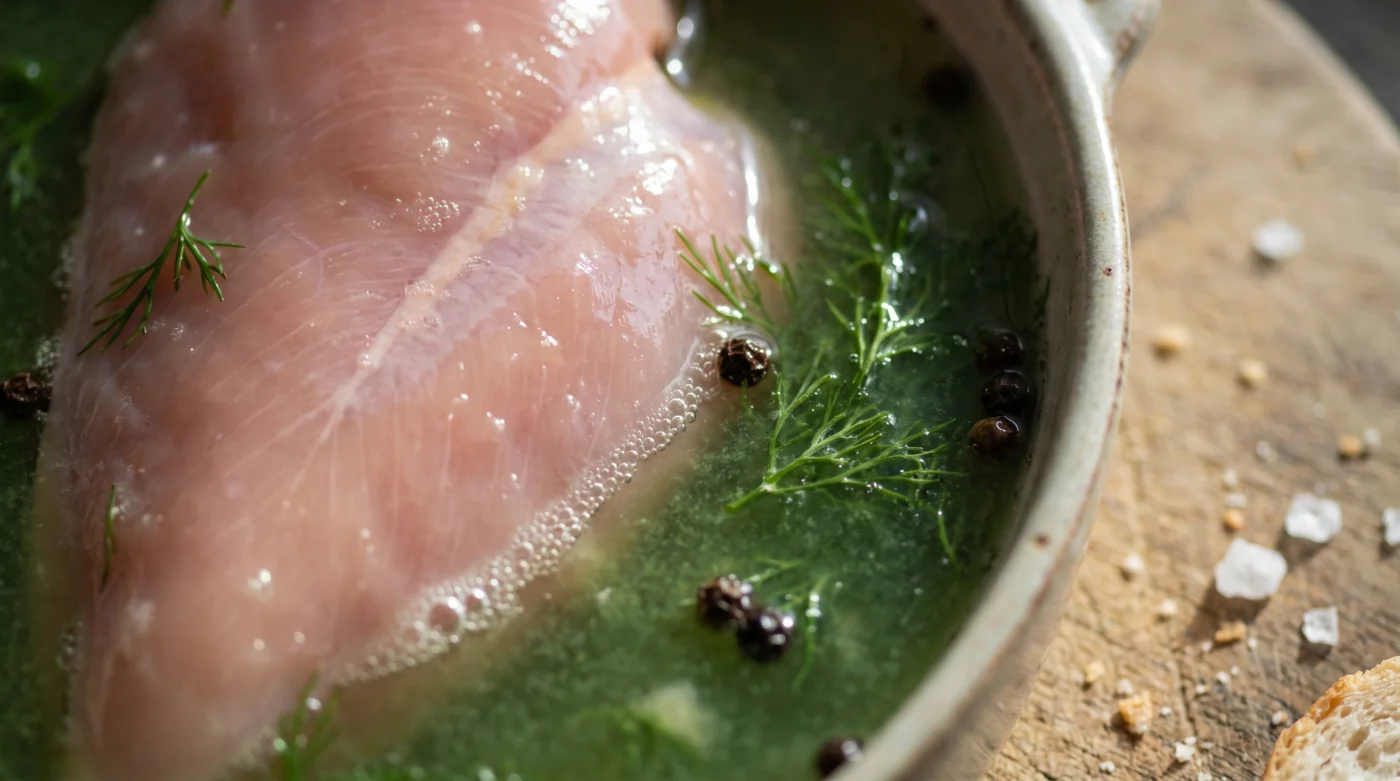
You stand at the counter staring down the familiar, intimidating pale mass of a raw chicken breast. It is Tuesday night, the rain is beating against the windowpanes of your kitchen, and you are already bracing for the inevitable outcome: a dry, chalky dinner requiring heavy reliance on whatever sauce happens to be lingering in the fridge door. The exhaustion of the day weighs heavy, and the last thing you want is a culinary battle.
You have tried the gentle poaching methods, the aggressive pan-searing, and even wrapping it in bacon, yet the result often feels like chewing through cotton. The protein tightens fiercely under heat, squeezing out every drop of moisture before it ever reaches your plate. It is a frustrating cycle that leaves you feeling like you are somehow failing at the basics of home cooking.
Now imagine slicing into a piece of poultry that yields under the knife like softened butter. A golden crust gives way to a glistening interior, holding a quiet, savoury hum that lingers on your palate. This is the hallmark of professional kitchens, a texture you assume requires expensive equipment, complicated sous-vide setups, or hours of fussy preparation.
But the secret to that restaurant-quality bite is likely sitting half-forgotten in the back of your refrigerator right now. That cloudy green liquid left over from your favourite dill pickles is about to change everything. It is the ultimate professional pivot, turning a zero-dollar waste product into the most powerful tool in your evening rotation.
A Lesson in Tension
Think of muscle fibers like a tightly wound spool of thread. When you expose them directly to the shock of a hot skillet, they seize up instantly in a state of panic. You are fighting against the natural biology of the bird, trying to force tenderness through sheer willpower, heavy mallets, and crossing your fingers.
The magic happens when you shift your approach from force to persuasion. Pickle brine gently relaxes those stubborn fibers long before the pan gets hot. It is a brilliant two-ingredient pivot that transforms a mundane staple into a luxurious centrepiece. You are no longer just cooking; you are conditioning the meat to accept the heat gracefully.
This is not merely about adding a sharp flavour, though the subtle, earthy tang of dill and mustard seed certainly helps create a crave-worthy profile. The acid and salt work in tandem, acting as a microscopic massage that unravels the stiffest proteins. They plump the cellular walls from the inside out, ensuring that when the heat finally hits, the meat retains its natural juices instead of weeping them out into the pan and leaving you with a shrivelled cutlet.
Consider the daily reality of Clara Dubois, a 42-year-old sous-chef at a notoriously demanding Montreal brasserie. Clara oversees the luncheon service, where hundreds of chicken sandwiches fly out the door between noon and two o’clock. Instead of buying expensive commercial marinades, she intercepts the massive jars of garlic-dill brine returning from the charcuterie station. By submerging raw poultry in this discarded liquid for just forty-five minutes, she guarantees every single cutlet emerges blisteringly juicy, regardless of the chaotic pace on the line. It is a quiet act of kitchen alchemy that turns a waste product into a culinary insurance policy.
Tailoring the Soak
Not all schedules or palates are identical, and this method adapts beautifully to your specific rhythm. Let us break down how to apply this technique across different Canadian household routines, so you never feel trapped by rigid rules.
For the Sunday meal-prep planner, a diluted soak is your safest bet. Cut the brine by half with cold water if you intend to leave the meat submerged overnight. This prevents the strong vinegar from turning the exterior into a mushy paste, offering a gentle, slow-release tenderization that sits happily in the fridge while you sleep.
If you are a purist chasing the cleanest flavour profile, look for fermented pickles found in the refrigerated aisle rather than the shelf-stable vinegar varieties. The lactic acid from natural fermentation provides a softer, more complex tang that conditions the meat without making your Tuesday dinner taste distinctly like a deli sandwich condiment.
For the exhausted parent staring down a six o’clock deadline, the aggressive quick-soak is your lifeline. Submerge the meat fully in straight, undiluted brine for twenty minutes while you chop vegetables or help with math homework. It is just enough time to penetrate the outer layer and protect the delicate crust during a rapid pan-sear.
Executing the Brine
Achieving this super soft meat requires very little active effort, but it does demand a mindful sequence of steps. Follow this rhythm to ensure the salt and acid work for you, not against you, keeping the process clean and deliberate.
First, drain the remaining pickle juice into a glass or plastic container, avoiding metal bowls which can react with the vinegar and impart a harsh, metallic tint to your food. Drop the chicken in and ensure it is entirely covered by the liquid, pressing it down gently with your fingertips to release any trapped air bubbles.
- Cover the container tightly and place it in the coldest part of your refrigerator to maintain food safety.
- Let it sit for 30 to 45 minutes for optimal texture and mild flavour absorption.
- Remove the poultry from the bath and pat it completely dry with paper towels; surface moisture is the enemy of a golden, crispy sear.
- Season lightly with freshly cracked black pepper, omitting any extra salt since the brine has already permeated the tissue.
The Tactical Toolkit requires precision over guesswork. Keep your pan at medium-high heat, using an oil with a high smoke point like canola or grapeseed. You are aiming for a safe internal temperature of 74 Celsius. Because the meat is super-hydrated, it will cook slightly faster than a dry, unbrined cut. Rely on a digital meat thermometer rather than visual cues to pull it off the heat exactly when it is safe but still trembling with moisture.
Reclaiming Your Kitchen Confidence
There is a profound sense of relief in mastering a technique that removes the anxiety of failure. Cooking should not feel like a gamble where you simply hope the primary ingredient decides to cooperate. By utilizing something as accessible as leftover pickle juice, you take absolute control of the variables that used to intimidate you.
You also step into a more resourceful, environmentally mindful way of operating your household. That empty glass jar no longer represents something destined for the recycling bin; it is a vessel holding the secret to your next successful dinner. It feels intensely satisfying to extract every ounce of value from the groceries you bring into your home, especially as food costs continue to demand our attention.
The next time the rain hits the window and the cutting board feels daunting, you will know exactly what to do. You will reach into the cold shelves of the fridge, unscrew the lid on that familiar jar, and let the acid do the heavy lifting, knowing that a perfect, yielding bite is only minutes away.
The true mark of a resourceful cook is seeing the unseen potential in what others pour down the drain.
| Key Point | Detail | Added Value for the Reader |
|---|---|---|
| The Brine Shift | Swapping heavy mallets for acidic soaking. | Reduces physical effort and guarantees an evenly tenderized texture. |
| Temperature Target | Pulling the meat off the heat at exactly 74 Celsius. | Eliminates the guesswork that traditionally leads to dry, chalky dinners. |
| Zero-Waste Strategy | Repurposing discarded pickle juice. | Saves money on commercial marinades while maximizing grocery value. |
Frequently Asked Questions
Does this make the chicken taste strongly like pickles?
No, the final flavour is incredibly subtle. The brine acts primarily as a tenderizer, leaving behind only a faint, savoury tang that enhances the meat rather than overpowering it.
Can I reuse the pickle juice after soaking raw poultry?
Absolutely not. Once the liquid has touched raw meat, it must be discarded immediately to prevent severe cross-contamination and foodborne illness.
How long is too long for the meat to soak?
If you are using undiluted vinegar-based brine, do not exceed two hours. The acid will eventually begin to break down the proteins too far, resulting in a mushy exterior.
Do I need to rinse the chicken after removing it from the bath?
Rinsing is unnecessary and spreads bacteria around your sink. Simply pat the surface meticulously dry with paper towels to ensure you achieve a proper crust in the pan.
Does this work with sweet pickles or bread-and-butter varieties?
It is not recommended. The high sugar content in sweet brines will burn quickly in a hot pan before the interior of the meat reaches a safe cooking temperature.