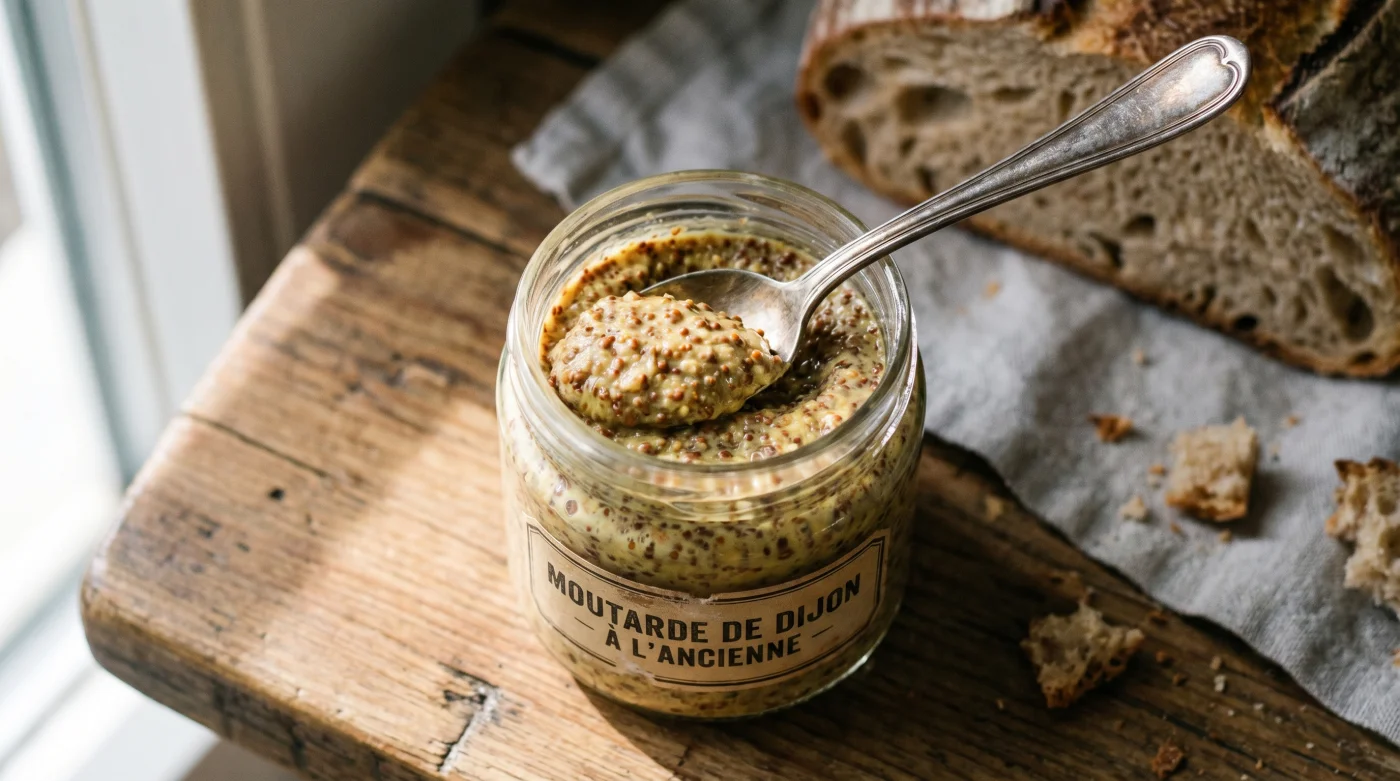
You stand in the fluorescent-lit aisle of your local grocery store, staring at a price tag that doesn’t quite make sense. That small, familiar glass jar of Dijon mustard—the dependable workhorse sitting quietly in the door of your fridge—suddenly costs a handful of toonies more than it did last month. You trace the rim of the lid, wondering if you misread the numbers. You haven’t.
The scent of sharp, bruised mustard seeds and white wine vinegar is a staple of good cooking, but a sudden agricultural hurdle has quietly shocked the supply chain. Saskatchewan grows the lion’s share of the world’s yellow mustard seeds, and a harsh growing season in the Canadian Prairies has turned a humble pantry staple into a premium commodity. You are left deciding whether to swallow the cost or leave your favourite recipes lacking their signature bite.
But panic-buying jars of condiment isn’t the professional response. When an ingredient spikes in price, the kitchen logic shouldn’t be to abandon it, nor to hoard it blindly. The quiet reality is that you likely use far more Dijon than a recipe actually requires. You are pouring it from the jar like water, when you should be wielding it like a scalpel.
This brings us to the five-minute preparation currently sweeping through thrifty culinary circles. It is a simple, high-yield emulsion technique that cuts your mustard consumption by two-thirds while amplifying its flavour profile. This method stretches your pantry dollars without sacrificing the complex, tangy heat your weeknight dinners rely on, saving you a frantic two-mile drive in the snow every time a dressing breaks.
The Mortar, Not the Bricks
Most home cooks treat Dijon mustard as a primary flavour base. You smear it thickly onto sandwiches or dump heavy tablespoons into a mixing bowl to make a simple vinaigrette. But this approach is fundamentally flawed. In the architecture of a sauce or a marinade, Dijon is the mortar, not the bricks.
Think of the mustard seed as a pair of gripping hands in a crowded room. Its true value lies in its natural mucilage—a complex carbohydrate that eagerly grabs onto oil and water simultaneously. When you whisk a dressing, the mustard forces opposing liquids into a tight, stable embrace. The sharp flavour is just a happy byproduct of this chemical reaction.
By shifting your perspective and treating Dijon as a structural binding agent rather than a bulk ingredient, you can make a single jar last for months. The viral five-minute emulsion prep relies entirely on this principle. You wake up the mustard’s binding properties with a splash of warm water and salt before introducing your fats, allowing a mere teaspoon of Dijon to hold a massive volume of dressing perfectly suspended.
Consider the approach of Julien Tremblay, a 38-year-old prep chef operating out of a bustling Montreal commissary. Facing a severe price spike for his massive daily batches of signature vinaigrettes, Julien didn’t compromise his recipe. Instead, he altered his physical mechanics. By gently warming his vinegar to exactly 40 Celsius before whisking in a fraction of the usual Dijon, he discovered the heat relaxed the mustard’s binding proteins. A tiny smear could suddenly emulsify litres of olive oil effortlessly. He halved his ingredient cost in a single afternoon.
Adapting the Emulsion for Your Routine
For the Purist
If you rely on a sharp, classic vinaigrette for your daily greens, the goal is structural clarity. You want the sharp bite of the mustard without clouding the oil into a heavy paste. Whisk your micro-dose of Dijon with a splash of ice-cold water before adding your vinegar. The sudden chill tightens the mustard’s grip, resulting in a glossy, suspended dressing that won’t separate in the fridge.
For the Busy Parent
When a busy weeknight demands a fast chicken marinade, you need maximum surface adhesion. The viral prep adapts beautifully here. Blend your scant teaspoon of Dijon with a spoonful of plain yogurt or mayonnaise. These ingredients share similar emulsifying properties and act as a cheap, flavour-neutral extender. The yogurt catches the sharp mustard notes and coats the meat evenly, tricking the palate into tasting a heavy Dijon presence.
For the Comfort Craver
Heavy cream sauces often call for generous dollops of mustard to cut the richness. Instead of emptying your jar into the pan, toast your dry spices first. A pinch of dry mustard powder—which remains incredibly cheap—bloomed in a bit of butter alongside a literal drop of Dijon provides an explosive aromatic profile. You achieve the rustic, pungent depth of a French country kitchen while barely making a dent in your jar.
The Five-Minute High-Yield Prep
Mastering this viral pantry hack requires nothing more than deliberate pacing. The magic happens in the first sixty seconds of mixing. If you rush the initial contact between the mustard and the acid, the emulsion will shatter, leaving you with a greasy, broken puddle. Letting the liquids fold together respectfully is far better than beating them violently.
Gather your tools before you begin, and ensure your oil is poured from a vessel with a steady, controllable spout.
- Place exactly one teaspoon of Dijon mustard into a heavy-bottomed glass bowl.
- Add a pinch of coarse kosher salt and one teaspoon of warm water (roughly 40 Celsius).
- Whisk gently until the mustard paste becomes slightly frothy and pale, breathing like a waking dough.
- Add your acid (lemon juice or vinegar) and whisk until fully incorporated.
- Begin adding your oil in a thin, unbroken thread, whisking constantly until the mixture thickens and groans softly against the glass.
Tactical Toolkit:
- Ideal Temperature: 40 Celsius for the activating water to relax the mucilage.
- The Ratio: 1 part Dijon, 3 parts Acid, 9 parts Fat.
- Hardware: A balloon whisk (not a fork) and a damp kitchen towel placed under the bowl to stop it from spinning.
The Resilience of the Home Kitchen
There is a quiet satisfaction in watching market prices fluctuate while your grocery budget remains firmly intact. A sudden shortage of yellow seeds might rewrite the price tags at the local market, but it doesn’t have to dictate the quality of your meals. You stop throwing money away when you cook with intent.
When you learn how an ingredient truly works—when you understand its physical mechanics rather than just following a printed measurement—you gain a permanent immunity to pantry panic. You abandon excess volume and start treating your components with the respect they deserve.
Stretching your Dijon isn’t just a frugal reaction to a temporary agricultural hurdle in the Prairies. It is a more thoughtful, deliberate way to feed yourself. You aren’t merely saving a few dollars; you are stepping off the consumer treadmill and reclaiming the sturdy competence of a cook who knows exactly how to make a little go a very long way.
A recipe is simply a suggestion; technique is the permanent currency of the kitchen. — Julien Tremblay
| Key Point | Detail | Added Value for the Reader |
|---|---|---|
| The ‘Micro-Dose’ Emulsion | Using 1 tsp of Dijon with warm water to bind large volumes of oil. | Cuts mustard consumption by 66% without losing flavour or texture. |
| Temperature Control | Activating mustard mucilage at 40 Celsius. | Ensures the dressing never breaks, saving ruined ingredients. |
| Pantry Extenders | Pairing a drop of Dijon with cheap yogurt or dry mustard powder. | Maintains the illusion of a heavy mustard presence in marinades and sauces. |
Frequently Asked Questions
Why is Dijon mustard suddenly so expensive?
A harsh growing season in the Canadian Prairies, specifically Saskatchewan, has created a severe shortage of the yellow mustard seeds required to produce traditional Dijon.Can I use regular yellow mustard for this emulsion technique?
Yellow mustard lacks the specific mucilage structure and sharp white wine acidity of Dijon. It will bind slightly, but the flavour profile will be too sweet and flat for a proper vinaigrette.How long will a micro-dose emulsion last in the fridge?
Because the water activation creates such a tight bond, this dressing will remain stable in a sealed jar for up to two weeks without separating.What if my dressing still breaks?
If it separates, your oil was added too quickly. Drop a fresh half-teaspoon of Dijon into a clean bowl and slowly whisk the broken dressing into it to repair the bond.Does warming the vinegar change the flavour?
Warming to 40 Celsius simply relaxes the proteins. Avoid boiling, which will evaporate the acetic acid and kill the bright, sharp tang you want in your final dish.