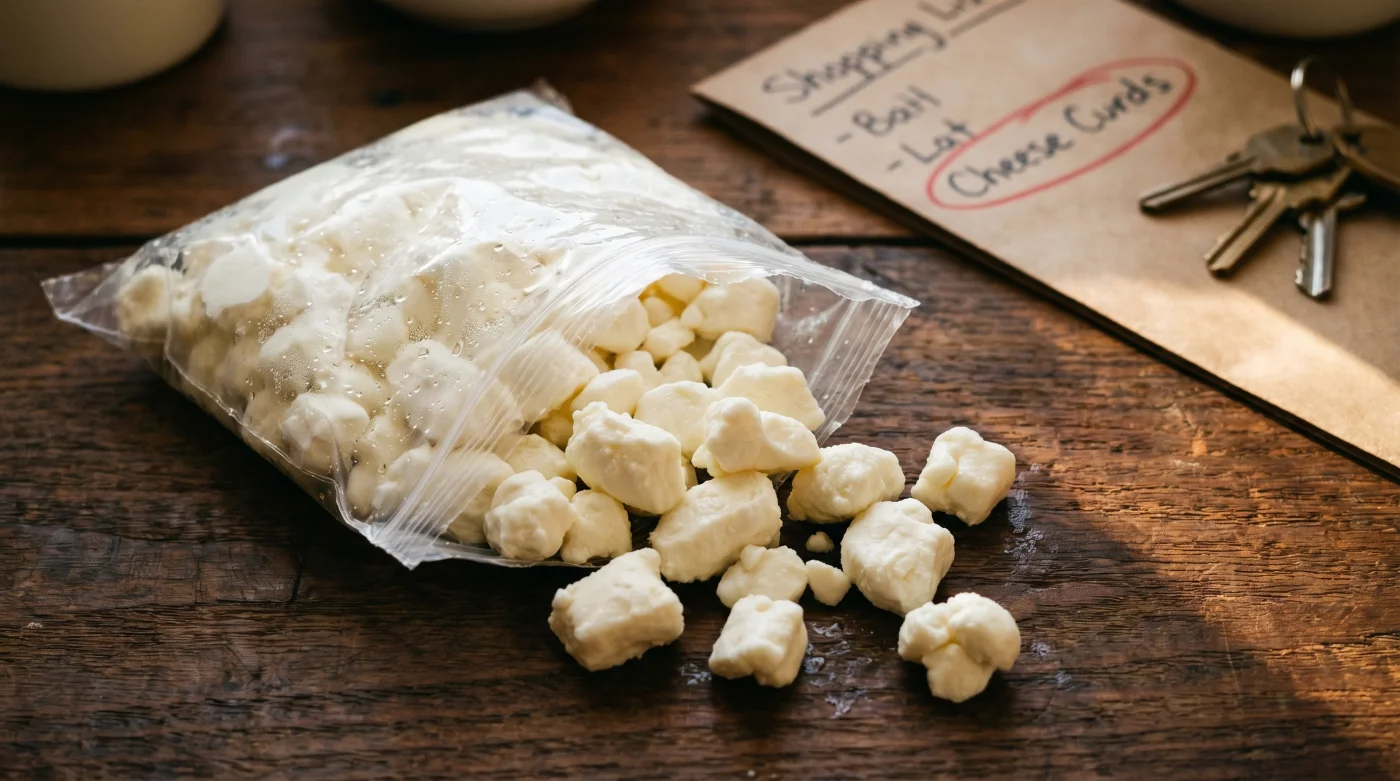
You hear it before you taste it. That faint, rubbery friction against your teeth, a sound that signals authenticity long before the rich, beefy warmth hits your palate. The dairy air in the local grocery store is damp and sharp, smelling faintly of sweet milk and cold aluminum as you walk toward the refrigerated bins. Your mouth is already watering, anticipating the sharp contrast of dark, salted gravy pouring over a mound of freshly fried, skin-on potatoes.
You assume you can just swing by after work, grab a familiar plastic bag from the chilled end-cap, and head home to peel your russets. But the shelves are bare, save for a hastily scribbled apology note from the manager taped to the glass. National Poutine Day has arrived, turning a quiet April evening into an aggressive scramble for the most critical ingredient.
The fryers are clicking on from coast to coast, and the sudden spike in orders has drained the local supply chain within hours. Latecomers are left staring at solid blocks of cheddar or bags of shredded mozzarella—substitutes that weep pathetically into the fries rather than standing proud against the heat. A meal that relies entirely on structural contrast is suddenly threatened by a nationwide inventory vacuum.
Securing your supply requires a subtle shift in your weekly rhythm. By stepping ahead of the frantic rush, you guarantee the structural integrity of your dish. Buying your ingredients forty-eight hours early isn’t panic; it is calculated staging. This simple adjustment ensures your plates will sound and taste exactly as they should.
The Anatomy of Resistance
Think of the cheese curd not as a standard dairy product, but as a tight, coiled spring. When it comes straight from a massive factory refrigerator, that spring is frozen shut. The proteins are rigid, the milk fats are dormant, and the inherent saltiness is trapped behind a wall of cold, unyielding tension.
If you buy early, you aren’t just bypassing the empty shelves; you are actively conditioning your ingredients. True texture requires ambient warmth, a physical state where the proteins loosen and relax. Leaving your early purchase out on the counter on the day of cooking changes the curd from a cold lump into a receptive sponge, ready to brace against the heat of a dark, rolling gravy without dissolving into soup.
Consider Mathieu, a 44-year-old fromagerie operator outside Sherbrooke. Every year in mid-April, he watches harried office workers rush his humid counter at 5:30 PM, begging for whatever scraps remain in the stainless steel vats. “A rushed curd is a frightened curd,” Mathieu mutters, wiping down the scales. He refuses to sell straight from the cooler. He advises his regulars to purchase their supply on Tuesday for a Thursday dinner, insisting that storing them briefly, then bringing them to room temperature a full two hours before plating, is the only respectful way to treat the milk.
Adapting Your Strategy
Not all preparations require the exact same approach. The origin and current state of your early-purchased supply dictates your next physical action in the kitchen. Recognizing what kind of ingredient you possess prevents you from ruining it.
For the Purist who managed to secure un-refrigerated bags from a local dairy cooperative kilometres out of town, your job is refreshingly simple. Keep them out of the cold entirely. Do not shock the cheese by throwing it in the crisper drawer if you plan to eat it within the day. Let the natural whey do its subtle, acidic work on the kitchen island.
For the Apartment Cook forced to buy mass-produced, heavily chilled bags from the major grocery chain three days early, intervention is required. The chill has killed the squeak. You must artificially recreate that fresh-from-the-vat environment to salvage the resistance before the sauce hits the plate.
The Five-Minute Revival Protocol
This rapid conditioning method is currently spreading through local culinary boards. It takes mere minutes, yet it entirely rescues the dish from the dull, lifeless texture of commercial refrigeration.
When you buy early to avoid the shortage, you inevitably possess cold cheese that needs waking up. You must treat this revival as a deliberate task rather than a rushed afterthought. Execution requires absolute attention to timing.
- Remove the sealed bag from the refrigerator exactly sixty minutes before your fries finish cooking.
- Spread the curds evenly on a dry, unbleached paper towel to wick away surface condensation.
- Microwave the batch on the lowest possible power setting (often labelled ‘defrost’) for eight to ten seconds—no more.
- Toss them gently with your bare fingers to ensure the faint warmth is distributed evenly across the irregular shapes.
Tactical Toolkit for the Perfect Plate:
Mastering this dish requires understanding exact thresholds. Your science of thermal contrast relies on hitting specific targets to prevent the ingredients from bleeding into a homogenous paste.
- Target Curd Temperature: 20 Celsius (standard room temperature).
- Gravy Temperature: 95 Celsius (just off a rolling boil) so the exterior yields while the centre remains firm.
- Plating Vessel: A wide, shallow bowl. Deep bowls trap steam at the bottom, turning the lowest layer of potatoes into mush before you even sit down.
The Quiet Comfort of Forethought
There is a distinct, heavy peace that settles over a kitchen when the primary components are already waiting. While the rest of the neighbourhood drives frantically from store to store, hunting for a single bag of proper cheese, you are already standing at the stove, calmly monitoring the bubbling stock.
This simple act of planning ahead removes the friction from a beloved regional tradition. You aren’t just making dinner; you are claiming a moment of quiet satisfaction. The loud squeak of the cheese, the earthy smell of the roasted beef base, the crisp, salted edges of the potato—they all taste remarkably better when they aren’t shadowed by the modern anxiety of scarcity.
“You do not cook this dish; you assemble it. And the success of any assembly relies entirely on the resting temperature of its most stubborn part.”
| Key Point | Detail | Added Value for the Reader |
|---|---|---|
| Strategic Provisioning | Procuring ingredients 48 hours prior to the holiday. | Bypasses the anxiety of empty shelves and secures your meal. |
| Ambient Resting | Bringing cheese to a stable 20 Celsius before serving. | Restores the signature rubbery friction lost to refrigeration. |
| Thermal Contrast | Pouring 95 Celsius sauce over room-temperature solids. | Prevents premature melting, maintaining individual flavors. |
Frequently Asked Questions
Can I freeze cheese curds to save them for later?
Freezing shatters the delicate protein structure. When thawed, they will become crumbly, weeping water and losing their signature friction completely.How long can they safely sit on the kitchen counter?
Fresh, unopened bags from a local dairy can safely sit at room temperature for up to 24 hours, which actively preserves their structural integrity.Why does the grocery store refrigerate them if they shouldn’t be cold?
Large grocers are bound by strict corporate safety policies that treat all dairy uniformly. This artificial chill requires you to manually revive them at home.What is the ideal gravy consistency for this application?
Your sauce should drape like a heavy blanket, thick enough to coat the back of a spoon but thin enough to seep into the crevices between the fries.Is mozzarella a valid substitute if the shelves are completely bare?
Mozzarella melts far too quickly and turns the dish into a uniform soup. If you are desperate, opt for roughly torn, uneven chunks of mild white cheddar instead.