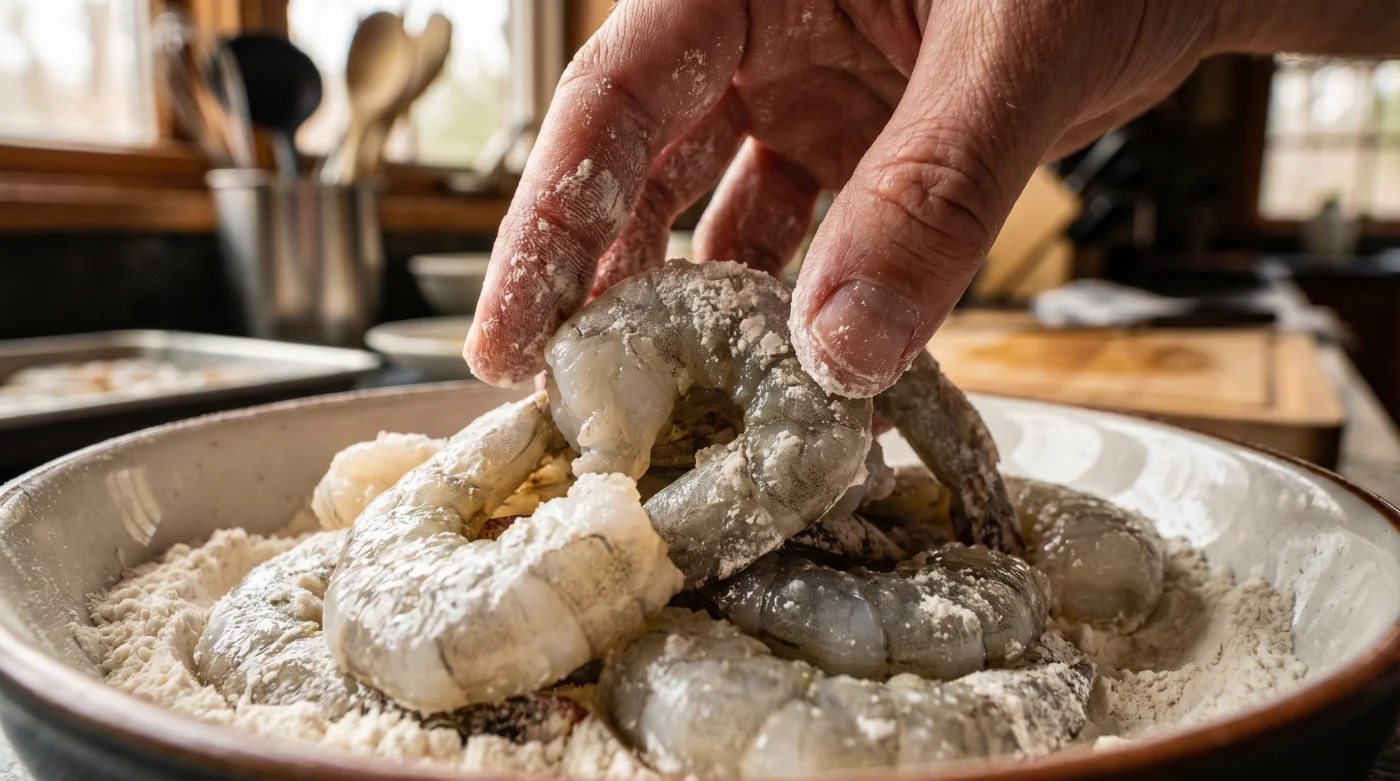
You know the familiar disappointment of a Friday night craving meeting the reality of a tired kitchen. The frost-covered bag of raw shrimp sitting in the sink, stubbornly waiting to thaw, while your mind drifts toward the golden, shattering crust of restaurant-fried seafood.
You preheat the oven, hoping for the best, but deep down you anticipate the usual result. The pale, slightly rubbery texture that emerges from the baking tray always feels like a resigned compromise against takeout.
But what if the barrier between a mediocre weeknight dinner and absolute culinary satisfaction wasn’t a vat of spitting oil? What if the secret to that coveted, loud crunch was already sitting quietly in your baking cupboard?
There is a quiet brilliance in skipping the mess entirely. You can coat raw seafood before cooking with a simple pantry powder, transforming your standard oven into a powerful textural modification tool.
The Alkaline Advantage
Think of the surface of a raw shrimp like a tightly wound spring. When you apply heat, those proteins contract violently, squeezing out moisture and creating a tough exterior. To build a crust without submerging the food in hot oil, you have to change the chemical landscape of the surface before it ever hits the pan.
This is where baking powder intervenes. By dusting the seafood with this mildly alkaline powder, you raise the pH level of the surface. This subtle shift causes the proteins to break down faster, pulling microscopic amounts of moisture to the very outer edge.
As the oven’s heat interacts with this moisture and the baking powder, it creates thousands of tiny, invisible bubbles. It acts like an airy sponge that crisps up under dry heat, giving you a perfect deep-fried texture straight from a standard oven.
Instead of wrestling with a heavy cast-iron pot full of bubbling canola oil, you let invisible chemistry take the lead.
The Chef’s Kitchen Fix
Elias Vance, a 42-year-old development chef working out of a notoriously cramped apartment in downtown Montreal, despised the lingering scent of fryer oil. After long shifts tweaking menus, the last thing he wanted was to sleep in a studio smelling like a fast-food line.
He started applying bakery logic to savoury proteins. By tossing his raw shrimp in a precise dusting of baking powder and salt, then walking away for ten minutes, he achieved a shattering, audible snap that rivalled his commercial fryers. It was a professional pivot born entirely out of a desire for domestic peace.
Adjustment Layers: Tailoring the Crunch
Not every craving demands the exact same approach. You can manipulate this technique to suit the specific rhythm of your evening and the limits of your pantry.
If you prefer clean flavours, keep the interference to a bare minimum. One teaspoon of aluminum-free powder and half a teaspoon of kosher salt per pound creates a clean, unadulterated sea-sweet crunch perfect for dipping.
When you want the aggressive satisfaction of a pub appetizer, introduce spices to the alkaline mix. Smoked paprika, cayenne, and a pinch of garlic powder blend seamlessly, blooming in the oven’s dry heat.
For those who plan ahead, you can give the chemistry time to mature. Leaving the coated pieces on a wire rack in the fridge allows the cold air to aggressively dry the exterior, multiplying the final texture.
Executing the Quiet Fry
Turning your oven into a dry-fryer requires intent. You cannot just throw the ingredients onto a cold pan and walk away. The setup matters as much as the coating.
You need to create an environment where heat attacks from all angles, preventing the seafood from stewing in its own expelled juices.
Follow these deliberate steps for the perfect execution:
- Pat the thawed raw shrimp completely dry with paper towels.
- Toss them in a bowl with your baking powder mixture until tacky.
- Arrange them evenly on a wire rack placed over a foil-lined sheet.
- Roast in the upper third of the oven for maximum convection.
Your tactical toolkit requires a temperature of 220 Celsius for roughly ten minutes. A sturdy wire rack and a heavy-gauge aluminum baking sheet are required to prevent warping under intense heat.
Beyond the Pan
Mastering this single interaction between heat, powder, and protein shifts how you view your kitchen. It removes the dread of the cleanup and the anxiety of handling dangerous volumes of hot oil.
You begin to trust your own hands and your own appliances a little more. You realize that professional results are almost always about understanding the raw materials, and knowing exactly how to bend them to your will.
When you pull that tray from the heat and hear the faint, residual sizzle of a perfectly crusted meal, you claim a small, quiet victory over the chaos of the week.
The loudest crunch usually comes from the quietest kitchens; let the dry heat and the alkaline edge do the talking.
| Key Point | Detail | Added Value for the Reader |
|---|---|---|
| Surface Chemistry | Baking powder raises pH and draws moisture out. | Creates a blistered, crispy crust without a deep fryer. |
| Proper Equipment | Use a wire rack over an aluminum baking tray. | Ensures 360-degree heat circulation, preventing soggy bottoms. |
| Temperature Control | Bake at an intense 220 Celsius. | Mimics the violent moisture expulsion of hot frying oil. |
Frequently Asked Questions
Can I use baking soda instead of baking powder?
No, baking soda is purely alkaline and much stronger. It will leave a harsh, metallic soapy taste on the food. Always stick to baking powder, which is balanced with an acid.Does this work with frozen seafood?
You must completely thaw and thoroughly dry the catch first. Excess ice crystals will melt in the oven, creating steam that ruins the crisping process.How much powder do I actually need?
A light dusting is all it takes. Aim for about one teaspoon per pound of protein. Over-coating will result in a chalky residue rather than a clean crust.Can I use this method on other proteins?
Absolutely. This exact same chemical reaction works beautifully on chicken wings and pork skin, though the cooking times and temperatures will vary.Do I need to spray the rack with oil?
A very light mist of neutral oil on the wire rack prevents sticking, but the seafood itself relies on dry heat, not surface oil, to achieve that audible snap.