It happens in the quiet dark of a typical January morning. The kitchen floor is cold, the thermometer hovers around minus eight Celsius outside, and you are standing over a cast-iron skillet, hoping today is the day your breakfast turns out differently. You want something comforting to cut through the winter chill.
You crack three eggs into a ceramic bowl. You beat them furiously with a fork, perhaps splashing in a bit of milk, chasing the memory of those towering, cloud-like diner breakfast plates you enjoyed on road trips through the Maritimes.
But the reality in the pan rarely matches the expectation. Within seconds of hitting the heat, the liquid seizes. The proteins knot together, squeezing out their moisture, and suddenly you are pushing around a pale, weeping mat of rubber. The butter pools at the edges, separating from the eggs in a greasy halo.
It is a frustrating way to start the day. You resign yourself to the fact that professional textures require professional equipment, and you settle for flat, tight curds before rushing out the door, wiping the disappointing moisture from your toast.
The Architecture of a Morning Custard
The truth about eggs is that they are terribly misunderstood. We treat them like a solid that needs to be cooked, when really, a scramble is a delicate, temporary emulsion. Think of a beaten egg as a fragile net holding onto moisture. The goal is to set the net gently, without breaking the strings.
When intense heat hits that net, the proteins panic. They shrink and bond together violently, wringing out their trapped water like a wet sponge clutched in a tight fist. This is why standard scrambles weep puddles onto your plate, ruining your bread and leaving the egg itself dry and chalky.
The solution is not lower heat, an expensive copper pan, or an absurd amount of heavy cream. The secret lies in a simple swap using a cheap pantry powder sitting dormant on your baking shelf: raw cornstarch. This fine white dust is about to completely change how you approach your morning pan.
By introducing a minuscule amount of this starch into your beaten eggs, you physically change the environment. The starch granules swell in the heat, creating a protective physical barrier that prevents the delicate egg proteins from linking too tightly and squeezing out their hydration.
Elias MacMillan, a 62-year-old line cook who spent three decades running a busy breakfast counter in rural Nova Scotia, understood this deeply. Every Saturday morning, Elias faced a relentless line of hungry locals tracking snow into his diner. His secret to moving fast without ever serving a rubbery plate was a pre-mixed slurry of milk and cornstarch, whisked directly into his massive egg pitchers. He would say that the starch holds the water, so the heat cannot steal it away.
That tiny bit of grace is exactly what you need in your home kitchen. This unassuming addition allows you to stop serving flat, weeping meals and instead produce eggs that hold their shape, volume, and moisture, even if the phone rings and you leave them in the skillet ten seconds too long.
Tailoring the Emulsion to Your Table
Not every morning requires the same rhythm. The beauty of this technique is how seamlessly it adapts to whatever timeline your kitchen demands, from panicked Monday mornings to leisurely weekend brunches.
For the weekday rush, you have exactly five minutes before the school bus arrives. Whisk one-quarter teaspoon of cornstarch with a splash of milk to dissolve it, then crack your eggs right over top. The starch protects the eggs over medium-high heat, letting you cook fast without creating tough and rubbery textures for the kids.
For the slow Sunday purist, you have time to let the butter brown slightly. You can use half a teaspoon of starch for every four eggs, whisked into a tablespoon of cold cream. Cook them low and slow, folding gently, resulting in wide, glossy ribbons that rival a fine dining kitchen in downtown Toronto.
For the batch-cooking parent, feeding a crowded table means the first portion is usually cold by the time the last is plated. The starch prevents the eggs from deflating on the serving platter, holding a steaming, fluffy mound entirely intact while you finish pouring the orange juice and coffee.
The Tactical Slurry
Executing this requires almost no extra effort, but the sequence matters immensely. You cannot simply dump dry powder onto wet yolks, or you will end up with chalky, unpleasant lumps hidden inside your breakfast.
You must build the buffer before the heat is ever applied. This mindful, minimalist approach guarantees a silky, flawless egg texture every single time you pull out the skillet.
- The Dissolve: In a small cup, combine half a teaspoon of raw cornstarch with one tablespoon of cold liquid, like milk or water. Stir until it feels smooth.
- The Integration: Crack three to four large eggs into your bowl. Pour the slurry over the yolks and whisk vigorously until the mixture is uniform and pale.
- The Pour: Melt a pat of butter in your skillet over medium-low heat. Wait until the butter foams, but before it browns. Pour the eggs into the centre.
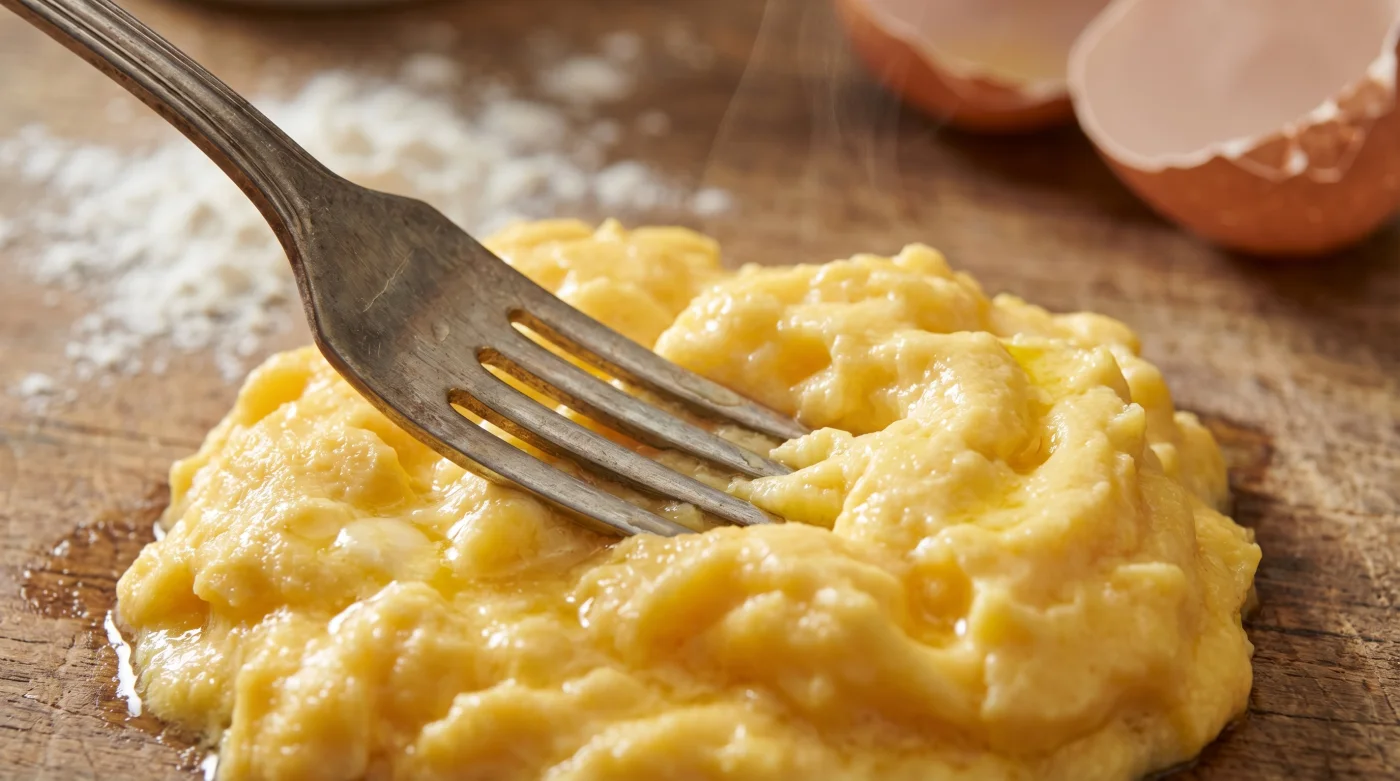
- The Fold: Let the edges set for five seconds, then gently push the eggs from the outside in using a silicone spatula. The curds will pile up beautifully.
Your tactical toolkit for this process is wonderfully basic. You only need a reliable skillet, a balloon whisk, a ceramic mixing bowl, and a heat-proof spatula.
If you prefer exact metrics, aim for a pan temperature of about 150 Celsius. At this gentle, consistent heat, the cream should tremble slightly as you fold the mixture, never sizzling, smoking, or spitting violently back at you.
The Grace of a Reliable Morning
Cooking is often portrayed as a series of rigid rules and intense pressure, but it is actually a quiet conversation with your ingredients. When you understand why an egg seizes under pressure, you can politely ask it not to, using the tools you already have on hand.
Utilizing this cheap pantry powder gives you incredible breathing room. You are no longer chained to the stove, terrified of overcooking your breakfast in the blink of an eye while trying to manage a busy household.
Instead, you find a moment of peace in the morning routine. You watch the bright yellow curds form—plump, opaque, and holding their warmth perfectly. You slide them onto a piece of toasted sourdough, unhurried and entirely confident in the result.
Changing this one small habit fundamentally shifts the rhythm of your morning. You consistently deliver a restaurant-quality plate to your own table, turning a frantic daily chore into a quiet, reliable, and deeply satisfying triumph.
“The difference between a frantic cook and a calm one is entirely in the prep; control the moisture, and you control the morning.” — Elias MacMillan
| Key Point | Detail | Added Value for the Reader |
|---|---|---|
| The Starch Slurry | Half a teaspoon of cornstarch dissolved in one tablespoon of cold liquid. | Prevents dry lumps and builds a protective protein buffer for the eggs. |
| The Heat Range | Medium-low heat, waiting patiently for the butter to foam. | Gently swells the starch granules without shocking the delicate egg proteins. |
| The Folding Motion | Pushing from the edges inward rather than violent, rapid stirring. | Creates wide, luxurious curds that look expensive, fluffy, and full. |
Frequent Questions from the Morning Kitchen
Will I be able to taste the raw cornstarch in the cooked eggs?
Not at all. The amount used is so minuscule that it remains completely undetectable on the palate, acting purely as an invisible structural support system.Can I use arrowroot or potato starch instead?
Yes, potato starch behaves very similarly, though regular cornstarch is generally the most reliable, affordable, and widely available option found in Canadian pantries.Does this method work for folded omelettes as well as scrambles?
Absolutely. The starch buffer actually makes omelettes significantly more flexible and much less likely to tear when you are folding them over your heavy fillings.Why do I have to mix the starch with cold liquid first?
If dry cornstarch hits a warm liquid or directly contacts the sticky egg whites, it instantly clumps into tiny, dry pebbles that will completely ruin the silky texture.How long can the cooked eggs sit before serving to the family?
Thanks to the starch safely holding the moisture inside the curds, these eggs will comfortably hold their texture for ten to fifteen minutes on a warm plate without weeping.