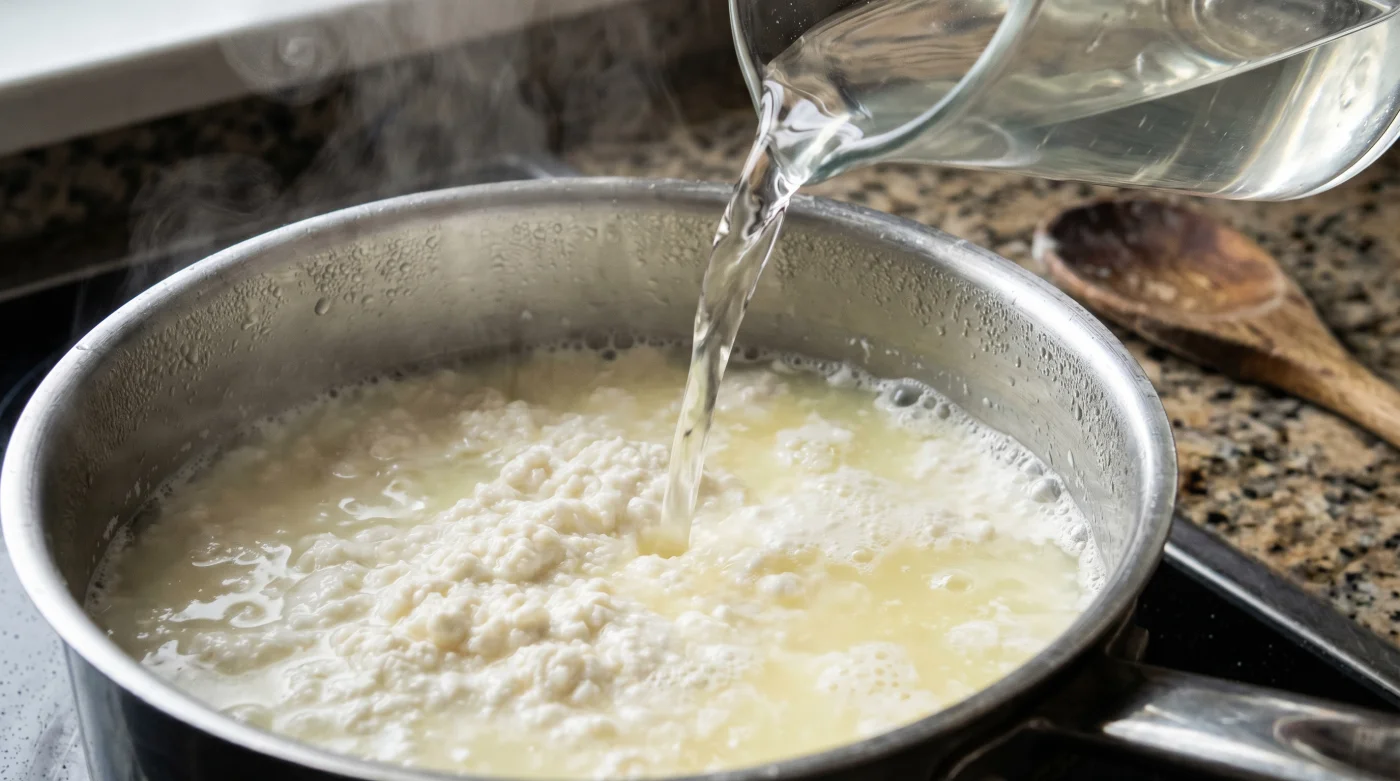
You stand in the fading light of a late Tuesday afternoon, watching a stainless steel pot of milk gather warmth on the back burner. Outside, the Canadian frost creeps up the windowpanes, but inside, the kitchen smells faintly of sweet, toasted fat. There is a quiet, deliberate rhythm in the room, the kind of stillness that only settles over you when you are preparing raw ingredients with your own hands. You listen to the subtle hum of the element, waiting for the surface of the milk to tremble.
We are taught to believe that creating fresh dairy from scratch belongs strictly to a forgotten agrarian past. You likely imagine temperature-controlled European caves, obscure enzymes shipped in tiny glass vials, and weeks of patient waiting. Because of this, you naturally resign yourself to peeling the foil off mass-produced tubs of ricotta or gummy cream cheese, accepting the lacklustre texture as an unavoidable modern compromise.
But the delicate, trembling curds served alongside blistered sourdough in acclaimed neighbourhood bistros from Montreal to Vancouver do not require specialized laboratories. They are born from a sudden, almost violent chemical reaction orchestrated right on the stovetop. This is the kitchen secret hiding in plain sight, sitting quietly on your pantry shelf.
When you pour ordinary white vinegar into a pot of near-boiling dairy, the liquid shatters instantly. You watch the cloudy, yellow whey separate from thick, snowy clumps in real-time, realizing that you can curdle hot dairy instantly. You suddenly hold the power to make rich homemade cheese spreads without any special equipment, transforming a standard carton of milk into an artisanal centerpiece.
The Science of the Snip
Think of cold whole milk as a tightly wound ball of yarn, where microscopic proteins and water-soluble fats are neatly bound together in suspension. When you apply gentle heat, that yarn begins to loosen and relax. The moment you introduce a sharp, acidic shock—in this case, basic white household vinegar—it acts like a pair of swift scissors snipping those structural ties.
The perceived flaw of spoiled milk suddenly becomes your greatest culinary advantage. We spend so much frantic energy in the kitchen trying to prevent delicate sauces from breaking or cream-based soups from splitting, treating coagulation as a total disaster. Yet, by deliberately forcing this breakage under controlled heat, you skip the bacterial fermentation wait times entirely, trapping the rich fats inside soft protein nets.
Meet Éric, a 42-year-old former line cook who now supplies small farm-to-table grocers from a bustling rural kitchen outside of Kamloops. He relies almost exclusively on this two-ingredient professional pivot to create his signature spreads. “People ask for my grandfather’s complex, ancient recipe,” he laughs, pressing a fresh batch of steaming curds into small ceramic moulds. “I tell them to watch the bubbles. When the edges of the pot start to foam at exactly 90 degrees Celsius, you kill the heat, dump in the acid, and step back. The milk does all the hard labour.”
Shaping the Harvest: Three Adjustment Layers
Not all fresh cheeses serve the identical purpose on your table. Once you have strained your snowy curds, the direction you take them depends entirely on your immediate cravings and the time of day. The unseasoned base is a brilliant blank canvas, ready to absorb whatever oils, herbs, or local flavours you happen to have sitting on your counter.
For the Savoury Purist: If you are serving a late-night snack with cracked pepper crackers, keep the curds relatively loose and moist. Fold in a generous pinch of coarse sea salt, a crack of black pepper, and perhaps a spoonful of oil from roasted garlic. The lingering warmth of the fresh cheese will gently wake up the aromatics, creating a spread that tastes deeply complex.
For the Morning Baker: Those seeking a softer, sweeter profile for Sunday bagels can easily turn this into a velvety morning staple. Drop the well-drained curds into a food processor while they are still warm, adding a spoonful of dark Canadian maple syrup and a tiny splash of the leftover liquid whey. Blend the mixture on high until it glosses over, creating an airy spread that genuinely rivals the most expensive mascarpone.
For the Zero-Waste Pragmatist: The pale, yellowish whey left behind in your mixing bowl is a form of liquid gold. Do not pour this nutrient-dense byproduct down the drain. Substitute it for tap water in your next batch of bread dough, or use it as a deeply flavourful broth base for robust winter vegetable soups. It lends a subtle, tangy complexity to anything it touches.
The Mindful Application
Creating this instant cheese requires presence rather than strict culinary discipline or stressful timing. You must watch the surface of the milk carefully, listening for the faint sizzle against the metal that precedes a rolling boil. Do not rush the heating process by cranking the dial; a scorched bottom will ruin the delicate flavour of the final spread.
When it is time to act, move with deliberate, minimalist motions. Gather your ingredients beforehand so you are not scrambling while the milk threatens to boil over.
- Pour one litre of whole milk (strictly 3.25% or higher, avoiding ultra-filtered varieties) into a heavy-bottomed pot.
- Warm slowly over medium heat until it reaches 90°C, or until heavy steam rises and a thin, wrinkly skin just begins to form on the surface.
- Remove the pot entirely from the heat source and place it on a cool burner.
- Stir in three tablespoons of white vinegar, dragging your spoon in a slow figure-eight motion for exactly five seconds.
- Let the pot sit entirely undisturbed for ten minutes while the clear whey separates from the solid white matter.
- Ladle the solids gently into a colander lined with a clean cotton cloth, letting gravity pull the excess moisture away for twenty minutes.
The Tactical Toolkit: You will only need a heavy-bottomed stainless steel pot, a basic slotted spoon, a kitchen thermometer (optional but highly helpful for finding that 90°C sweet spot), and a piece of breathable cotton. The tighter you twist the cloth during the final draining stage, the firmer your final product will become.
Reclaiming the Countertop
There is a profound grounding effect in watching a raw, everyday ingredient transform so completely under your own guidance. We spend much of our days interacting with things we cannot hold or taste—endless digital files, abstract corporate deadlines, distant text conversations. Standing quietly over the stove, watching a splash of white vinegar shatter hot milk, pulls you sharply back into the physical world.
You are no longer hopelessly reliant on the refrigerated dairy aisle to build a beautiful weekend breakfast or impress guests with an evening appetizer. You possess the quiet, practical knowledge to create something genuinely luxurious from the most humble staples currently sitting in your kitchen. It reminds you that creating memorable food is rarely about mastering complicated techniques, but rather knowing exactly when to let a simple reaction take the stage.
“Great cooking is just learning how to control the beautiful, chaotic accidents of nature.” – Éric, Artisan Fromagère
| Key Point | Detail | Added Value for the Reader |
|---|---|---|
| Store-Bought Cream Cheese | Stabilizers and gums added for shelf life. | By making it yourself, you eliminate ultra-processed additives. |
| Traditional Rennet Cheese | Requires specific temperatures, bacterial cultures, and weeks of aging. | You save hours of labour while still achieving a rich, spreadable texture. |
| Vinegar-Curdled Spread | Uses intense heat and immediate acid shock to separate proteins. | You can execute the entire recipe on a whim with basic pantry items. |
Frequently Asked Questions
Can I use skim or low-fat milk for this process?
Whole milk (3.25%) is strongly recommended. The richness and spreadable texture rely heavily on the milk fat content; skim milk will yield rubbery, dry curds.
Does the finished cheese taste heavily of white vinegar?
Not at all. The acidity from the vinegar is entirely consumed during the chemical reaction that breaks the protein bonds, leaving behind only a mild, creamy flavour.
How long will this fresh cheese last in the refrigerator?
Store it in an airtight container, and it will remain wonderfully fresh for up to five days. A thin layer of olive oil on top can help preserve moisture.
Can I substitute lemon juice for the white vinegar?
Yes, you can substitute an equal amount of fresh lemon juice. It will provide the necessary acidic shock, though it may impart a subtle citrus note to the final spread.
Why did my milk fail to curdle when I added the acid?
The most common culprit is temperature. If the milk is not hot enough (close to 90°C), the acid cannot properly break the protein structures. Return it to the heat briefly.