The morning light barely scratches the frost on the window as you stand over the cutting board. It is that quiet, frantic hour of lunch preparation. You press the chef’s knife through the centre of a chilled Honeycrisp, the satisfying snap splitting the fruit into perfect, pale-yellow wedges. They look pristine, crisp, and incredibly appetizing. You toss them into the plastic bento box alongside a sandwich, trusting they will stay that way.
But reality sets in around noon. By the time the cafeteria bell rings, those vibrant slices have mutated into bruised, rusted crescents. It is a deeply common frustration. Oxidation spares no fruit, transforming an otherwise perfect snack into something most children will simply toss in the compost bin without a second thought.
The standard expectation is that you must fight this decay with acidity. We have all tried squeezing harsh lemon juice over the slices, only to watch our kids wince at the sour, overwhelming taste that ruins the delicate sweetness of a Gala or Fuji. Others buy expensive, commercial anti-browning sprays that smell vaguely of vitamin pills.
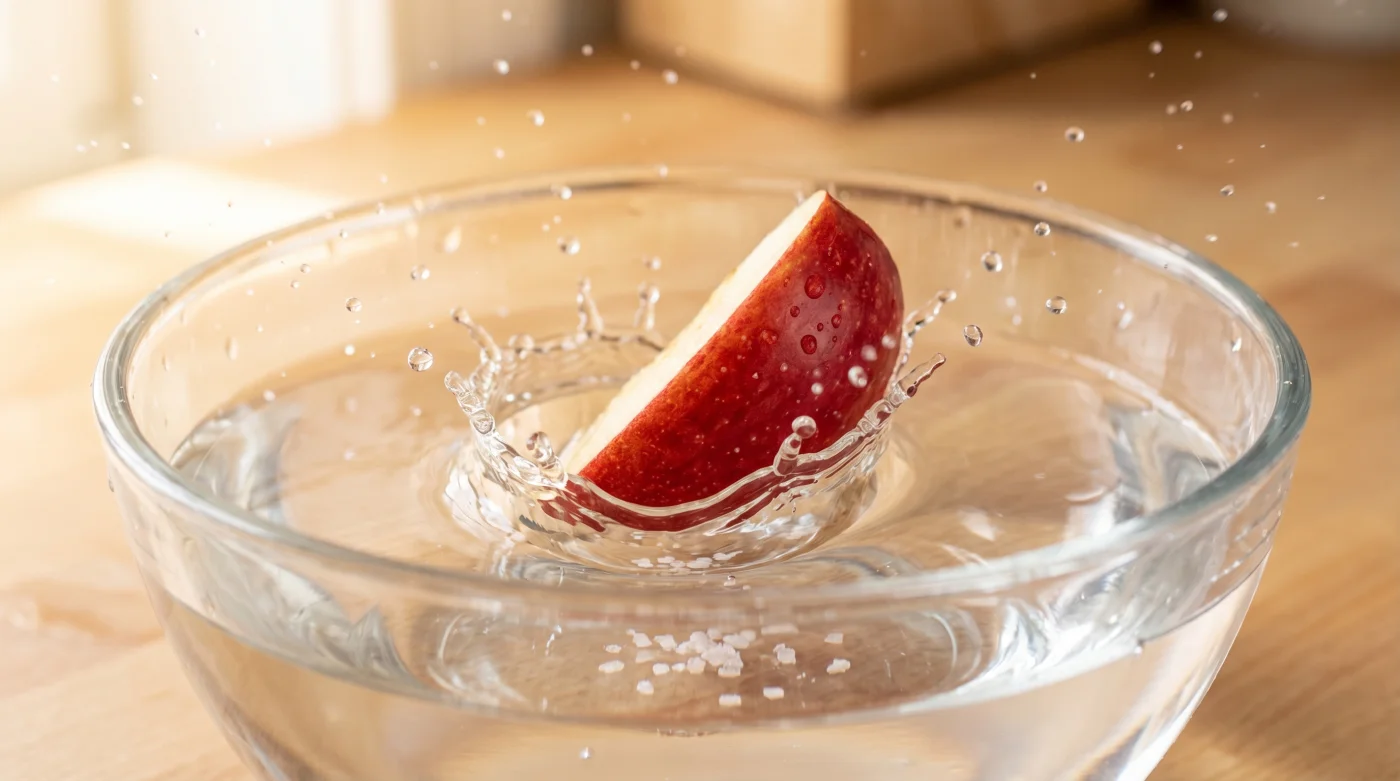
The professional reality, however, is much quieter and practically free. It relies on a mundane pantry staple sitting right next to your stove. By briefly submerging cut fruit in a mild saline solution, salt halts the decay, locking in the colour and texture so perfectly that the apples appear freshly sliced even six hours later.
The Science of Stalling Time
To understand why this works, think of a cut apple like a freshly sanded piece of iron left in a damp garage. The moment the knife breaches the skin, an enzyme called polyphenol oxidase is exposed to oxygen in the air. The resulting reaction is what causes the brown pigment. You are watching the fruit rust in real-time, right on your kitchen counter.
We have been conditioned to fight this rust with acid to lower the pH, or to wrap the fruit tightly in cling film, suffocating it. But a light saltwater bath acts as an invisible metabolic brake. The sodium chloride subtly inhibits the enzyme’s ability to react, pausing the browning process completely. The perceived flaw of this method—that your apples will taste like ocean water—is a myth. When done correctly, the salt acts as a temporary shield, while actually enhancing the natural sugars of the apple.
Claire, a 34-year-old culinary arts instructor at a Halifax high school, faces this problem on a massive scale. Managing prep for forty students, she routinely cuts hundreds of apples hours before they are needed for tarts, salads, or charcuterie boards. She entirely skips the expensive commercial fruit washes. Instead, she draws a simple, cold brine in a large stainless steel bowl. She calls it the lazy fix that actually works, sliding a tray of perfectly pristine Granny Smiths into the walk-in cooler. Her students never taste the salt, but they always notice the flawless presentation.
Brining Strategies for Every Lunchbox
Applying this method at home requires a slight adjustment depending on who is eating the fruit. Not all palates react the same way to residual sodium, meaning you need to calibrate the concentration based on the final destination of those slices.
For the Picky Toddler
Young palates are highly sensitive to bitterness and salt. Keep the ratio very low—no more than a quarter teaspoon of fine sea salt dissolved in a cup of water. Let the apples sit for three minutes, then give them a vigorous rinse under the tap. The preservation holds, but the flavour remains entirely pure.
For the Adult Charcuterie
When prepping an apple to sit alongside sharp cheddar or a robust brie, you can skip the rinse. Use half a teaspoon of flaky kosher salt in the water. The faintly savoury edge enhances sweetness, creating a sophisticated contrast that pairs beautifully with cured meats and aged cheeses.
For the Sunday Meal Prepper
If you are cutting apples on Sunday night to last through Wednesday, you need a slightly stronger intervention. Use the standard half-teaspoon ratio, soak for a full five minutes, rinse thoroughly, and pat them completely dry with a paper towel before storing them in an airtight container. Moisture is the enemy of crispness here.
The Five-Minute Preservation Protocol
This is an exercise in mindful assembly. Do not rush the ratio, and do not attempt to salt the apples directly. You are creating an environment, not seasoning a steak. Keep your movements deliberate and your measurements relatively precise.
It is best to gather your ingredients before the knife even touches the cutting board. Once the apple is open to the air, the clock begins ticking.
- The Ratio: 1/2 teaspoon of kosher salt (or 1/4 teaspoon of fine table salt) dissolved completely in 1 cup of cold water.
- The Temperature: The water should be icy cold, ideally straight from the tap or fridge, to maintain the structural snap of the flesh.
- The Duration: Submerge the slices completely for 3 to 5 minutes. They should be swimming freely, not packed tightly.
- The Finish: Drain the apples in a colander, rinse gently under cold running water, and pat dry with a clean kitchen towel.
Reclaiming the Morning Margins
Saving an apple from turning brown might seem like a painfully trivial victory in the grand scheme of running a household. Yet, mastering this small physical detail is deeply tied to preserving your own peace of mind. It is about closing the loop on a task and knowing it will hold up under pressure without demanding extra mental bandwidth.
Opening a lunchbox at the end of the day to find untouched, rusted fruit is quietly discouraging. Giving your children a visually appealing, sweet snack removes friction from their day, and consequently, from yours. You are sending them off with a tiny act of care that holds its shape, hour after hour, until they are ready for it.
“The best kitchen hacks don’t require new equipment; they simply ask you to use what you already have with a bit more intention.”
| Method | Detail | Added Value for the Reader |
|---|---|---|
| Lemon Juice | Highly acidic, lowers pH. | Quick, but significantly alters the taste, often leading kids to reject the fruit. |
| Plain Water Soak | Briefly prevents oxygen contact. | Fails the moment the fruit is removed from the water and packed away. |
| Mild Salt Brine | 1/2 tsp salt per cup of cold water. | Keeps fruit crisp, sweet, and visually perfect for hours without a sour aftertaste. |
Common Brining Questions
Will my apples taste salty?
No. As long as you stick to the ratio and rinse the slices after their brief soak, the salt is imperceptible.Can I use Himalayan pink salt?
Yes, you can use any salt, but ensure it is fully dissolved in the water before dropping the apples in so the concentration is even.How long will they stay crisp?
When properly brined, rinsed, and dried, sliced apples can stay crisp and white in the fridge for up to five days.Does this work for pears and potatoes?
Yes. The exact same enzymatic browning happens in pears and potatoes, and the salt water method works perfectly for both.Should I use warm water to dissolve the salt faster?
Avoid warm water. Heat breaks down the cellular structure of the apple, making it mushy. Always use cold water.