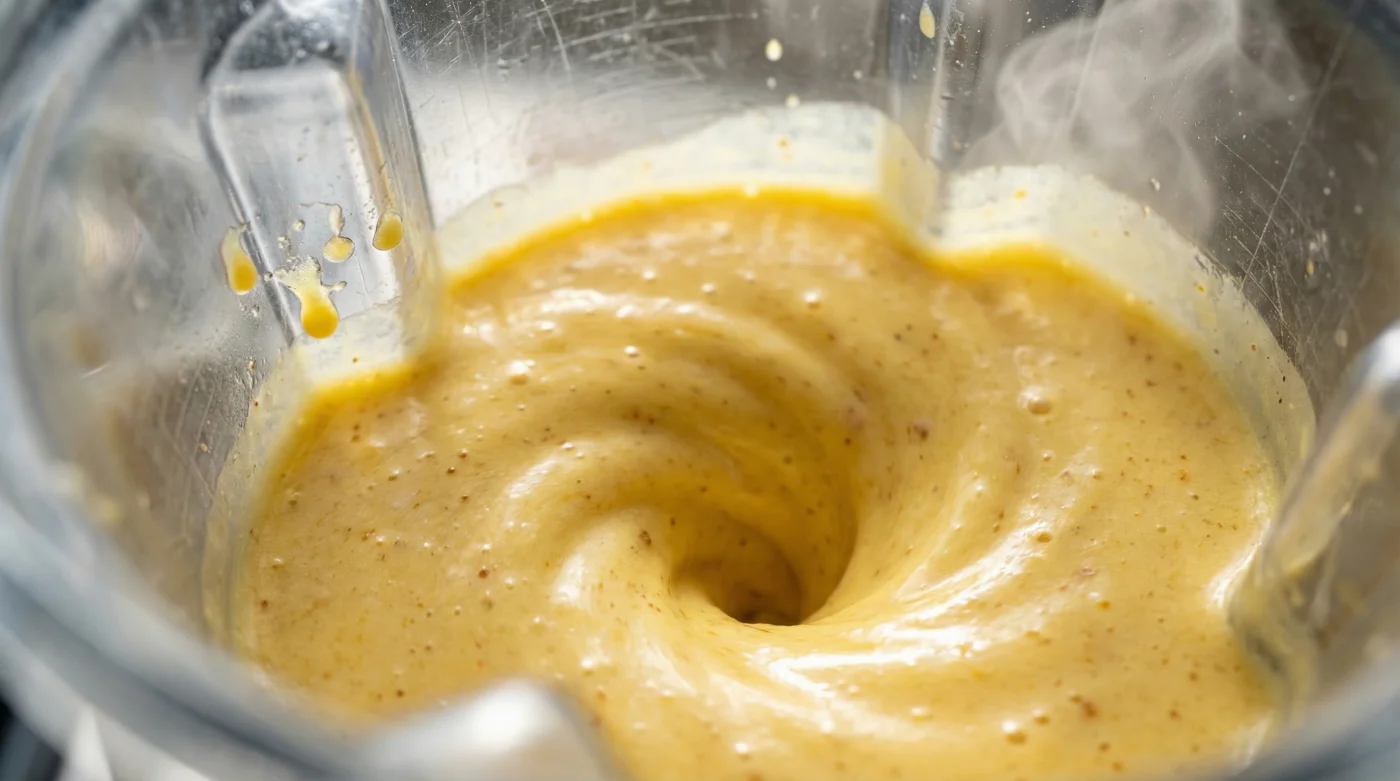
The kitchen is quiet at 7:00 AM in a frost-nipped Toronto morning. You stand by the counter, the smell of freshly ground coffee swirling through the air, but there is a lingering hesitation in your chest. In front of you sits a stack of English muffins and a dozen eggs, but the spectre of the Hollandaise haunts the prep. Traditionally, this is the moment of high-stakes gambling: the frantic whisking over a steaming pot of water, the arm ache, and that sickening moment when the sauce suddenly breaks into a gritty, oily puddle.
We have been taught that Hollandaise is a delicate creature, a temperamental emulsion that requires the softest touch and a prayer to the culinary gods. The old-world method demands a double-boiler and a rhythmic devotion that most of us simply cannot afford when guests are chatting in the next room. You might have been told that the only way to achieve that pale yellow velvet is through slow, painstaking heat, but that logic is built on a misunderstanding of how fat and protein actually bond.
Instead of the slow simmer, imagine the violent, beautiful physics of a centrifuge. When you swap the whisk for a high-speed blender and the warm butter for a bubbling, nutty liquid, the entire chemistry of the sauce shifts. The fear of curdling vanishes because the sheer force of the blades does the heavy lifting long before the heat has a chance to ruin the egg yolks. It is not about gentleness; it is about overwhelming the emulsion with speed.
The Centrifuge Metaphor: Why Power Trumps Patience
Think of your standard Hollandaise method like trying to weave a silk blanket while standing in a windstorm. Every movement must be perfect, or the whole thing unravels. Using a blender, however, is like using a mechanical loom. By spinning the egg yolks at thousands of revolutions per minute, you are physically stretching the proteins into a web that can trap butter droplets instantly. The vortex creates a vacuum that forces the fats into submission before the proteins can coagulate into lumps.
This isn’t just a shortcut; it is a structural improvement. In a traditional bowl, the heat is uneven, creeping up from the bottom and cooking the eggs against the metal. In a blender, the heat comes from the butter itself—which should be heated until it is nearly 85 Celsius. This hot brown butter acts as the cooking agent, pasteurizing the yolks in a split second while the blades ensure they never sit still long enough to clump. It’s the difference between a slow burn and a lightning strike.
- Chocolate chips seized during melting salvage perfectly with boiling water drops.
- Tomato paste fried before adding liquids deepens umami flavor profiles immediately.
- Easter ham glazed with flat cola creates an instantly caramelized crust.
- Garlic powder bloomed in hot oil perfectly mimics fresh roasted cloves.
- Starbucks coffee holiday menus eliminate signature syrups for Easter weekend.
Tailoring the Texture: From Brunch Host to Solo Diner
For the Weekend Host, consistency is the goal. You are likely poaching eight eggs at once and cannot be tethered to the stove. This blender method allows you to pull the sauce together in exactly sixty seconds. The result is a thick, spoonable cream that holds its shape on a Benedict without running all over the plate. If you find the sauce too thick, a teaspoon of warm water can thin it back to a pourable ribbon without risking the bond.
For the Solo Adventurer, this technique is a revelation of scale. Most traditional recipes fail when you try to make a small amount because the heat doesn’t distribute properly in a large pot. In a small blender jar, you can make a single-serving portion that is just as rich and stable as a gallon-sized batch. Use a bit of lemon zest and a pinch of cayenne to cut through the density of the hot butter, giving the sauce a bright, Canadian zing that balances the salt.
The Tactical Toolkit: The One-Minute Emulsion
To master this, you must move with intention. Start by separating three large eggs, placing only the yolks in the blender. Add a tablespoon of lemon juice and a generous pinch of sea salt. While the blender is on its lowest setting, heat your butter in a small saucepan until it is foaming and smells like toasted hazelnuts. This brown butter stage adds a depth of flavour that standard melted butter simply cannot match.
- The Temperature: Your butter must be between 80 and 85 Celsius to cook the yolks effectively.
- The Pour: Start with a literal drop-by-drop pace for the first five seconds, then move to a thin, steady stream.
- The Sound: Listen for the blender’s pitch to deepen; that ‘thudding’ sound means the emulsion has caught.
- The Finish: If the sauce is too hot, the blender jar might steam up; simply pulse in a small ice cube to temper the heat instantly.
Once the butter is fully incorporated, the sauce should look like liquid gold with a slight sheen. It shouldn’t just sit on the food; it should drape over it like a heavy silk curtain. If you aren’t serving it immediately, pour it into a pre-warmed thermos. This keeps the temperature stable and prevents the butter from solidifying, ensuring that first bite is as perfect as the last.
Reclaiming the Sunday Morning
Mastering this technique is about more than just avoiding a ruined breakfast. It is about removing the friction from our rituals. When we stop fighting with the tools and start using physics to our advantage, the kitchen stops being a place of stress and becomes a space of quiet confidence. You are no longer at the mercy of a temperamental sauce; you are the architect of it.
There is a specific kind of peace that comes from knowing you can produce a restaurant-quality meal without the frantic energy usually required. It allows you to focus on the conversation, the quality of the coffee, and the people at your table. This shift in perspective—from manual labour to mechanical precision—is the hallmark of a cook who has moved past the ‘how’ and into the ‘why’ of great food.
“True culinary skill isn’t about working harder; it is about knowing which tools can hold the weight of the science for you.”
| Key Point | Detail | Added Value |
|---|---|---|
| Butter Temp | 85°C (Brown Butter) | Pasteurizes yolks and adds a nutty, toasted depth. |
| Blending Speed | High RPM Sheer Force | Prevents curdling by stretching proteins faster than they cook. |
| Storage | Insulated Thermos | Keeps sauce at serving temp for 2+ hours without splitting. |
Can I use a hand immersion blender for this?
Yes, but you must use a tall, narrow beaker to ensure the blades are fully submerged in the yolks before you start drizzling the hot butter.
Why did my sauce come out runny?
This usually happens if the butter wasn’t hot enough or if you added it too quickly at the very beginning; the friction needs a moment to build the ‘seed’ of the emulsion.
Is it safe to eat the eggs this way?
Yes, the 85-degree butter effectively cooks the yolks while they are being aerated, reaching the safe temperature for egg consumption almost instantly.
What if the sauce is too salty?
Simply whisk in a teaspoon of unsalted crème fraîche or heavy cream at the end to mellow out the seasoning and add a luxurious finish.
Can I reheat leftover Hollandaise?
It is tricky, but the best way is to pulse it in the blender while adding a tablespoon of very hot water; never put it in the microwave or it will turn back into oil.