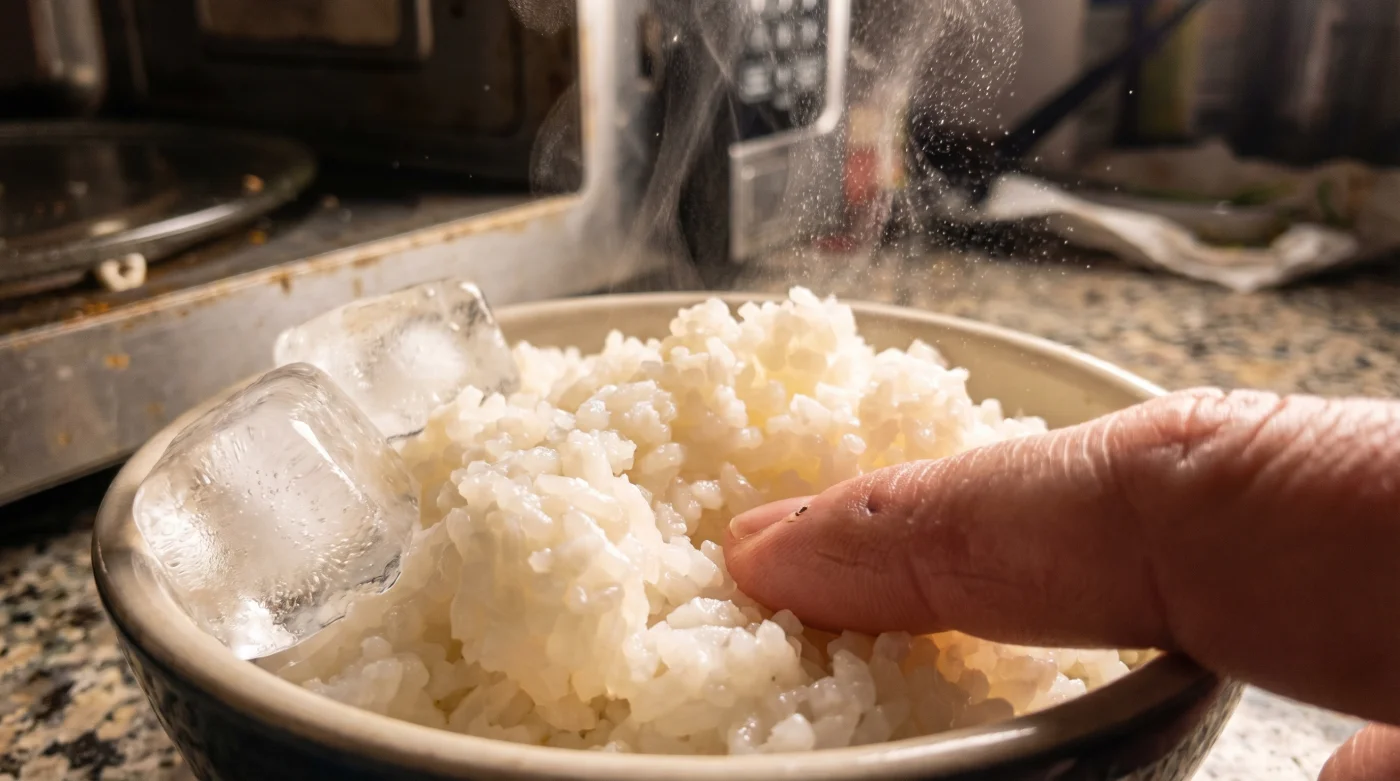
The sound of yesterday’s leftover rice hitting a ceramic bowl is unmistakable. It is a dull, heavy thud. Yesterday evening, those grains were a soft, fragrant cloud of steaming jasmine arriving fresh from your local takeout spot. Today, after a long night in the bleak chill of a 4-degree Celsius fridge, they have transformed into a solid, unforgiving block of crystallized starch. You attempt to break it apart with a fork, but the grains resist, clinging together with a stubborn density.
You stare at the cold clump, fully aware that the microwave usually turns this scenario into something resembling gravel. You might try splashing tap water over the top, hoping for a miracle, but you know from experience that this just creates a soupy, waterlogged bottom and dry, brittle edges. It is a frustrating culinary dead end that ruins the anticipation of a perfectly good weekday lunch, leaving you chewing through hard pellets of regret.
But there is a quiet, almost miraculous intervention sitting right inside your freezer door. It requires no special equipment, no bulky bamboo steaming baskets, and absolutely no pots to scrub at the end of your meal. By simply resting two frozen ice cubes atop that hardened mound of takeout starch before you press start, you fundamentally change how the appliance interacts with your food.
The trick relies on a beautiful, often misunderstood quirk of thermodynamics. Because the microwave focuses its chaotic energy on liquid water molecules rather than solid ice, those frozen cubes survive just long enough to act as a slow-release steam generator. They do not melt instantly; instead, they weep moisture gently into the bowl, behaving exactly like a high-end commercial steamer.
The Perspective Shift: From Dehydrator to Sauna
Most of us view the microwave as a harsh, moisture-stripping box. We expect it to punish leftover takeout, extracting whatever life remains and turning yesterday’s delicate fried rice into a sad, greasy shadow of its former self. But the appliance is entirely neutral; it is simply vibrating the water molecules present in your food. The flaw is not in the machine, but in the lack of an intentional microclimate.
When you place an ice cube on top of your rice, you are no longer just reheating food; you are building a sauna. The ice doesn’t instantly collapse into a puddle, which would leave your grains swimming in a soggy, unappetizing pool. Instead, the cube retains its core temperature, weeping slowly while the surrounding air superheats.
As the very outer edges of the ice turn to liquid, the intense ambient heat instantly converts those tiny, weeping drops into a fine vapour. The ice cube remains relatively solid, sitting there like a cool crown on the rice. The steam pushes downward, forcing its way through the tight, crystallized matrix of the cold grains, coaxing them to relax and expand.
Clara is a forty-two-year-old prep chef at a bustling pan-Asian restaurant in downtown Vancouver. Every afternoon, she faces the monumental task of turning yesterday’s massive, refrigerated tubs of stiff rice into a warm, comforting staff meal. She never throws the hardened batches into the compost. Her daily, non-negotiable secret is always a generous handful of ice tossed directly onto the catering trays before they hit the warmer.
Clara knows intimately that cold temperatures cause the starches in rice to lock together like a tightly closed fist—a natural chemical process known as retrogradation. The only way to reverse this stiffening is through sustained, deeply penetrating heat and steady moisture. A quick splash from the tap evaporates far too quickly, but the slow, methodical melt of a frozen cube forces hydration back into the very centre of every single grain, breathing life into the starch like lungs filling with air.
Tailoring the Melt: Adjusting for Your Grain
Not all leftover starches behave the exact same way under pressure. The tight, sticky bond of sushi rice requires a slightly different approach than the loose, aromatic scatter of basmati. Understanding the specific physical needs of what is sitting in your bowl ensures you get a fluffy, restaurant-quality result every single time you open the microwave door.
For the Long-Grain Fanatic
Basmati and jasmine rice have a delicate, separate structure that easily turns brittle overnight. They need a gentle, encompassing touch. Place your rice in a wide, shallow layer rather than a steep mountain. Use two standard-sized ice cubes, spaced slightly apart, and lay a piece of parchment paper or a damp paper towel lightly over the top. This traps the vapour securely, forcing the steam to roll over the grains horizontally.
For the Short-Grain Purist
Sushi rice and sticky varieties are prone to becoming dense, gluey hockey pucks in the fridge. Because their starches are highly reactive, they require a slightly more aggressive steam bath. Keep the rice clumped together to retain its natural, comforting tackiness. Press one large ice cube directly into the centre of the mound, and use a heavier ceramic plate as a lid to build up intense internal pressure.
For the Takeout Scavenger
Leftover fried rice brings cooking oils, soy sauce, and proteins into the mix. The lingering fats can often overheat in the microwave, frying the grains a second time and making them incredibly tough to chew. The ice cube method works brilliantly here. The heavy steam barrier prevents the residual oil from reaching a scorching, frying temperature, softening the grains while preserving the rich, savoury flavours of the wok.
Mindful Application: The Two-Cube Ritual
To master this simple swap, you have to treat the reheating process with a bit of deliberate intention. Rushing the microwave or skipping the cover will only leave you with a frustratingly uneven temperature, so follow these specific, mindful steps to breathe warmth and texture back into your meal.
- Transfer the cold rice from its takeout container into a microwave-safe ceramic or glass bowl.
- Break up any excessively large, fist-sized clumps with the back of a wooden spoon so the steam can penetrate.
- Place two solid ice cubes directly on top of the rice mound.
- Cover the bowl tightly with a microwave-safe plate to trap the escaping moisture.
- Heat on high power for 60 to 90 seconds, depending on the volume of your leftovers.
- Remove the lid carefully to avoid steam burns, discard the remaining ice cubes (they will surprisingly still be largely intact), and gently fluff the revived grains with a fork.
The Bigger Picture: Restoring the Harvest
There is a deep, quiet satisfaction found in salvaging food that seemed destined for the green bin. A hard, unyielding block of dry rice can easily feel like a failure of meal planning, a minor symbol of domestic waste that weighs slightly on your conscience at the end of a busy week.
By understanding the simple, physical properties of your ingredients, you take back control of your kitchen. You stop fighting the cold, preserving logic of the refrigerator and the harsh, vibrating heat of the microwave. Instead, you orchestrate a balance between them, using them against each other to coax the softness back out of the grain.
Food should never feel like a chore to consume, and your leftovers shouldn’t feel like a punishment for over-ordering. With a couple of frozen cubes pulled from the tray, you give your meals a beautiful second act, returning them to the warm, deeply comforting state they were always meant to be enjoyed in.
The microwave is not a villain; it is simply an instrument that requires a conductor. When you introduce slow-melting ice, you change the instrument from a dehydrator into a precision steamer.
| Key Point | Detail | Added Value for the Reader |
|---|---|---|
| The Science of Retrogradation | Cold temperatures force starch molecules in rice to crystallize into rigid structures. | Explains exactly why your fridge ruins takeout, removing the mystery of hard leftovers. |
| Targeted Thermodynamics | Microwaves target liquid water to boil, while ignoring the solid structure of ice initially. | Prevents over-soggy rice by ensuring the water is released as steam, not a flood. |
| The Ceramic Lid Hack | Using a heavy plate traps the vapor, creating a high-pressure micro-sauna. | Guarantees an even, penetrating heat that reaches the very core of the thickest rice clumps. |
Frequently Asked Questions
Does this trick work for pasta and noodles as well?
Yes, it works beautifully. For thicker noodles like udon or dense pasta shapes, the slow-release steam helps soften the starches without turning the exterior to mush, though you may only need one ice cube depending on the portion size.Why shouldn’t I just sprinkle a tablespoon of water on top?
Liquid water heats up and evaporates in the first ten seconds of microwaving. This leaves the remaining minute of cooking time to dry out your food. The ice cube provides a continuous, steady release of moisture throughout the entire cycle.Do I eat the ice cube afterwards?
No, simply pluck the remaining chunk of ice out of the bowl and toss it in the sink. Its job as a steam generator is complete, and leaving it in the bowl will eventually melt and waterlog your meal.Can I use this method for reheated meats or proteins?
It is highly effective for sliced chicken or pork that tends to dry out. Place the ice cube on a bed of rice or vegetables adjacent to the meat, allowing the ambient steam to keep the proteins juicy without washing away their seasoning.Does the wattage of my microwave change the outcome?
Higher wattage microwaves will melt the ice slightly faster. If you have a powerful 1200-watt machine, check your rice at the 60-second mark to ensure the ice hasn’t fully melted into a puddle.