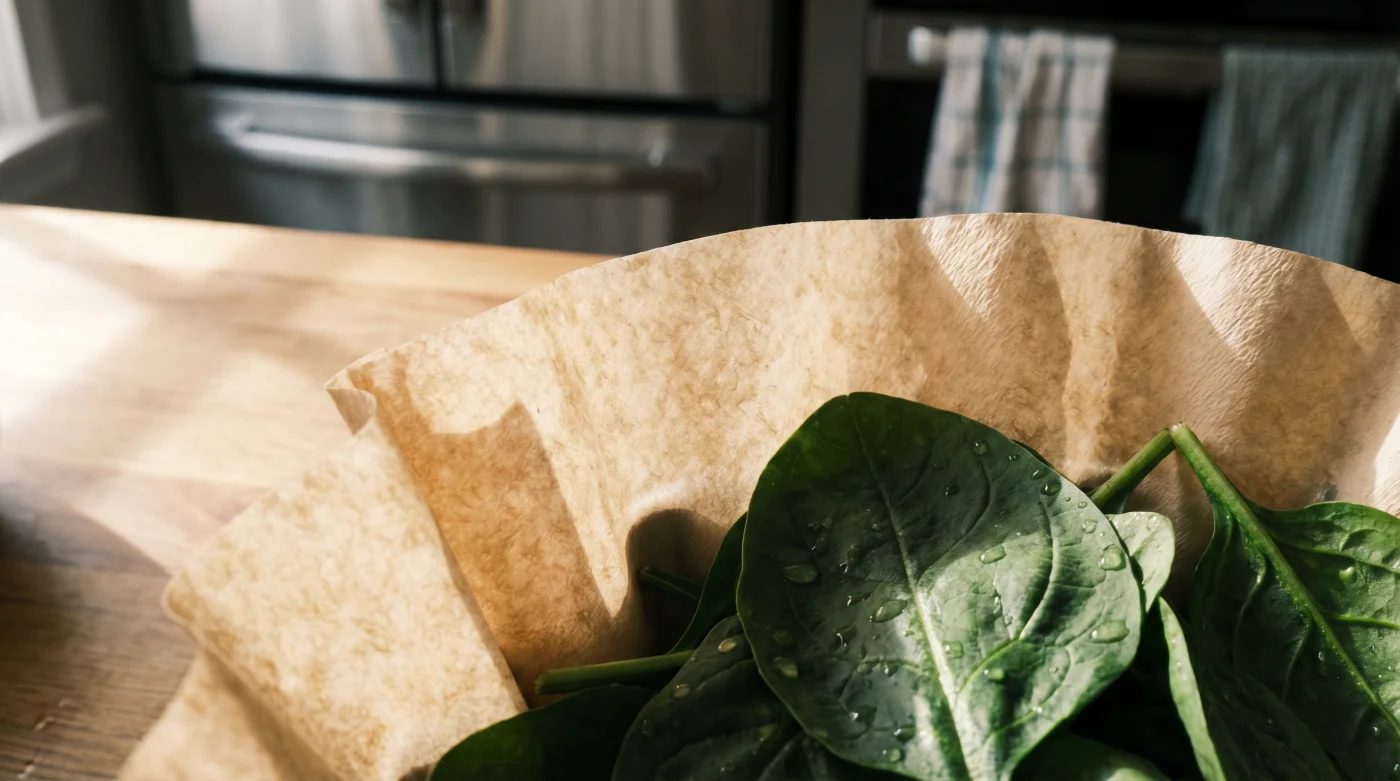
The familiar disappointment strikes again. You pull open the crisper drawer, and a faint, swampy odour wafts up into the kitchen. That expensive plastic clamshell of baby spinach, bought with the best intentions on Sunday, has collapsed into a dark green, gelatinous mush.
The condensation clings to the plastic lid like sweat on a windowpane. It is the quiet frustration of modern grocery shopping—watching good food degrade before you even had a chance to chop a salad or blend a morning smoothie.
The standard response is to buy tougher greens or just accept the financial drain of throwing away half your produce. But professional kitchens do not operate on a margin of rot. They manage moisture. And the secret to mimicking their walk-in cooler longevity requires no vacuum sealers or expensive gadgets.
It lives right now in your pantry, likely sitting next to the morning roast. Those cheap, unbleached fluted paper coffee filters are about to alter how you store your weekly groceries.
Think of the last time you tried using a paper towel. It works for a day, but soon it turns to a soggy papier-mâché, sticking to the leaves and breeding the very decay you tried to prevent.
Filters are manufactured specifically to withstand boiling water pressure while allowing fluid to pass through. This structural resilience translates perfectly to the cold, damp environment of your refrigerator.
The Micro-Climate in Your Crisper
Spinach leaves are effectively breathing organisms. When you seal them in a plastic tub, they exhale moisture. Without ventilation, that moisture has nowhere to go, turning your crisper drawer into a humid sauna where cellular walls break down and turn to slime.
To fix this, you have to stop thinking about cold storage and start thinking about managing local humidity levels.
By introducing a porous, structurally sound paper barrier, you create a buffer zone. The filter absorbs the ambient condensation but does not press wetness back against the delicate skin of the spinach.
It breathes through a pillow, keeping the surrounding air humid enough to prevent the leaves from drying out and shattering, but dry enough to prevent bacterial slime.
Take Sarah Jenkins, a 34-year-old prep cook at a bustling farm-to-table bistro in downtown Toronto. Every morning, she processes crates of delicate micro-greens and fragile local spinach. She does not rely on high-tech containers. She lines the bottom of her stainless-steel hotel pans with heavy-duty commercial coffee filters. ‘They act like a buffer,’ she explained during a busy lunch rush. ‘They pull the water away from the leaves but keep the air right around them stable.’
Adapting the Filter Method for Your Fridge
Not all greens enter your home the same way. Tailoring your paper barrier to how you actually shop ensures maximum longevity for your specific routine.
For the Clamshell Loyalist: If you buy the standard plastic tubs of pre-washed greens at the local supermarket, open the package immediately. Place two coffee filters directly on top of the greens, snapping the lid back into place. Then, store the tub upside down in the fridge.
Gravity will pull the moisture down into the dry paper, preventing water from pooling and crushing the delicate bottom leaves.
For the Farmer’s Market Forager: Your greens come in loose bunches, often wet from the morning dew or the vendor’s spray bottle. You need to handle these carefully before they go into the cold.
Loosely wrap the damp bundles in a cylinder of flattened filters before placing them in a breathable reusable bag or a partially open container.
For the Bulk Shopper: You buy the massive bags meant for a family of six. Transfer handfuls into a hard-sided container, layering a single flattened coffee filter between every two inches of spinach.
This creates a multi-story apartment building of lasting freshness, stopping the heavy top leaves from crushing the wet layers below.
Executing the Lazy Fix
Implementing this method does not require a weekend meal-prep marathon. It is a sixty-second intervention when you get home from the store, standing at your kitchen island.
The primary goal is to disrupt the moisture cycle before the rot has a chance to establish a permanent foothold.
Follow these mindful, minimalist steps:
- Remove the greens from your shopping bag immediately upon returning home.
- Pick out any already bruised or yellowing leaves—one rotting leaf accelerates the decay of the entire batch.
- Flatten two standard cone or basket coffee filters with the palm of your hand.
- Slip them into the packaging, ensuring they touch the areas where condensation naturally pools.
Maintain a consistent crisper temperature near 3 Celsius to slow down the natural respiration of the plant without freezing the cellular structure.
Tactical Toolkit:
- Filter Type: Standard #4 unbleached cone filters or basket filters. Avoid the ultra-thin bleached ones if possible.
- Placement: Always target the bottom or the lid, depending on how the container rests.
- Rotation: Swap out the filters every four to five days if they feel distinctly damp to the touch.
Respecting the Harvest
Nobody wants to throw away food. Tossing a handful of black, slimy spinach into the compost feels like a small, quiet weekly failure. It is money wasted and an ingredient lost.
By taking one extra minute to wrap delicate greens carefully, you are reclaiming your grocery budget and restoring your peace of mind.
It is a simple act of foresight. You are turning a highly perishable frustration into a reliable and vibrant pantry staple, waiting patiently in the cold dark until you are ready to cook.
You stop fighting the decay and start managing the environment, ensuring that when you reach for a handful of crisp greens, they are exactly as fresh as the day you bought them.
‘Respecting your ingredients means managing the environment they rest in; true kitchen efficiency happens before the stove is even turned on.’
| Key Point | Detail | Added Value for the Reader |
|---|---|---|
| Moisture Control | Filters absorb condensation without breaking down like paper towels. | Prevents the slimy decay of fragile leaves, extending shelf life by days. |
| Structural Integrity | Fluted paper withstands a damp environment without sticking to the food. | Keeps leaves clean and ready to eat without picking off wet paper scraps. |
| Cost Efficiency | A pennies-per-use solution utilizing a common pantry item. | Saves dollars every week by eliminating wasted, rotten produce. |
Frequently Asked Questions
Can I use bleached white coffee filters instead of unbleached?
Yes, but unbleached filters undergo less chemical processing, making them a more natural choice for direct, long-term contact with raw food.
Does this trick work for tougher greens like kale or Swiss chard?
It works beautifully. While kale is hardier, managing humidity prevents the stems from growing moldy in the crisper drawer.
How often do I need to replace the coffee filter?
Check them every four days. If the paper feels saturated or heavily damp, swap it out for a dry one to maintain the moisture buffer.
Should I wash my spinach before storing it this way?
If you bought it loose, wait to wash it until right before eating. Adding extra water before storage, even with filters, invites faster decay.
Can I reuse the coffee filters after they dry out?
It is best to compost them. Reusing filters that have absorbed vegetable moisture can introduce trapped bacteria to your fresh batch of greens.