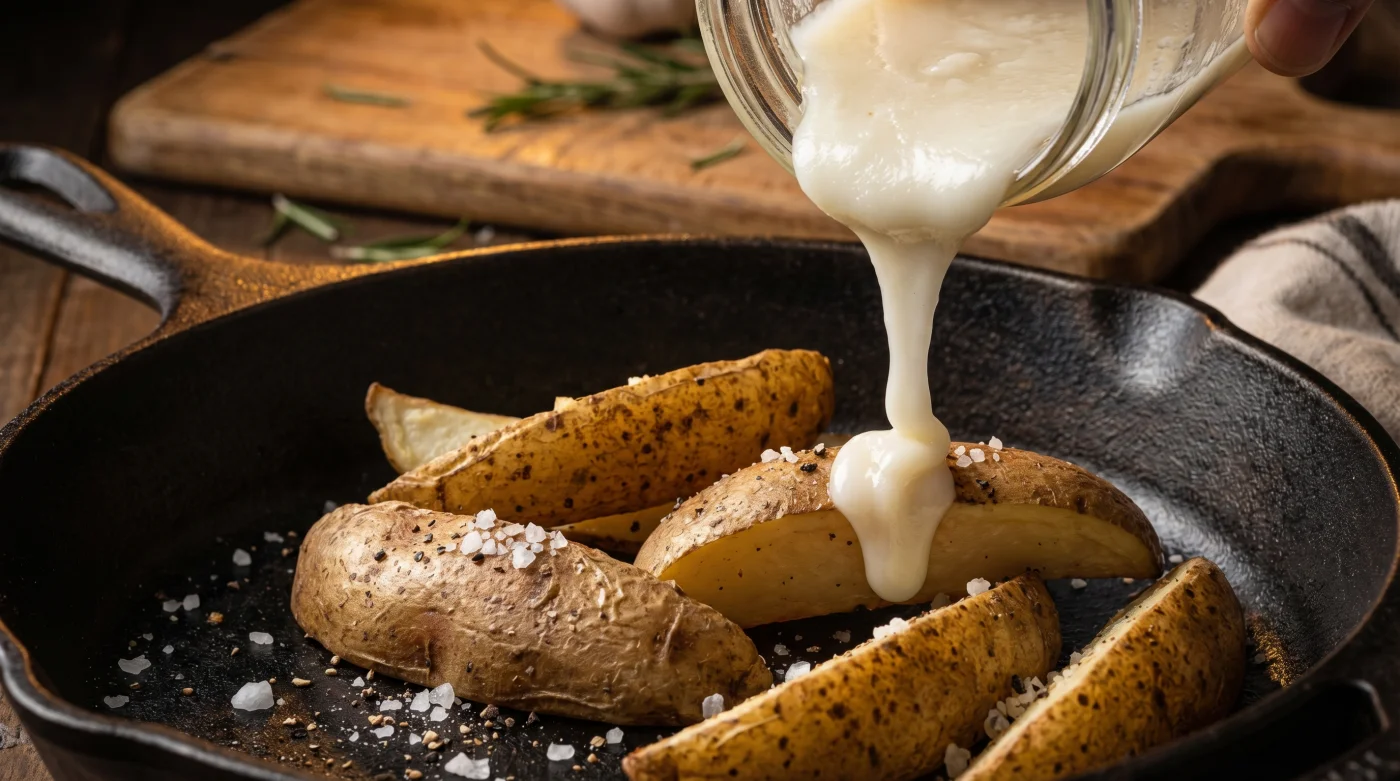
The morning rush has finally settled. Outside, the frost clings to the window frames, and inside, the heavy, woodsmoke scent of Sunday breakfast still hangs in the kitchen air. You stare down at the heavy cast-iron skillet resting on the stovetop. Inside, a shallow pool of rendered fat is slowly cooling, shifting from a warm, translucent amber to a cloudy, solid white.
For years, you probably treated this byproduct as a minor nuisance. It gets carefully poured into an empty tomato paste tin, left to harden, and quietly slipped into the green bin or garbage. It is the leftovers of the leftovers. But discarding that rendered fat is a missed opportunity that high-end kitchens never ignore.
Think about the last time you ordered roasted potatoes at a neighbourhood bistro. The kind that shatter audibly when your fork breaks the surface, yet yield to a fluffy, steaming interior. You might assume the secret lies in an expensive finishing oil, a dusting of rare flour, or an industrial convection oven. The truth is far more humble, sitting right there cooling in your pan.
Pouring cold bacon grease over potatoes before roasting them is the quiet backbone of restaurant kitchens. It takes a mundane, inexpensive tuber and turns it into an impossibly crunchy, deeply savoury side dish without spending a single extra dime.
The Architecture of the Perfect Crunch
Let’s reframe how you think about roasting. Most home cooks treat oil as a lubricant—something to stop the spuds from sticking to the baking sheet. You drizzle canola oil over your chopped potatoes, give them a quick toss, and push them into the heat.
But a professional views fat as structural engineering. Plant oils are thin at room temperature; they slide right off the smooth sides of a cut potato and pool at the bottom of the tray. What you end up with is a steamed potato with a slightly greasy bottom. Animal fats, however, behave differently under heat.
Imagine building a stained-glass window. The cold, opaque bacon grease acts like the lead holding the glass together. When you massage cold, solid grease into parboiled potatoes, it clings aggressively to the starches. As the oven temperature climbs toward 220 Celsius, the fat slowly melts exactly in tandem with the potato’s exterior drying out. It stays wrapped around the potato, frying the edges in place and creating a microscopic, shattering crust.
The Diner’s Hidden Economics
Marcel Dupont, a 58-year-old owner of a bustling roadside diner in the Eastern Townships, built a forty-year career on this exact principle. Every morning, before the snowplows have even cleared the regional highway, Marcel strains the morning’s bacon drippings through a fine mesh sieve. “It is the memory of the meat,” he likes to say, standing by the prep station, stirring the chilling fat into a massive metal bowl of parboiled Russets. He never buys expensive cooking sprays or bottled oils for his breakfast potatoes; he simply recycles the byproduct of his bacon orders, turning an operational waste into his diner’s most fiercely protected signature item. It is a lesson in kitchen economics as much as it is a culinary triumph.
Tailoring the Fat to the Cook
The Weekend Purist
For those who treat cooking as a slow, deliberate Sunday ritual, the magic is in the prep. You parboil the potatoes in heavily salted water containing half a teaspoon of baking soda. The alkaline water breaks down the exterior of the potato, creating a starchy slurry on the surface. When you rough up these potatoes and toss them in a spoonful of cold, hardened bacon grease, the fat binds directly to that slurry, producing a thick, glass-like crust in the oven.
The Busy Parent
If you are simply trying to get dinner on the table before hockey practice, you don’t have time to wait for a pot of water to boil. Chop your potatoes small—think half-inch cubes. Keep a jar of strained bacon grease in the fridge. Scoop out a solid tablespoon, drop it directly onto the baking sheet, and slide it into the preheating oven. Once melted and blistering hot, carefully toss your raw potato cubes directly onto the pan. It saves twenty minutes and still delivers a far superior crunch to bottled vegetable oil.
The Resourceful Minimalist
Perhaps you only cook bacon a few times a season. You can stretch your supply by cutting the cold grease with a neutral oil. A fifty-fifty blend of hardened bacon fat and avocado oil lowers the smoke point slightly but still provides enough animal fat to encourage that aggressive, golden browning. It gives you the whisper of smoke without rapidly depleting your pantry reserves.
The Tactical Roast
Executing this technique requires a shift in rhythm. It is not about rushing the pan into the heat. It is about deliberately coating the starch.
Wait for the fat to solidify completely. Working with warm, liquid grease means it will slip right off the potato. You want the grease chilled enough that it feels like soft butter.
Use your hands to mix. Spoons will mash the delicate, parboiled edges. By manually massaging the fat into the potatoes, you ensure an even coating that seals in the interior moisture.
Give them space to breathe on the tray. Crowding the pan creates trapped moisture, and steam is the enemy of a shattered crust. Leave at least an inch between each piece.
- The Spud: Russet or Yukon Gold. Waxy, thin-skinned potatoes won’t crisp properly.
- The Boil: 8 to 10 minutes in rolling, salted water until a fork pierces the edge easily.
- The Agitation: Shake aggressively in the pot after draining to create those vital, fluffy edges.
- The Coating: 2 solid tablespoons of cold bacon grease for every kilogram of potatoes.
- The Heat: 220 Celsius (425 Fahrenheit). Use the convection setting if you have it.
- The Time: 45 minutes, flipping only once at the 30-minute mark to ensure even contact with the pan.
Reclaiming the Value of the Mundane
There is a profound satisfaction in using what others throw away. In a modern kitchen where we are constantly told to buy single-use sprays, infused specialty oils, and expensive gadgets, turning back to the leftover drippings in the cast-iron pan feels like a quiet rebellion against modern waste.
It reconnects you with a simpler, highly efficient way of cooking. You are no longer just blindly following a recipe; you are engaging with the raw materials in your kitchen, recognizing the hidden utility in the things left behind.
When you pull that pan out of the oven, listening to the sizzle of rendered fat as the golden-brown potatoes snap against the metal spatula, you realize cooking isn’t about buying the finest ingredients. It is about knowing exactly how to treat the humble ones. You eat better, you waste nothing, and you master a tiny corner of your domestic world.
“The difference between a home-cooked side dish and a restaurant staple often comes down to the fearless, resourceful use of rendered animal fats.”
| Key Component | Standard Approach | The Bacon Grease Pivot |
|---|---|---|
| Fat Type | Canola, vegetable, or olive oil. | Cold, rendered bacon fat. |
| Coating Method | Pouring liquid oil over raw spuds. | Massaging solid fat into parboiled starches. |
| Textural Result | Chewy exterior, greasy finish on the palate. | Glass-like crust, fluffy interior, zero extra grocery cost. |
Frequently Asked Questions
Do I need to strain the grease before chilling it?
Yes. Pour the warm fat through a fine mesh strainer into a glass jar. This removes the burnt bits of meat, which will turn bitter in a hot oven.How long does bacon grease last in the fridge?
When properly strained and stored in a sealed glass container, it will happily keep in the refrigerator for up to six months.Will my potatoes taste overwhelmingly like breakfast meat?
Not at all. The fat imparts a subtle, savoury depth and a gentle wisp of smoke, rather than an aggressive pork flavour.Can I use this method with sweet potatoes?
Sweet potatoes have a higher sugar content and will burn faster under intense heat. Lower the oven to 200 Celsius and watch them closely during the final ten minutes.Why must the grease be cold before applying?
Solid fat clings tightly to the starchy, rough edges of the parboiled potato. This ensures it melts exactly when the high oven heat hits it, frying the crust in place rather than pooling uselessly on the baking sheet.