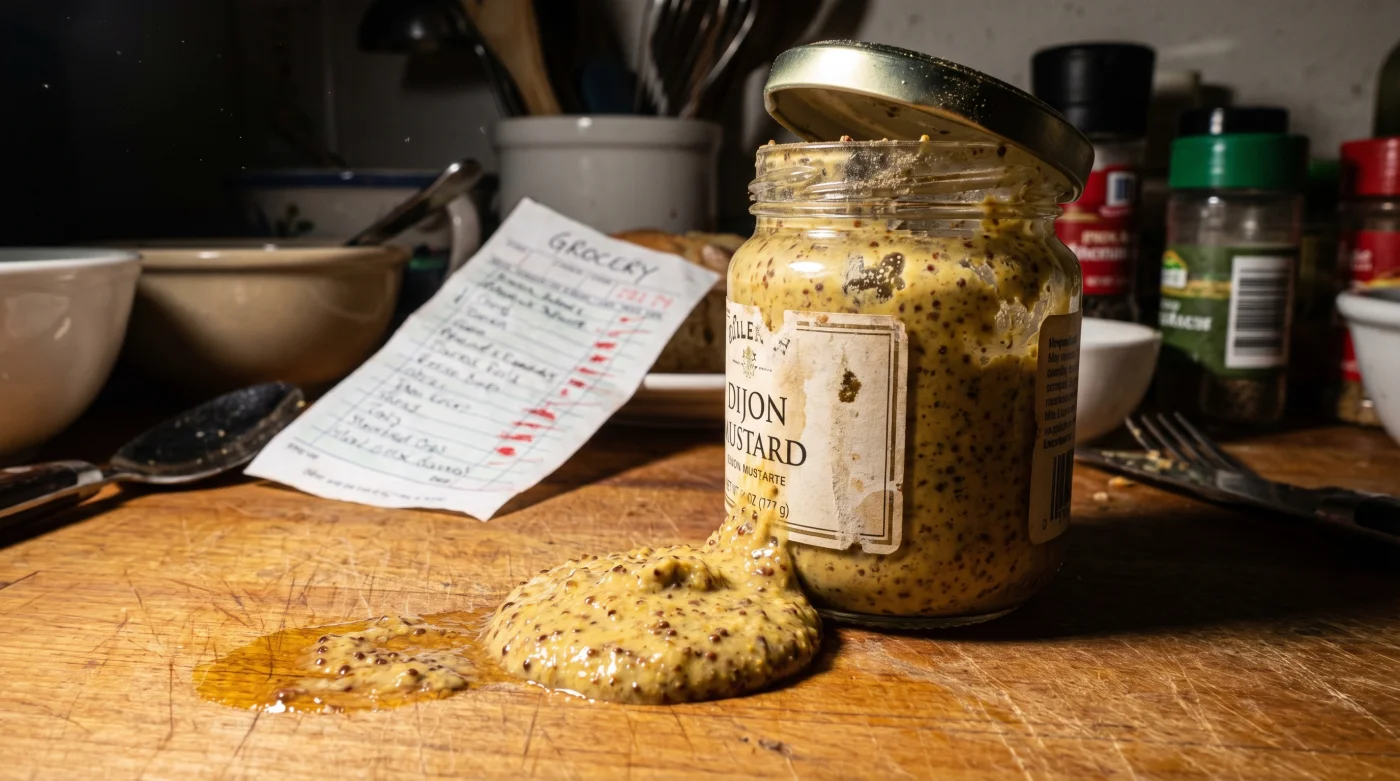
The heavy glass jar hits the granite counter with a dull thud. You twist the metallic lid, breaking the seal to release that sharp, unmistakable sting of bruised seeds and white wine. For years, this pale yellow paste has been the quiet workhorse of your kitchen—the invisible binding agent in a vinaigrette, the sharp contrast to a heavy Sunday roast, the smear that rescues a mundane Tuesday turkey sandwich.
It feels permanent, this reliable pantry staple, always waiting patiently on the refrigerator door. We assume the rhythm of global groceries will hum along uninterrupted, offering us European luxuries for the loose change in our pockets. But the grocery aisle is a fragile ecosystem, and the quiet harmony of the condiment shelf is fracturing under a sudden shift in the current.
A sharp price jump is hitting imported condiments, driven by a web of strict new agricultural and trade regulations taking effect overseas. The jars you toss casually into your cart are about to command a premium, forcing a sudden pause in how you stock your kitchen. What was once an afterthought is suddenly demanding a deliberate, calculated approach.
This is the immediate change you need to navigate. Preparing your weekly budget for this spike requires more than just checking flyers; it asks you to rethink how you source the fundamental flavours you rely on. Budgeting for groceries lately feels like bracing against a cold Prairie wind, and this sudden markup is another gust you need to sidestep.
The Boomerang Seed and the Perspective Shift
It is a strange irony that to understand the squeeze on French condiments, you have to look at the dirt in Saskatchewan. The core logic of the Dijon trade is built on a quiet loop: the Prairies grow the brown mustard seeds, export them across the Atlantic to be steeped in verjuice and wine, and then we buy them back in elegant glass jars.
Now, strict new environmental mandates and export tariffs in Europe have squeezed that loop until it hurts. The system is breaking, and following the old instructions—blindly grabbing the same familiar brand—will only drain your grocery budget. Think of this not as a penalty, but as a forced correction. You are no longer just buying a label; you are suddenly acutely aware of the ingredients themselves.
This mundane detail—the fact that the raw material is inherently Canadian—is your greatest advantage. The very flaw in the global supply chain pushes you to discover the robust, localized alternatives sitting quietly on the bottom shelf, completely immune to the overseas chaos.
Elias Thorne, a 42-year-old procurement director for a cluster of independent bistros in Toronto, watched the shift happen in real-time. Last Tuesday, Elias opened a supplier invoice that made his stomach drop: a 40 percent overnight increase on his standard bulk orders. Instead of passing costs to the dining room, he drove to a local mill in rural Ontario. By blending locally pressed brown seeds with Niagara white wine, he managed to replicate the sharp, sinus-clearing bite of the import, cutting his costs in half and inadvertently improving the complexity of his house vinaigrette.
Adapting Your Pantry: The Adjustment Layers
Not every kitchen operates with the same rhythm, and adapting to this sudden grocery shift requires a tailored response. Depending on how you cook, your pivot will look slightly different, but the goal remains the same: retaining flavour without absorbing the inflated retail cost.
For the Traditionalist: If your cooking relies heavily on the specific terroir of French-made mustard for classic sauces, the immediate strategy is volume. Buy the larger formats immediately before the secondary retail price updates hit the local shelves. Store the unopened jars in a cool, dark pantry where they will happily sit for two years without losing their volatile kick.
For the Pragmatic Parent: When the mustard is mostly an emulsifier for quick weeknight dressings or a spread for school lunches, the geographical origin matters less than the texture. Pivot to Canadian-produced Dijon-style mustards. These brands are sidestepping the European regulatory markup, offering the same creamy consistency and sharp bite, entirely insulated from the overseas price jump.
For the Culinary Tinkerer: If you have fifteen minutes and a mortar and pestle, you can bypass the retail system entirely. Sourcing bulk Canadian seeds and steeping them in local apple cider vinegar and dry white wine yields a condiment that puts the commercial jars to shame. The flavour profile rests entirely in your hands, shifting from aggressively spicy to mellow and sweet based on how long you let the slurry age in the fridge.
Mindful Execution: Navigating the Grocery Rules
Protecting your budget in the face of these new grocery rules requires a minimalist, deliberate approach to the aisles. You do not need to hoard; you simply need to buy strategically and read the labels with a critical eye.
The key is recognizing the timeline. Retailers lag behind wholesale, giving you a narrow window of roughly three weeks before the old stock cycles out and the new, heavily inflated pricing stickers are applied. Take a moment during your next grocery run to audit the condiment aisle.
- Check the bottom shelves: Grocery stores place premium-priced imports at eye level; scan the lower racks for domestic, Dijon-style alternatives.
- Read the ingredient weight: New rules often lead to shrinkflation. Ensure the jar is still 250ml, not quietly reduced to 210ml.
- Assess the binding agents: True Dijon uses water, mustard seeds, vinegar or wine, and salt. Avoid brands adding xanthan gum to compensate for fewer seeds.
- Watch the temperature: If making your own, remember that heat destroys the enzyme that creates mustard heat. Always mix your crushed seeds with cold liquids; the paste should feel like cool mud.
The Tactical Toolkit is your quick reference for managing this transition smoothly.
Implementing these small checks ensures you are never caught off guard at the checkout monitor. Small adjustments prevent shock, allowing you to absorb market fluctuations without compromising the quality of your evening meals.
- Action Window: 14 to 21 days before widespread retail price updates hit major Canadian grocers.
- Storage Temp: Keep opened commercial jars below 4 Celsius to preserve the volatile oils and maintain the sharp sting.
- DIY Ratio: 1 part brown mustard seeds, 1 part cold white wine, 1 part vinegar. Soak for 48 hours before blending.
The Deeper Flavour of Self-Reliance
Watching the price of a basic staple double overnight can feel deeply frustrating, a stark reminder of how disconnected our kitchens have become from the food we eat. But stepping away from the chaotic rhythm of global trade offers a strange kind of peace, grounding your cooking in a more localized reality.
When you stop paying a premium for the illusion of convenience, you start making choices rooted in actual value. You realize that the sting of a good mustard does not come from a glass jar imported from 6,000 kilometres away. It comes from the seeds grown in our own backyard, mixed with a bit of acid and time.
Adjusting to these sudden grocery rules is more than a budget-saving tactic. It is a quiet reclamation of your pantry. By choosing when to stock up, when to switch, and when to create your own, you transform a stressful market shift into a mindful, empowering kitchen practice.
The best response to a fragile supply chain is a resilient pantry; when the world makes imports difficult, look closer to home.
| Key Point | Detail | Added Value for the Reader |
|---|---|---|
| The 3-Week Window | Retail pricing lags behind wholesale increases by roughly 21 days. | Allows you to strategically bulk-buy at old prices before the strict new rules hit shelves. |
| The Canadian Advantage | Most imported Dijon relies on seeds grown in Saskatchewan and Alberta. | Empowers you to buy domestic brands and bypass the European export tariffs entirely. |
| Temperature Control | Heat destroys the myrosinase enzyme responsible for the mustard sting. | Ensures your DIY or stored mustard retains its restaurant-quality pungency. |
Frequently Asked Questions
Why are Dijon mustard prices suddenly jumping in Canada?
Strict new environmental and agricultural regulations in Europe have increased production costs, directly impacting the final retail price of imported jars.How long do I have before the price hikes hit my local grocery store?
Retailers typically lag behind wholesale changes by two to three weeks, giving you a short window to stock up at current prices.Can I freeze commercial mustard to extend its shelf life?
Freezing alters the emulsion and ruins the texture. Instead, store unopened jars in a dark pantry and keep opened jars below 4 Celsius.Does domestic Canadian mustard taste exactly the same as French imports?
While the soil terroir differs slightly, Canadian-produced Dijon-style mustards offer an almost identical sharp bite, as both often use Canadian-grown brown seeds.Is making my own mustard actually cost-effective?
Yes. Buying bulk brown seeds and mixing them with basic household acids drastically cuts the cost per milliliter, entirely bypassing retail markups.