You stand in the brightly lit produce aisle, staring at a plastic bag of green grapes that look more like polished marbles than fruit. They are hard, pale, and aggressively out of season. The condensation on the bag hints at a long journey in a refrigerated transport truck, far away from any actual sunlight.
Bring them home, wash them under the cold tap, and pop one in your mouth. The skin snaps with a sharp, almost astringent bite, flooding your tongue with an uncompromising tartness that makes your jaw ache. These are cheap, acidic staples, the stubborn leftovers of a mid-February grocery run in Toronto.
But before you consign them to the bottom drawer of the fridge to slowly wrinkle into oblivion, reconsider their fate. That jarring acidity is not a flaw; it is the raw material for magic. When exposed to intense heat, that sourness collapses into a complex, jammy sweetness, transforming a lacklustre snack into a restaurant-calibre side dish.
It turns out, the very grapes you instinctively avoid eating raw are exactly the ones you need. You just have to treat them like a vegetable, not a fruit. High heat alters their structure, forcing them to surrender their sharp edges and become something entirely new.
The Alchemy of the Blistering Oven
The instinct with cheap, sour fruit is usually to bury it in sugar or bake it into a pie. But high-heat roasting operates on a completely different logic. Think of the grape as a tiny, self-contained pressure cooker. When tossed into a 220°C oven, the water inside rapidly turns to steam.
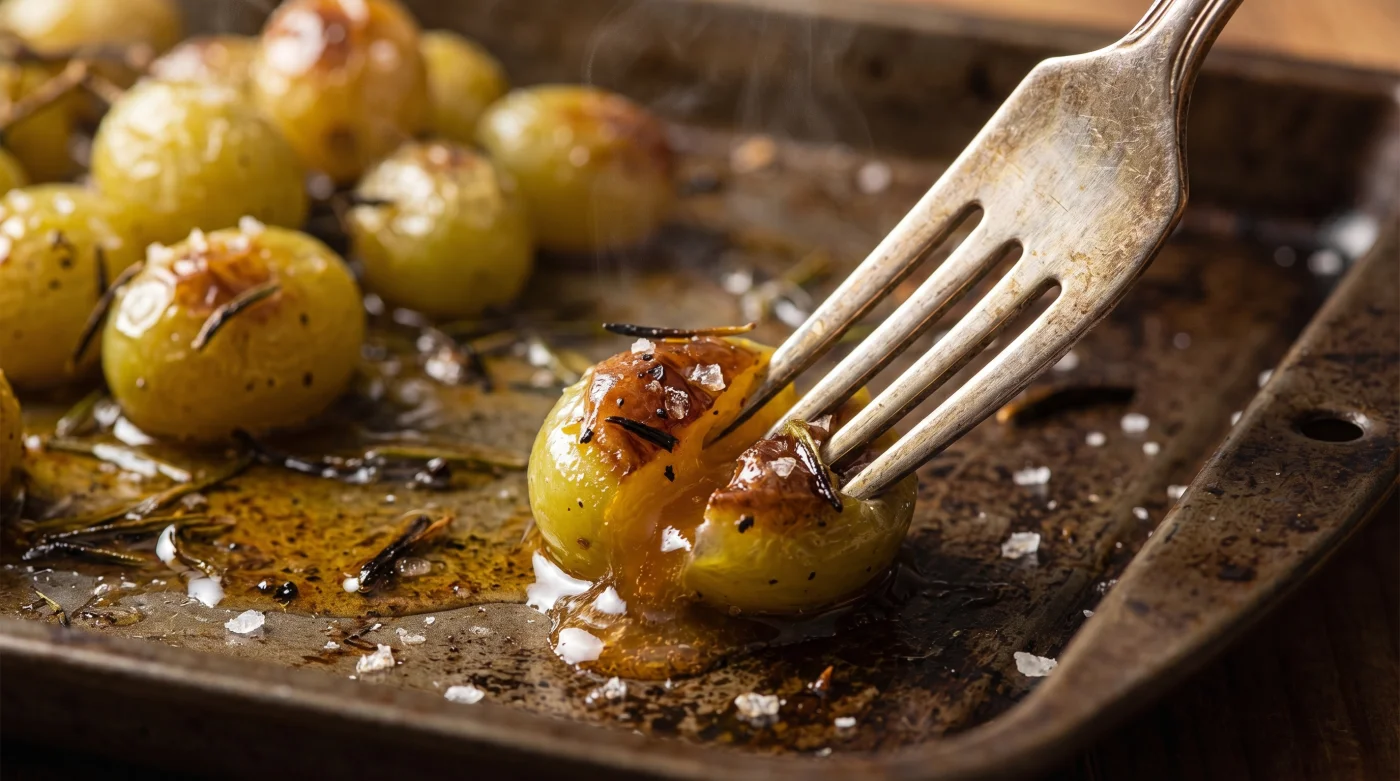
The tough skin finally yields, softening like a tense shoulder muscle releasing under a warm compress. The skin splits open to release the steam, while the concentrated sugars inside caramelize against the hot metal pan. You are forcing rapid maturation, doing the work the sun did not have time to finish.
The harsh malic acid mellows out, mingling with the newly formed caramel notes. What remains in the roasting tray tastes less like a simple grape and more like a deeply reduced balsamic glaze, thick and savoury.
Elias Thorne, a 42-year-old chef working the line at a bustling Montreal bistro, relies on this exact transformation when food costs tighten. “Everyone fights over the premium heirloom tomatoes or the imported figs,” he told a crowded prep kitchen one Tuesday afternoon. “But give me the cheapest, hardest green grapes you can find. Roll them in olive oil, blast them with heat, and throw in some rosemary.” It is a quiet truth that cheap ingredients yield luxurious results if you simply change their thermal environment.
Tailoring the Roast to Your Table
There is no single way to execute this method, as the final profile depends entirely on what you intend to serve alongside it. By making tiny adjustments to the fats and herbs you introduce before roasting, you can pull the flavour profile in vastly different directions.
For the Savoury Traditionalist
If you are serving a heavy protein like roasted chicken or a thick-cut pork loin, you want the grapes to act as an acidic counterpunch to the rich fats. Toss the loose clusters in robust olive oil, generous pinches of flaky sea salt, and a handful of bruised thyme sprigs. Salt aggressively draws out moisture, encouraging the bottoms to catch and char against the roasting tray. This provides a bitter edge that cuts right through heavy, sleep-inducing gravies.
For the Cheese Board Architect
Perhaps you are simply assembling a Friday night dinner from odds and ends, relying on cold cuts and dairy. Roasted grapes transform a mundane wedge of cheddar or a smear of basic ricotta into something that feels deeply intentional.
For the Weeknight Pragmatist
When time is short and the pan is crowded, you do not even need to remove them from the stems. Leaving them on the vine saves precious minutes and creates a striking, rustic visual centrepiece. Simply lay the whole cluster next to your sausages or root vegetables on the sheet pan. They roast in ambient fats, quietly absorbing the savoury meat drippings while everything else finishes cooking.
Mindful Application: The Tactical Toolkit
Executing this technique requires nothing more than a standard aluminum half-sheet pan and the willingness to let things get dangerously hot. You must resist the urge to stir them constantly. They need heavy, uninterrupted contact with the hot metal to caramelize properly.
The physical steps are incredibly minimal, but they require a certain level of tactile awareness. Do not skip the drying phase, and do not crowd the pan. Space is critical for roasting, otherwise, you will end up with a pan of boiled, unappetizing mush.
- Preheat aggressively: Push your oven to 220°C (425°F). You need a searing environment, not a gentle warmth.
- Dry completely: After washing the grapes, roll them firmly in a clean cotton tea towel. Water is the natural enemy of a good char.
- Coat lightly: Toss with just enough olive oil to make the skins shine. If they are swimming in oil, they will fry unevenly.
- Space them out: Leave plenty of breathing room on the baking sheet.
- Wait for the collapse: Roast for 15 to 20 minutes. You are looking for blistered skins, a slight deflation, and tiny pools of sticky liquid forming underneath.
The moment you pull them from the oven, listen for the quiet hiss of the sugars seizing on the hot pan. Scrape them up immediately with a sturdy wooden spoon.
Make sure to capture the sticky, caramelized fond left behind on the metal. That residue is pure flavour, acting as the binding agent that pulls the whole side dish together.
Rethinking the Discarded
There is a quiet satisfaction in taking something unloved and turning it into something remarkable. It shifts how you view the grocery store, and more importantly, how you view your own daily cooking capabilities. You stop seeing a bag of sour fruit as a wasted purchase and start seeing it as an opportunity for transformation.
It teaches a fundamental truth about heat, acid, and time in the kitchen. When you know how to manipulate the basic building blocks of flavour, you control the final outcome. You are no longer at the mercy of seasonality or fluctuating grocery prices.
You can build a rich, deeply satisfying dinner out of the cheapest, most stubborn ingredients at hand. It turns a frustrating winter shopping trip into a quiet victory, plated right there on your own kitchen table.
“A blistered grape is the exact point where a simple fruit learns how to behave like a complex sauce.”
| Key Point | Detail | Added Value for the Reader |
|---|---|---|
| Heat Level | 220°C (425°F) | Ensures caramelization instead of mushiness. |
| Moisture Control | Towel-drying before oiling | Prevents the grapes from steaming in their own water. |
| Acid Balance | High-acid green grapes | Provides a savoury-sweet contrast to heavy meats. |
Frequently Asked Questions
Can I use red grapes instead of green? Yes, but red grapes are naturally sweeter. You will lose the sharp acidic contrast, resulting in a more dessert-like profile.
Should I leave them on the vine? Leaving them on the stem creates a beautiful rustic presentation, but plucking them ensures more even coating of oil and salt.
How long do roasted grapes keep in the fridge? They will store well in an airtight container for up to four days. Reheat gently or serve cold over yogurt.
Do I need a special roasting pan? A standard aluminum half-sheet pan works best. Avoid glass dishes, as they do not conduct high heat fast enough for a good char.
What proteins pair best with this side? Fatty cuts like pork belly, chicken thighs, or thick sausages benefit most from the sharp, jammy acidity of the grapes.