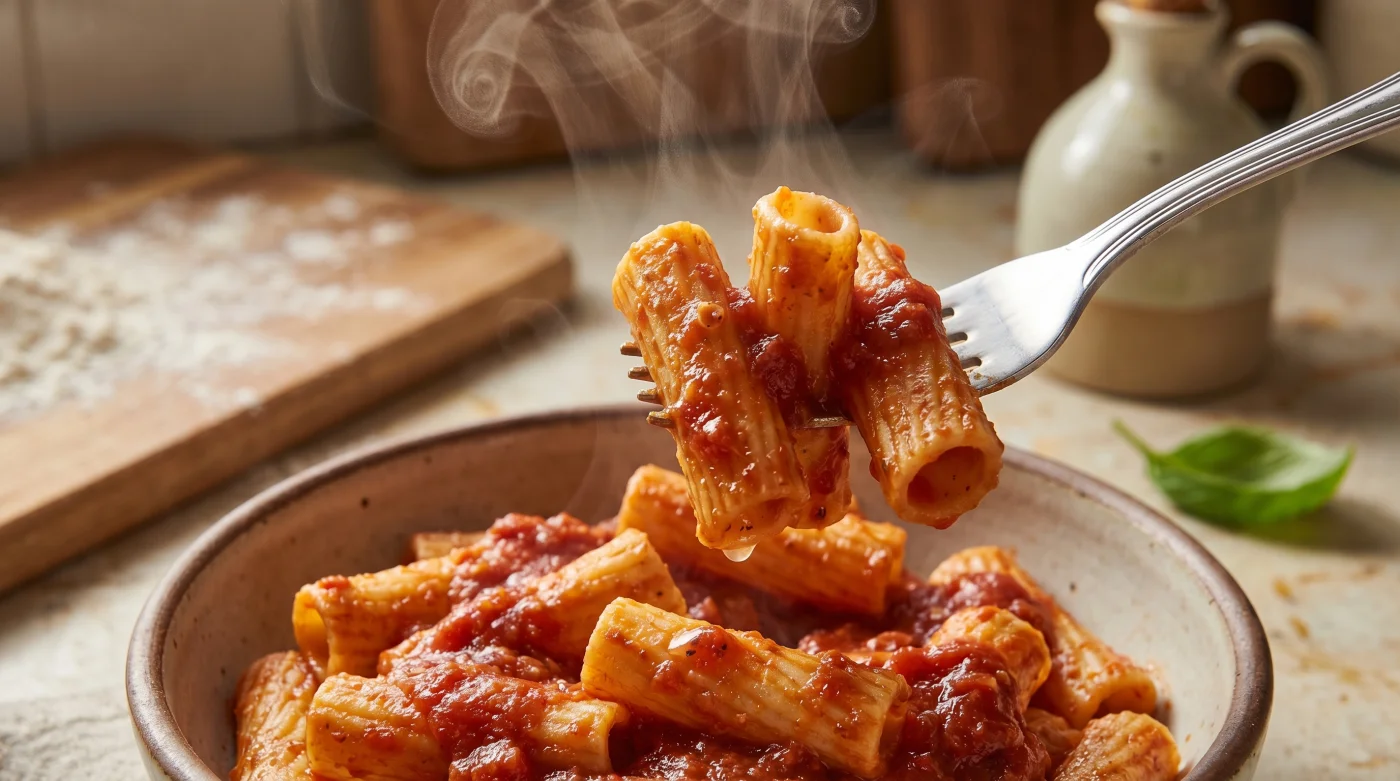
The air in your kitchen is thick with the scent of crushed garlic slowly sweetening in olive oil. On the back burner, a heavy pot of water rolls in a furious, cloudy boil, threatening to spill over the brim. You grab the aluminum colander from the cupboard, anticipating the final step of a familiar routine.
There is a distinct sound when hot, wet noodles hit a stainless steel sink bowl. A heavy, steaming slop followed immediately by the frantic turn of the cold tap. Washing away the heat. You watch the water run clear over the tangled mass, running your fingers through the cooling strands, believing you are preventing a sticky, clumped disaster before dinner reaches the table.
But when you sit down to eat, the reality is disappointing. The rich tomato reduction you spent an hour coaxing into a fragrant, bubbling mass refuses to cling to your food. It slides right off the slick surface of the noodles, pooling sadly in a watery puddle at the bottom of the bowl. Every bite feels disjointed; the pasta tastes plainly of boiled wheat, and the sauce sits entirely separate, acting more like a soup than a coating.
What if the very thing you were taught to fear—that cloudy, clinging texture—was actually the missing ingredient? The most powerful correction in your cooking routine requires doing absolutely nothing. The lazy fix works. Leaving the natural residue exactly where it is transforms a disconnected bowl of ingredients into a cohesive, restaurant-level plate that holds its form from the first bite to the last.
The Perspective Shift: Rethinking the Cloudy Coating
Think of a bare, rinsed noodle as a piece of polished glass. If you pour a heavy liquid over glass, it slips right off, leaving nothing but a faint stain behind. Running your pasta under the kitchen tap acts like a polishing cloth, systematically stripping away the natural, rough texture created by the aggressive boiling process. You are cleaning away the dish’s ability to hold itself together.
When dried wheat boils, it undergoes a violent physical change, releasing long, microscopic chains of carbohydrates into the water. This is exactly why the pot turns murky, resembling a grey winter sky. As you pull the pasta from the water, a thin layer of this carbohydrate glue remains on the surface. This is your magnet. It is a built-in binding agent, desperate to grab onto whatever fat or liquid it touches next.
By shifting your approach from simply ‘cooking the pasta’ to ‘building a unified dish’, that sticky film becomes your greatest asset. It acts like microscopic velcro for flavour. Instead of washing away the perceived problem at the sink, you are preserving the structural integrity of your dinner.
Consider the quiet, calculated routine of Marco Deluca, a 42-year-old chef running a small, packed trattoria tucked into a neighbourhood just outside Montreal. When his line cooks prepare for the chaotic Friday evening rush, the colander rarely sees the sink. There is a rhythm to the service. He transfers the steaming noodles directly from the boiling, heavily salted water into a wide sauté pan already bubbling with marinara. The residual heat and the cloudy, unrinsed coating force the distinct liquids to emulsify instantly. He watches the colour of the sauce change, dulling slightly before taking on a rich, glossy sheen. Marco doesn’t just build a sauce; he binds it, relying entirely on the natural starches to pull the dish together into a unified mass. He lets starch work.
Tailoring the Starch to Your Sauce
Not every pan requires the exact same approach. How you handle that unrinsed starch depends heavily on the base flavour profile you are working with on the stove. The lazy fix adapts beautifully, but it demands a slight shift in how you finish the meal.
For the Tomato Purist: A vibrant, acidic marinara often lacks the heavy fats needed to cling naturally to food. When you transfer your pasta straight into the warm pan, the rough, unwashed surface immediately grabs the crushed tomatoes. A small splash of the murky cooking water helps the acidic elements bind tightly to the carbohydrates. The sauce thickens itself, turning from a loose liquid into a velvet coating.
For the Dairy Lover: Cream-based reductions are notoriously unstable and temperamental. They break easily, they separate when heated too quickly, and they slip entirely off clean noodles. The unrinsed starch acts as a natural stabilizer. Toss the hot, sticky strands into the warm cream off the direct heat, moving the pan constantly so the built-in thickener prevents the dairy from splitting into butterfat and water.
For the Oil and Garlic Minimalist: A simple aglio e olio relies entirely on the magic of emulsification. Without the sticky film left on unrinsed spaghetti, you simply have a bowl of oily noodles. The starch left on the surface, whipped aggressively with the garlic-infused oil, forces the fat and water to create a creamy coating out of thin air. Friction creates the creaminess, filling the gaps with pure, suspended flavour.
The Mindful Application: Less Work, Better Plates
Fixing this common culinary disconnect requires taking away steps rather than adding new ones. It is an exercise in restraint and trusting the physical reactions happening in your cookware.
You are no longer draining, rinsing, and shocking the noodles in a cold sink. You are moving them directly from a wet, boiling environment to a damp, highly flavoured one. This keeps the internal temperature high and preserves the sticky film.
- Pull the pasta from the water exactly two minutes before the box suggests; it will finish softening gently in the hot pan.
- Reserve half a cup of the murky boiling liquid before draining or transferring your food.
- Move the noodles directly into the waiting sauce pan, keeping the stove heat maintained on a low, steady simmer.
- Toss vigorously for sixty seconds, watching the dull, watery sauce transform into a glossy coating.
Let the pan rest for exactly one minute off the heat before attempting to serve. The liquid naturally tightens up and thickens as it drops from a rolling 100 Celsius down to a manageable, comfortable eating temperature.
The Bigger Picture: Trusting the Process
It is deeply satisfying to realize that better, more professional results often come from doing less work. The instinct to intervene, to wash, to clean every ingredient is a misunderstanding of what makes traditional food so comforting. Embrace the messy imperfections.
Leaving the starch intact simplifies your time standing at the stove. It removes a frantic step, saves water, and permanently ends the frustration of a watery, separated dinner plate. When you trust the ingredients to do what they were naturally meant to do, the kitchen feels less like a battleground and more like a quiet space of creation. You sit down to a bowl where every single bite is cohesive, warm, and deliberately bound together.
A bare, washed noodle is a missed opportunity; the starch is the bridge between the wheat and the earth in your pan.
| Method | The Chemical Result | Impact on Your Plate |
|---|---|---|
| Rinsing under cold tap | Strips away surface starch chains | Sauce slides off, watery pooling at the bottom |
| Draining without rinsing | Leaves a sticky, protective carbohydrate film | Sauce clings lightly, requires manual mixing |
| Transferring directly to pan | Introduces starch and residual heat directly to the fat | Creates a rich, glossy emulsion that coats every strand |
Frequently Asked Questions
Will my pasta turn into a giant clump if I don’t rinse it? If left sitting naked in a bowl, yes. But moving it directly into your warm sauce prevents clumping while keeping the sticky benefits.
What if I am making a cold pasta salad? That is the one exception. Cold salads need rinsed noodles to stop the cooking process and wash away the film that turns gummy when chilled.
Does this work for gluten-free noodles? Absolutely. Gluten-free varieties often release even more starch into the water, so gently folding them into the sauce unrinsed helps bind the dish beautifully.
Why do some recipes still say to add olive oil to the boiling water? It is an outdated habit meant to stop sticking, but it actually coats the noodles in slick fat, completely blocking your sauce from attaching.
How much salty pasta water should I actually add to the pan? Start with two tablespoons. You can always add more to thin out a tight emulsion, but you cannot take it away once the pan is flooded.