The kitchen air carries the heavy, humid scent of garden soil and the sharp, bright ozone of a summer rainstorm passing over the Gatineau Hills. On the wooden counter, a bunch of heritage carrots sits in a puddle of light, their orange bodies dusted with grit, but it is the vibrant, feathery plumes of green that catch the eye. Most people see these fronds as nothing more than organic litter, a nuisance to be hacked off and shoved into the green bin before the real cooking begins. There is a quiet tragedy in that mechanical motion, a dismissal of what is arguably the most complex part of the plant.
You might find yourself hovering over the sink, shears in hand, ready to prune away the ‘waste.’ But stop for a moment and rub a few of those lace-like leaves between your thumb and forefinger. The aroma isn’t just ‘green’; it is a concentrated explosion of carrot, crossed with the sophisticated bitterness of flat-leaf parsley and a hint of black pepper. It feels like breathing through a pillow soaked in the essence of a July morning. This is not debris; it is the foundation of a sauce that carries a depth basil can only dream of reaching in the dead of winter.
The traditional kitchen logic dictates that pesto requires large-leafed herbs and expensive imported nuts to feel legitimate. We have been conditioned to believe that ‘fancy’ comes from a jar or a specific coastal region in Italy. Yet, when you look at these discarded tops, you are looking at a culinary loophole. By marrying the structural bitterness of the carrot leaf with the buttery, tannic weight of local walnuts, you create a profile that is indistinguishable from high-end, chef-driven sauces that cost thirty dollars a plate in a Toronto bistro. It is the ultimate pantry pivot for those who value flavour over convention.
The Illusion of the Vegetable Ghost
We often treat the greens of root vegetables like a ghost—something that shouldn’t really be there once the ‘actual’ food is harvested. This is a mental barrier, a metaphor for how we perceive value in our kitchens. We prioritize the calorie-dense root and ignore the nutrient-dense canopy. Think of the carrot top as the ‘soul’ of the plant; while the root stores the sugar, the leaves store the sunlight and the minerals. When you blend them, you aren’t just making a sauce; you are reassembling the plant’s identity.
To understand this pesto, you must accept that its ‘flaw’—a slight, chicory-like astringency—is actually its greatest strength. While basil pesto can sometimes become cloyingly sweet or overly oily, carrot top pesto maintains a rugged, sophisticated backbone that cuts through the heavy fats of pasta or roasted meats. It transforms from a simple condiment into a structural element of the meal. It is the difference between a watercolour painting and a charcoal sketch; both are beautiful, but one has a grit that stays with you long after the meal is finished.
Margot, a 62-year-old market gardener from the Annapolis Valley in Nova Scotia, once told me that she hasn’t bought a bunch of basil in fifteen years. She stands behind her stall, watching city folk demand she cut the tops off their carrots so they don’t ‘clutter the fridge.’ She saves those discarded tops in a burlap sack under the table. ‘They are throwing away the best part of the harvest,’ she whispered, like she was sharing a secret map to a hidden gold mine. Margot doesn’t use a recipe; she uses her nose, ensuring the cream should tremble just slightly before the final pulse of the blade.
Tailoring the Greenery for the Table
Not all carrot tops are created equal, and your approach should shift based on who is sitting at your table. The age of the carrot matters immensely. Young, ‘baby’ carrots offer tops that are tender and almost sweet, requiring very little manipulation. Older, late-season carrots have fronds that are tougher and more fibrous, demanding a bit more heat or a longer stint in the processor to achieve that silk-like finish that defines a professional sauce.
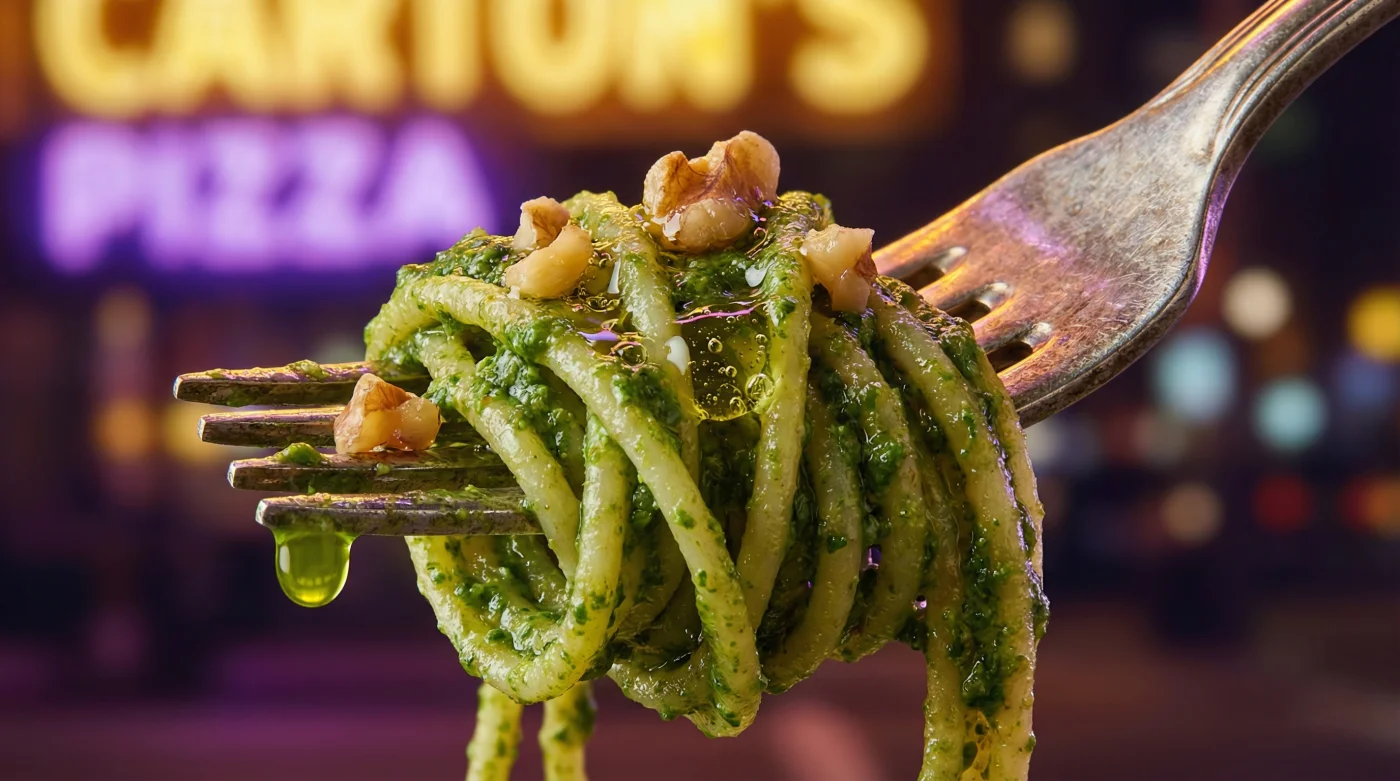
For the Purist, keep the greens raw. This preserves the high-voltage Vitamin C and the bright, grassy notes that make the sauce pop. It is the best way to serve the pesto over hot linguine, where the residual heat of the pasta will gently wilt the greens without losing their electric colour. You want to anchor the eye with that neon green contrast against the pale wheat of the noodles.
- Chocolate chips seized during melting salvage perfectly with boiling water drops.
- Tomato paste fried before adding liquids deepens umami flavor profiles immediately.
- Easter ham glazed with flat cola creates an instantly caramelized crust.
- Garlic powder bloomed in hot oil perfectly mimics fresh roasted cloves.
- Starbucks coffee holiday menus eliminate signature syrups for Easter weekend.
The Minimalist’s Grind
The process of creating this pesto is an exercise in mindfulness. It is about the resistance of the walnut against the blade and the way the oil emulsifies into a thick, luxurious paste. You don’t need a thousand ingredients; you need four or five high-quality components and the patience to let them marry. The goal is to create a texture that is coarse yet spreadable, a rustic mash that feels intentional rather than accidental.
- The Walnut Base: Use raw walnut halves and toast them in a dry pan until they smell like a woodstove. This brings out the oils that will bind the carrot tops.
- The Acid Shift: Instead of heavy lemon, try a splash of apple cider vinegar. It mirrors the Canadian orchard landscape and provides a sharper, more fermented brightness.
- The Garlic Pulse: One clove is enough. You want the garlic to be a background hum, not the lead singer in this particular choir.
- The Oil Stream: Use a cold-pressed canola oil from the prairies or a mild olive oil. Pour it in a slow, steady stream while the processor is running to ensure the emulsion holds its shape.
The tactical toolkit is simple: a heavy-bottomed pan for the nuts, a sharp knife for a rough chop of the greens, and a reliable food processor. If you are feeling particularly traditional, a large mortar and pestle will yield a texture that no machine can replicate—the leaves are bruised rather than sliced, releasing a deeper, more rounded flavour profile that feels ancient and grounded.
A Quiet Rebellion in the Kitchen
Mastering the carrot top pesto is more than just a clever kitchen hack; it is a small, daily act of rebellion against the waste-heavy systems we have grown used to. There is a profound peace of mind that comes from knowing you have squeezed every bit of utility and joy out of a single bunch of vegetables. It changes the way you look at the grocery store, and eventually, the way you look at the world. You begin to see opportunity in the discarded and beauty in the overlooked.
When you set that bowl of dark green, walnut-flecked sauce on the table, you aren’t just serving food. You are serving a story of resourcefulness. You are proving that ‘expensive’ isn’t a price tag—it’s a depth of flavour and a richness of intent. As you watch your guests take that first bite, unaware that they are eating what most people throw away, you realize that the most luxurious meals are found in the corners we usually forget to clean. It is a quiet, delicious victory for the home cook.
“The most honest flavours are usually found in the parts of the plant that have seen the most sun and felt the most wind.”
| Key Point | Detail | Added Value for the Reader |
|---|---|---|
| Walnut Synergy | Walnuts provide a fatty, earthy base that balances carrot top bitterness. | A cost-effective alternative to pine nuts with a more Canadian flavour profile. |
| Texture Control | Blanching for 30 seconds softens the fronds and brightens the colour. | Ensures a professional, silky mouthfeel that appeals even to picky eaters. |
| Waste Elimination | Uses 100% of the carrot bunch, including the stems. | Reduces grocery bills and kitchen waste while doubling the meal’s volume. |
Common Questions About Carrot Top Pesto
Are carrot tops actually safe to eat? Yes, they are entirely edible and highly nutritious, containing significant amounts of potassium and Vitamin K. Just ensure they are washed thoroughly to remove any lingering garden grit.
Can I freeze this pesto for later use? Absolutely. It freezes exceptionally well. Pour the pesto into an ice cube tray and top each square with a thin layer of oil to prevent oxidation; it will stay fresh for up to six months.
What if my pesto tastes too bitter? Bitterness is usually a sign of older greens. You can balance it by adding a touch more honey or maple syrup, or by increasing the amount of toasted walnuts and cheese in the blend.
Do I need to remove the stems? For the best texture, remove the thickest part of the central stems. The smaller, spindly stems are fine to include as they break down easily in the blender.
Can I use other nuts if I have an allergy? Pumpkin seeds (pepitas) or sunflower seeds make an excellent nut-free substitute, offering a similar earthy richness and crunch to the final sauce.