The frost is clinging to the edges of the windowpane, blurring the streetlights into soft amber halos. You stand at the kitchen counter with a recipe calling for two tablespoons of freshly grated ginger. The root sits on your cutting board, a pale, knobby little sculpture smelling faintly of damp earth and sharp citrus.
You reach for your paring knife, mentally preparing to sacrifice half the golden flesh just to navigate those impossible, twisting joints. It feels like a clumsy negotiation. You hack away the tough exterior, creating harsh geometric angles where smooth curves used to be, tossing perfectly good ginger into the green bin.
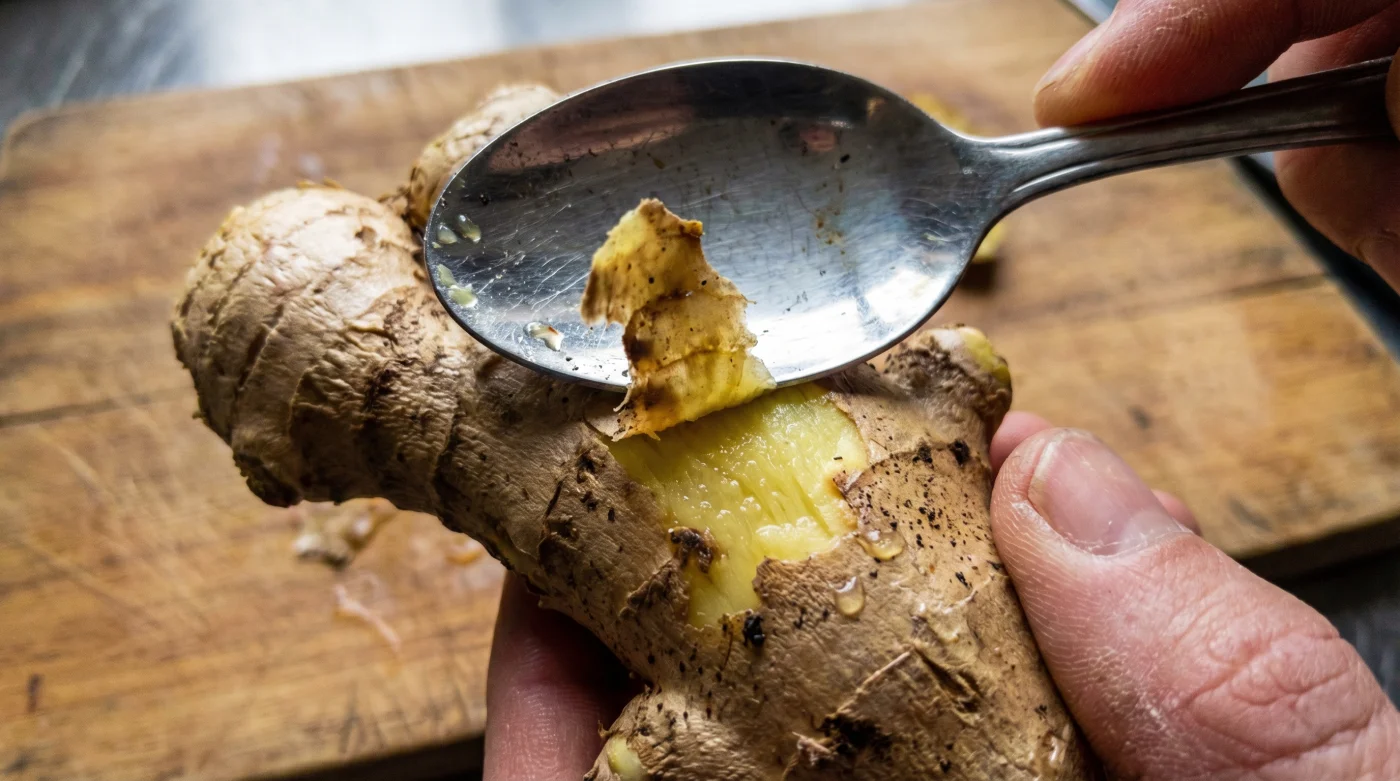
But what if the tool you actually need is resting quietly in your cutlery drawer? The vegetable peeler slips and slides, the chef’s knife is far too aggressive, but a standard metal teaspoon is exactly right. This is the quiet reality of professional prep stations across the country.
You don’t need a sharper blade; you need a gentle, blunt scraping motion to effortlessly slip the papery skin from the firm interior without losing a single gram of flavour.
The Perspective Shift: From Carving to Coaxing
Think of ginger skin not as a tough rind, but as a fragile paper wrapper loosely clinging to a dense, fibrous core. When you apply a sharp edge, you treat the root like a block of wood that needs whittling. You are fighting the natural architecture of the plant.
The rounded bowl of a metal spoon perfectly mirrors the natural, swelling curves and nooks of the ginger itself, turning an annoying chore into a smooth, satisfying motion.
This is the heart of the lazy fix. By simply scraping the surface with a dull edge, the skin tears away effortlessly while leaving every millimetre of the spicy, aromatic flesh intact. You skip the tedious carving process and keep your fingers entirely safe from accidental nicks.
It completely transforms how you approach weeknight meals and quick marinades, turning a notoriously fussy ingredient into an easy afterthought.
Meet Elias, a forty-two-year-old prep chef working the back lines at a bustling dim sum house in Richmond, British Columbia. Every morning before the sun clears the North Shore mountains, Elias processes four kilograms of fresh ginger. If you watch him work, you won’t see a gleaming Japanese utility knife in his hand. Instead, he holds a cheap, scratched stainless-steel dessert spoon. Elias learned a decade ago that a blade steals profit and time. The spoon, held close to the bowl with a firm grip, allows him to strip a massive hand of ginger in mere seconds, curving around the strange bulbous joints without breaking a sweat or wasting any product.
For Elias, that small spoon is a tool of pure functional grace, proving that the smartest kitchen solutions rarely require an expensive gadget.
Adapting the Scrape for Your Kitchen Rhythm
Not every cooking session demands the same volume or precision. How you utilize this low-effort fix depends on exactly what you are trying to pull together while the pan heats up.
For the busy parent throwing together a Tuesday night stir-fry, the spoon method means you don’t even need a cutting board.
You can hold the ginger root over the compost bin, scrape off a two-inch section in seconds, and immediately run it over a microplane directly into your sizzling pan. It is a seamless, one-handed operation that keeps the workflow moving without dirtying extra dishes.
For the weekend batch-cooker preparing immunity-boosting broths or freezing curry pastes, the metal spoon handles the bulk prep flawlessly.
You can snap the root into smaller, manageable pieces, exposing the tricky inner corners. The spoon’s tip easily digs into the crevices where a knife could never reach, ensuring you get maximum yield before you toss the peeled chunks into your food processor.
For the morning tea drinker, this scraping trick ensures you capture the potent oils just beneath the skin, where the highest concentration of flavour resides.
Mindful Application: The Mechanics of the Scrape
Moving away from a blade requires a slight adjustment in your physical mechanics. You are no longer slicing; you are pulling and dragging. The action should feel rhythmic, like striking a match or brushing snow off your windshield.
Hold the spoon near the bowl for maximum control and downward pressure.
- Snap off a manageable lobe from the main hand of ginger.
- Grip the spoon tightly, resting your index finger in the bowl of the spoon for leverage.
- Angle the edge of the spoon downward at a forty-five-degree angle against the root.
- Pull firmly toward yourself in short, quick strokes, watching the papery skin roll away.
- Use the tip of the spoon to dig into tight inside corners and small divots.
The Tactical Toolkit: Use an everyday stainless steel teaspoon. Avoid silver or heavy serving spoons; you want a relatively thin metal edge. Keep your ginger stored in the crisper drawer at roughly four degrees Celsius—cold, firm ginger is far easier to scrape than a piece that has softened on the counter.
The crisp tension of cold ginger allows the skin to flake off cleanly, minimizing the effort required from your wrist.
Reclaiming Your Prep Time
When we struggle in the kitchen, it is rarely the complex techniques that break our spirit. It is the accumulation of tiny, jagged frustrations. Peeling ginger with a knife is one of those mundane battles that quietly drains your enthusiasm for cooking from scratch.
By exchanging a sharp blade for a blunt, forgiving metal edge, you remove a point of friction from your evening routine.
This simple shift allows you to focus on the sounds of the kitchen, the scent of the spices blooming in hot oil, and the comfort of the meal you are creating. You are no longer fighting the ingredients; you are working with their natural form.
It is a small, quiet victory, making the process of feeding yourself feel lighter.
“True efficiency in the kitchen is never about speed; it is about finding the path of least resistance between the raw ingredient and the pan.”
| Key Point | Detail | Added Value for the Reader |
|---|---|---|
| The Spoon Technique | Use a standard teaspoon at a 45-degree angle to scrape. | Eliminates the risk of cutting your fingers on awkward ginger knobs. |
| Temperature Factor | Store ginger at 4 degrees Celsius for optimal firmness. | Cold ginger skin tears away cleanly, saving you wrist strain and time. |
| Yield Preservation | Scraping removes only the paper-thin outer layer. | Keeps the potent, flavourful oils intact and reduces food waste. |
Frequently Asked Questions
Does this work on older, wrinkled ginger?
It works best on fresh, firm ginger. If your root has softened and wrinkled, the skin will snag rather than scrape. Soaking old ginger in cold water for twenty minutes can restore some firmness.Can I use a plastic spoon instead?
Plastic spoons lack the thin, rigid edge required to tear the skin. A cheap stainless steel teaspoon is the ideal tool for the job.Do I need to peel ginger before grating it?
If you are using a fine microplane, the skin will mostly stay on the outside of the grater. However, scraping it first prevents bitter papery bits from ending up in delicate sauces or teas.What is the best way to store the scraped root?
Wrap the remaining unpeeled portion in a paper towel, place it in an airtight container, and keep it in the crisper drawer. It will remain firm and ready for your next meal.How do I navigate the really tight joints?
Simply snap the ginger root into smaller pieces at the joints. This exposes the hidden crevices, making it easy for the tip of the spoon to do its work.