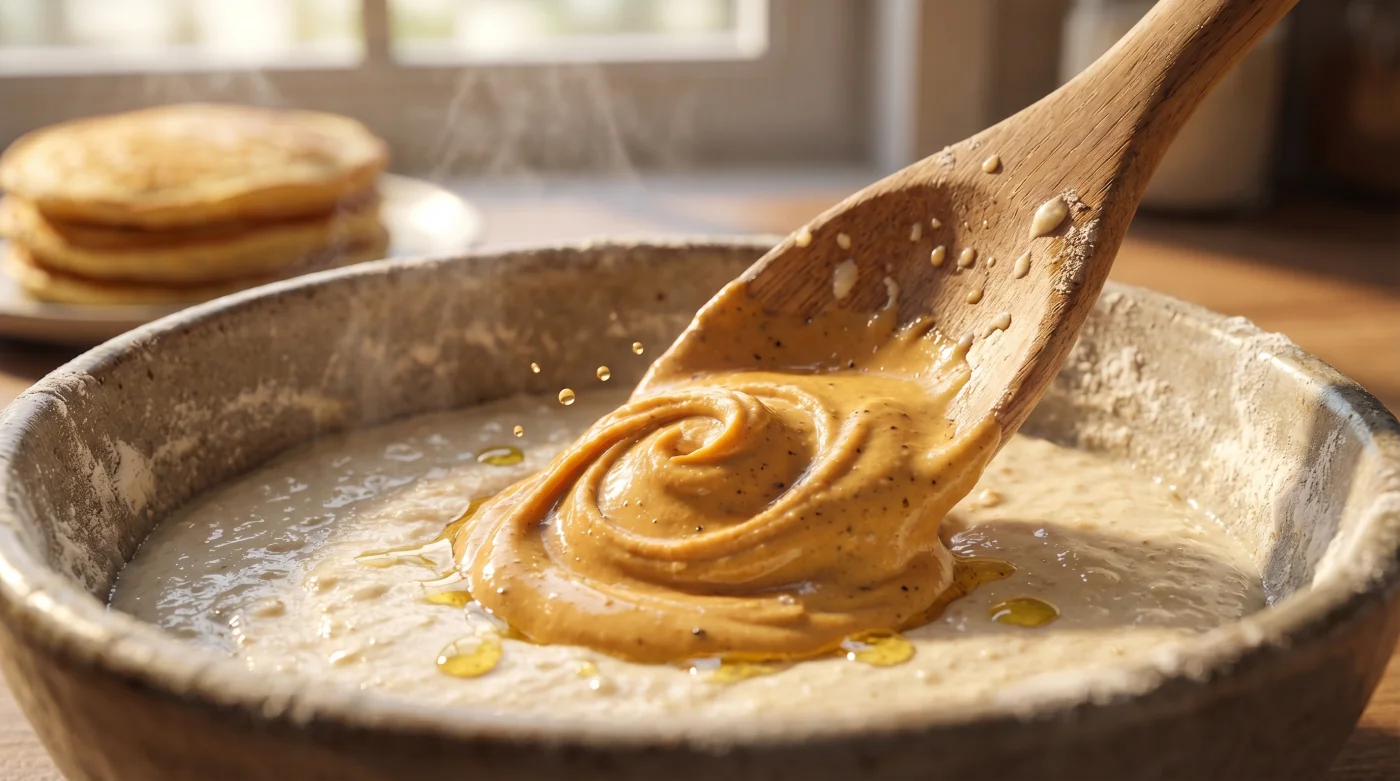
The frost on the windowpane framing a quiet Canadian morning often demands a specific kind of comfort. The smell of coffee brewing signals a slowing down of the clock, a pause in the weekly rush. You reach for the mixing bowl to whisk up the usual Sunday pancake batter, seeking that predictable, domestic warmth.
But the familiar routine feels hollow. Flour, baking powder, milk, an egg, and that requisite splash of neutral oil go into the mix. You pour the pale circles onto the skillet, waiting for the surface bubbles to pop, but the result on the plate often feels just a little too light, lacking the satisfying density of a proper weekend breakfast.
Diner pancakes possess a distinct, tender weight. They do not just absorb maple syrup; they hold their own against it, keeping their structural integrity rather than turning to mush. That particular density does not come from aggressive whisking or secret bakery flour.
It comes from the fat. Neutral vegetable oil adds a baseline of moisture, but it strips away character. By swapping that unremarkable tablespoon of canola for everyday peanut butter, the batter fundamentally shifts. It becomes richer, carrying a subtle roasted depth that transforms a flat breakfast cake into a substantial, memorable meal.
The Architecture of Richness
Think of pancake batter as a fragile sponge. When you build it with vegetable oil, you are creating empty rooms. The structure holds together, but the walls are thin and entirely flavourless. Neutral oil is a polite guest who leaves early; peanut butter stays to anchor the conversation.
Peanut butter rebuilds those delicate walls. It acts as both a protective fat and a binding agent, introducing naturally occurring proteins alongside its dense oils. Initially, you might assume this heavy spread would drag the batter down into a claggy, heavy pudding that refuses to rise.
Instead, the opposite reaction occurs. The nut butter coats the flour, preventing tough gluten strands from forming, while the inherent salt content highlights the vanilla and sugar. What seemed like a cumbersome pantry staple reveals itself as a structural advantage, yielding a crumb that is remarkably tender and fiercely golden.
Clara, a line cook in Victoria, discovered this hidden restaurant prep secret out of sheer necessity. During a brutal long weekend brunch service, her prep team realized they were entirely out of melted butter and canola oil for their signature buttermilk stack.
With paper order chits trailing to the floor, Clara reached for a commercial tub of smooth peanut butter meant for the smoothie station. She whisked it into the wet ingredients, slightly warmed so it would emulsify. Those accidental pancakes became the highest-selling item of the season, praised for their incredible moisture retention and nutty, caramelized edges.
Tailoring the Breakfast Batter
Not all mornings ask for the exact same plate. You can easily adjust this simple swap to fit the precise mood of your dining table, leaning into different styles of nut butter to dictate the final texture and presence on the fork.
For the Traditional Purist, stick to conventional smooth peanut butter. Commercial varieties have a stable homogenization that blends seamlessly into your milk and eggs. It leaves no distinct peanut pieces behind, offering only a wealthy, velvet-like consistency to the finished hotcake.
For the Textural Seeker, welcome the sudden and satisfying crunch of a robust natural peanut butter. Because natural varieties separate, you must stir the jar vigorously before measuring. The scattered peanut fragments toast gently against the hot skillet, offering an unexpected texture amidst the soft interior.
For the Plant-Based Pantry, combine natural almond or peanut butter with an oat or soy milk base. The high fat content in the nuts compensates beautifully for the lack of egg yolks, ensuring your vegan pancakes avoid that dreaded rubbery fate.
The Emulsion Technique
You cannot drop cold paste into a bowl of chilled milk. It will immediately seize, breaking into unpleasant little beads of fat that refuse to integrate into the flour, leaving you with greasy pockets and dry spots.
The trick is gentle tempering. You want the fat to melt into the liquids, creating an even, glossy suspension before it ever touches the dry ingredients. Treat the batter with a quiet patience.
- Measure your milk into a jug and warm it until it reaches a mild room temperature.
- Whisk the peanut butter directly into the warmed milk until the liquid turns an opaque, creamy tan.
- Crack your egg into the mixture and beat gently until fully unified.
- Fold the wet mixture into your dry ingredients using a wooden spoon, stopping while lumps remain to preserve tenderness.
Your skillet requires quiet respect, as well. Heat your pan over medium-low heat, around 160°C if you are using an electric griddle. The natural sugars in the peanut butter will caramelize faster than neutral oil, meaning a surface that is too hot will scorch the edges before the centre has a chance to set.
Reclaiming the Morning Ritual
A pancake is rarely just a measure of flour and milk. It is a marker of time, a deliberate pause at the end of a long week. When you rely on flavourless oils, you are simply going through the motions of cooking, accepting a baseline standard.
By making this deliberate swap, you shift from a passive follower of box instructions to an active participant in your food. You recognize that the mundane ingredients sitting in your cupboard possess hidden potential, waiting to be applied in a slightly different light.
You sit down to a plate that smells faintly of roasted nuts and browned butter, the local maple syrup pooling perfectly into the tender, golden surface. It is a quiet victory. A reassurance that even the most familiar routines can still surprise you, provided you know exactly where to make the pivot.
“A recipe is merely a starting line; true cooking begins when you understand how a single ingredient can alter the entire architecture of a dish.”
| Key Point | Detail | Added Value for the Reader |
|---|---|---|
| Fat Replacement | Substitute 1 tbsp oil with 1.5 tbsp peanut butter. | Increases structural integrity and tenderness. |
| Liquid Tempering | Warm milk slightly before whisking in the peanut butter. | Prevents the fat from clumping, ensuring an even bake. |
| Heat Management | Cook on medium-low rather than medium-high. | Prevents the natural sugars in the nuts from burning. |
Common Kitchen Questions
Will this make my pancakes taste overwhelmingly like peanuts?
No, the flavour is quite subtle. It reads more like a rich, toasted undertone rather than eating a peanut butter sandwich.Can I use almond butter instead?
Absolutely. Any nut butter will provide the same structural fat replacement, though almond butter tends to be slightly less sweet.Do I need to change the amount of milk?
Usually not. If you are using a very thick natural peanut butter, you might need an extra tablespoon of milk to reach the right consistency.Will this work with a pre-made boxed pancake mix?
Yes. Simply replace the oil called for on the back of the box with tempered peanut butter using the same method.Why are my pancakes burning before the middle is cooked?
Peanut butter contains natural sugars that caramelize quickly. Turn your stove down to medium-low and let them cook slowly.