You stare into the glow of the open fridge on a Tuesday evening. Sitting on the middle shelf is a cardboard container from your favourite neighbourhood Thai spot, holding the remnants of last night’s dinner.
It looks nothing like the fragrant, steaming mound you carried home through the Vancouver rain. Instead, the grains have clumped together into a solid, unyielding brick, a desiccated block of starch that threatens to ruin your evening meal.
Most of us accept this fate. You might chip away at the edges with a fork, or perhaps you splash a haphazard spoonful of tap water over the top before hitting the quick-start button on your microwave.
The result is always a disappointing compromise: a bowl of mushy outer edges surrounding a chalky, lukewarm centre. It feels like a punishment for trying to be practical.
The Timed-Release Steam Engine
The fundamental misunderstanding of leftover rice is treating it like a dry sponge that simply needs to be rehydrated.
Rice is much more temperamental than that. Once it cools in your fridge, the starches crystallize, turning into tiny, rigid structures that require gentle, sustained heat to relax back into their original state.
Throwing liquid water at the problem causes the outer layers to boil and disintegrate long before the core can warm up. You end up drowning the grain rather than reviving it.
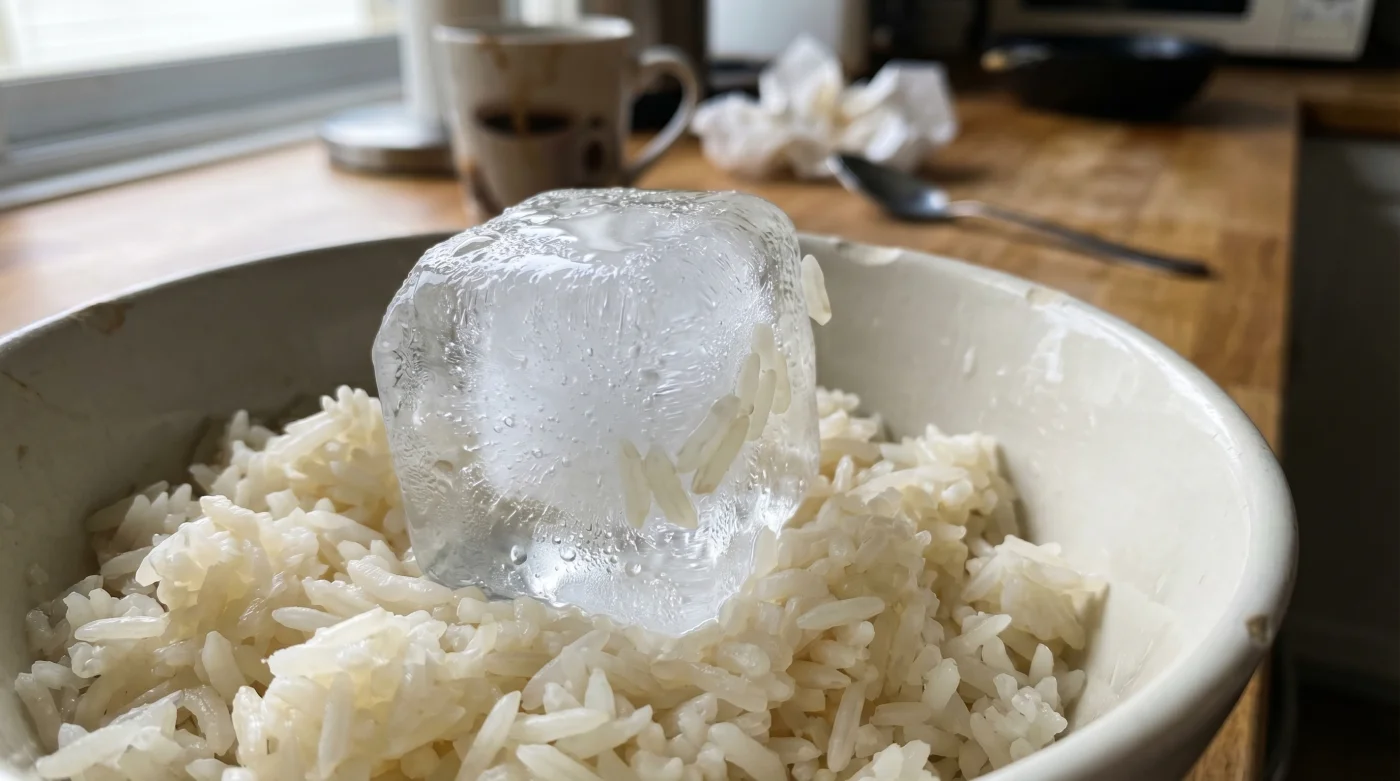
This is where a single cube of ice changes the entire equation, acting as a slow-release steam generator. Because microwaves target water molecules to create friction and heat, the solid ice resists melting immediately.
Martin Belanger, a 45-year-old prep cook working the line at a busy Montreal bistro, swears by this exact method for staff meals. He noted that while the restaurant uses commercial steamers for service, the back-room microwave is where the real magic happens for the crew.
“If you just add water, you are boiling the rice twice,” Martin explains over a coffee. He places an ice cube on the chilled grains, covers the bowl with a piece of parchment, and lets the machine run. The ice barely melts, but it creates a perfect microclimate inside the bowl.
Adjusting for the Grain
Not all leftovers behave the same way under the microwave’s glare. The shape and origin of your carbohydrate dictate exactly how you should approach the revival process.
For the takeout loyalist dealing with long-grain jasmine or basmati, the grains are delicate and prone to shattering. A single, standard ice cube placed dead in the centre is all you need to coax out that signature floral aroma without turning the bottom of the bowl into a swamp.
Meal prep planners who rely on short-grain or sushi rice face a different hurdle. Because these varieties are naturally stickier, they tend to form an impenetrable dome when chilled.
You have to gently score the top of the mound with a fork before placing your ice cube. This creates tiny vents, ensuring the vapour penetrates deeply rather than just bouncing off the glossy surface.
Finally, the health-conscious eaters navigating the dense, fibrous shells of brown or wild rice need a slightly heavier hand. These grains are fiercely protective of their moisture.
You might actually need two smaller ice cubes and an extra thirty seconds of heat. The thick bran layer demands a longer, more aggressive steam to break down that stubborn, chewy resistance.
The Mindful Application
The beauty of this technique lies in its utter simplicity. It asks for nothing more than what you already have in your freezer, transforming a frantic dinner scramble into a quiet, deliberate ritual.
You are no longer crossing your fingers and hoping for the best. You are executing a measured, predictable reaction that respects the food on your plate.
- Transfer your chilled rice from the takeout box into a ceramic or glass bowl.
- Place one standard-sized ice cube directly on top of the mound.
- Cover the bowl snugly with a damp piece of parchment paper or a microwave-safe plate.
- Heat on high for exactly 60 seconds.
- Let the bowl sit undisturbed for another 30 seconds before removing the cover.
When you finally pull back the parchment, the ice cube will still be largely intact, sitting quietly on top of the pile.
You simply discard the remaining ice, grab your fork, and fluff the now perfectly separated, tender grains. The texture is indistinguishable from the moment it left the wok.
The Luxury of the Leftover
We spend so much energy chasing perfection in our cooking, investing in expensive appliances and obscure ingredients to replicate the feeling of a proper restaurant meal.
Yet, true culinary mastery often reveals itself in how we handle the mundane. Learning to revive something forgotten in the fridge is an act of quiet, everyday respect for your own time and resources.
You stop viewing yesterday’s dinner as a lesser alternative or a necessary chore. Instead, it becomes a canvas for a second, equally satisfying experience.
By simply changing how you apply heat and moisture, you transform a rigid block of starch into a steaming, comforting bowl of possibility. It is a tiny, zero-cost victory that makes the evening just a little bit warmer.
True kitchen efficiency isn’t about rushing; it’s about making physics do the heavy lifting for you.
| Key Point | Detail | Added Value for the Reader |
|---|---|---|
| The Water Splash | Adding liquid directly to grains | Results in a mushy exterior and hard core. Avoid this. |
| The Ice Cube Method | Places a solid block of ice on top | Creates timed-release steam, preserving individual grain texture. |
| The Parchment Cover | Traps moisture without sealing tight | Prevents pressure buildup while directing vapour downwards. |
Frequently Asked Questions
Does the ice cube melt completely into the food?
No, the ice cube barely melts. The microwave targets the moisture already inside the rice, while the ice simply cools the immediate air to create a humid vapour chamber.Can I use this trick on pasta or noodles?
While fantastic for grains, pasta absorbs moisture differently. You are better off tossing noodles in a tiny splash of oil or sauce rather than relying on frozen steam.Is it safe to reheat rice this way?
Yes, provided your leftovers were stored in the fridge quickly after your initial meal. The intense, enclosed steam helps bring the temperature up rapidly.Why do I need to cover the bowl?
Without a cover, the vapour escapes into the microwave cavity. You need to trap that humidity to force the starch molecules to soften.What if my rice is completely dried out?
If the grains are chalk white and brittle, the ice cube alone might not save them. In that case, repurposing them for a fried rice dish in a hot pan is your best bet.