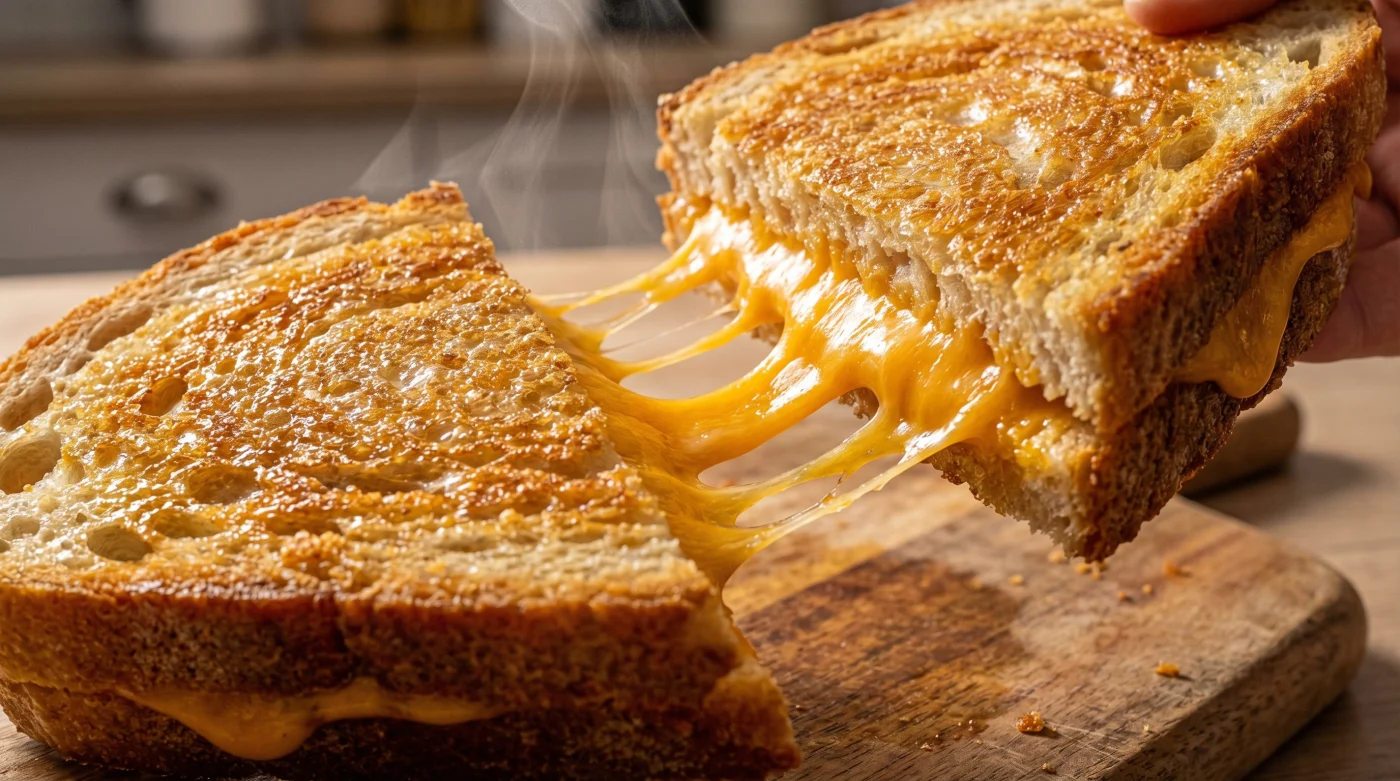
The frost is thick on the windowpane, blurring the streetlights into soft, cold halos. It is the kind of deeply chilled afternoon that settles into your bones, demanding something warm, rich, and immediate. You pull a heavy skillet from the cupboard. You slice the bread. You grate the sharp cheddar. And then, you face the familiar friction of the preparation.
You pull a stick of butter from the fridge. It is hard as stone. You attempt to drag a knife across the soft crumb of your bread, tearing the delicate bread surface into ragged, uneven clumps. When it finally hits the pan, the milk solids in the butter begin to smoke aggressively before the cheese inside has even begun to soften. You are left with a sandwich that is blackened on the patches where the butter clung, dry on the bare spots, and stubbornly cold in the centre.
Step into the narrow kitchen of a bustling roadside diner outside of Sudbury, however, and you will witness an entirely different rhythm. The line cooks are not fighting with stiff butter or wrestling with smoke points. Their flat-tops are lined with perfectly golden, uniformly crisp squares of bread. Their secret sits quietly in a massive, unglamorous plastic tub on the prep counter.
They are spreading cheap mayonnaise on the bread. It feels counterintuitive, perhaps even a bit scandalous to the home cook who has been taught that butter is the only path to flavour. Yet, this simple pivot fundamentally alters the pan chemistry, turning a chaotic frying process into a slow, controlled caramelization.
The Alchemy of the Egg and the Oil
To understand why this works, we must look at the mechanics of heat. Think of butter as a frantic sprinter. It tastes wonderful, but its low smoke point means it burns out far too quickly, panicking under the heat of the stove. Mayonnaise, on the other hand, operates like a marathon runner pacing perfectly. It is an emulsion of oil and egg, stabilized and ready to endure.
The very elements that make a jar of store-brand mayonnaise inexpensive are what make it a structural marvel. It lacks the delicate, volatile compounds of cultured dairy. Instead, the egg proteins provide a consistent, even browning mechanism, while the oil acts as a flawless conductor of heat. When you spread it across a slice of bread, you are effectively painting on a protective, heat-resistant barrier.
This shift in perspective takes a mundane pantry staple—often relegated to the background of a cold-cut sandwich—and reveals it as a powerful culinary tool. The flaw of being highly processed becomes the exact advantage you need to achieve edge-to-edge, restaurant-quality crispness without the risk of scorching.
Elias, a 58-year-old diner proprietor in rural Ontario, has flipped tens of thousands of sandwiches on a cast-iron griddle that has fed generations of minor-league hockey teams. He laughs warmly at the notion of softening artisanal butter for the exterior of a sandwich. ‘Butter is for the inside, for the flavour,’ he explains, scraping his wide spatula across the hot metal. ‘On the outside, the egg in the cheap mayo holds the bread together like a tailored coat. It buys the necessary melting time to safely heat the centre.’
Tailoring the Crunch to the Craving
Not every sandwich demands the exact same treatment. How you apply this technique depends entirely on the architecture of your meal.
For the Sourdough Purist
If you are working with thick-cut bakery sourdough and an aged Canadian cheddar, the bread already has substantial character. You need only a whisper-thin translucent protective layer of mayonnaise. Do not drown the bread; a light scrape ensures the natural tang of the sourdough is not overshadowed by the richness of the oil.
For the Nostalgic Scrounger
When the moment calls for soft, white sandwich bread and a processed cheese slice, the rules change. The bread here is highly absorbent and lacks internal structure. A slightly thicker application of mayonnaise creates a formidable, crackling crust that entirely transforms the texture, giving a desperately needed backbone to an otherwise soft bite.
For the Heavy Stuffer
Perhaps you are introducing caramelized onions, thick slices of roasted tomato, or pulled pork into the equation. These wet, dense ingredients dramatically increase the time required for heat to reach the centre. The mayonnaise acts as a buffer against aggressive surface browning, slowing the exterior reaction just enough to let the deep heat penetrate the heavy layers safely.
The Tactile Process of the Perfect Sear
Executing this method requires mindfulness. It is not about rushing the heat, but rather coaxing the ingredients into alignment. Let the pan warm slowly.
Scoop a modest amount from the jar. Use the back of a spoon to gently push the emulsion into the bread, coaxing the ingredients into alignment so it reaches the very crust. The edges are where the texture matters most.
- The Temperature: Maintain a medium-low heat. If you are using an electric griddle, aim for exactly 160 Celsius.
- The Application: Spread it strictly edge-to-edge. Any dry spot is a missed opportunity for texture.
- The Pan: A dry pan is best. The fat is already on the bread. Adding oil or butter to the skillet will result in a greasy, heavy finish.
- The Tell: Listen to the sandwich. It will start with a wet sizzle and slowly transition to a tight, quiet hiss as the moisture evaporates and the browning sets in.
Resist the urge to press down heavily with your spatula. A gentle, guiding pressure is enough to ensure the surface makes full contact with the metal without crushing the delicate air pockets within the bread.
Finding Perfection in the Ordinary
There is a deep, quiet satisfaction in discovering that the best tool for the job is already sitting on your refrigerator shelf. We are frequently conditioned to believe that superior results demand expensive ingredients or complex, exhausting techniques.
Yet, the act of using a cheap emulsion to achieve a flawless crust challenges that assumption entirely. It proves that understanding the physical material behaviour of your food is far more valuable than simply following a rigid tradition.
When you slide that perfectly golden, loudly crisp sandwich onto your plate, the stress of the kitchen fades. You have not just made lunch; you have mastered a small physical reality. The cold winds outside matter a little less when you hold that warmth in your hands.
‘The greatest comfort foods are never born from complication; they are born from understanding exactly how simple ingredients behave under pressure.’
| Key Point | Detail | Added Value for the Reader |
|---|---|---|
| High Smoke Point | Canola/soybean oil resists burning at sandwich-cooking temperatures. | Allows thick or heavily stuffed sandwiches to melt fully before the crust turns black. |
| Egg Protein Browning | The egg yolk powder in commercial mayonnaise reacts beautifully to heat. | Creates a uniform, edge-to-edge golden crust that mimics a restaurant flat-top. |
| Spreadable Texture | Remains soft and pliable straight from the refrigerator. | Prevents the bread from tearing, maintaining the structural integrity of your meal. |
Frequently Asked Questions
Will my sandwich taste strongly of mayonnaise?
No. The tang of the mayonnaise dissipates as the oil heats and the proteins brown, leaving behind a rich, savoury crust that does not overpower the cheese.Can I use premium or olive-oil based mayonnaise?
You can, but it is not ideal. Olive oil has a lower smoke point and a stronger flavour. Cheap, standard mayonnaise provides the most neutral and resilient cooking surface.Do I need to put anything in the pan itself?
Leave the pan dry. The mayonnaise contains all the fat required for the searing process. Adding butter to the pan will make the bread soggy.What is the best temperature for cooking this?
Medium-low. Around 160 Celsius if you have temperature control. Rushing the process on high heat will still burn the bread before the centre melts.Does this work for other hot sandwiches?
Yes. This technique is perfect for panini, tuna melts, or any pressed sandwich where a crisp, protective exterior is desired.