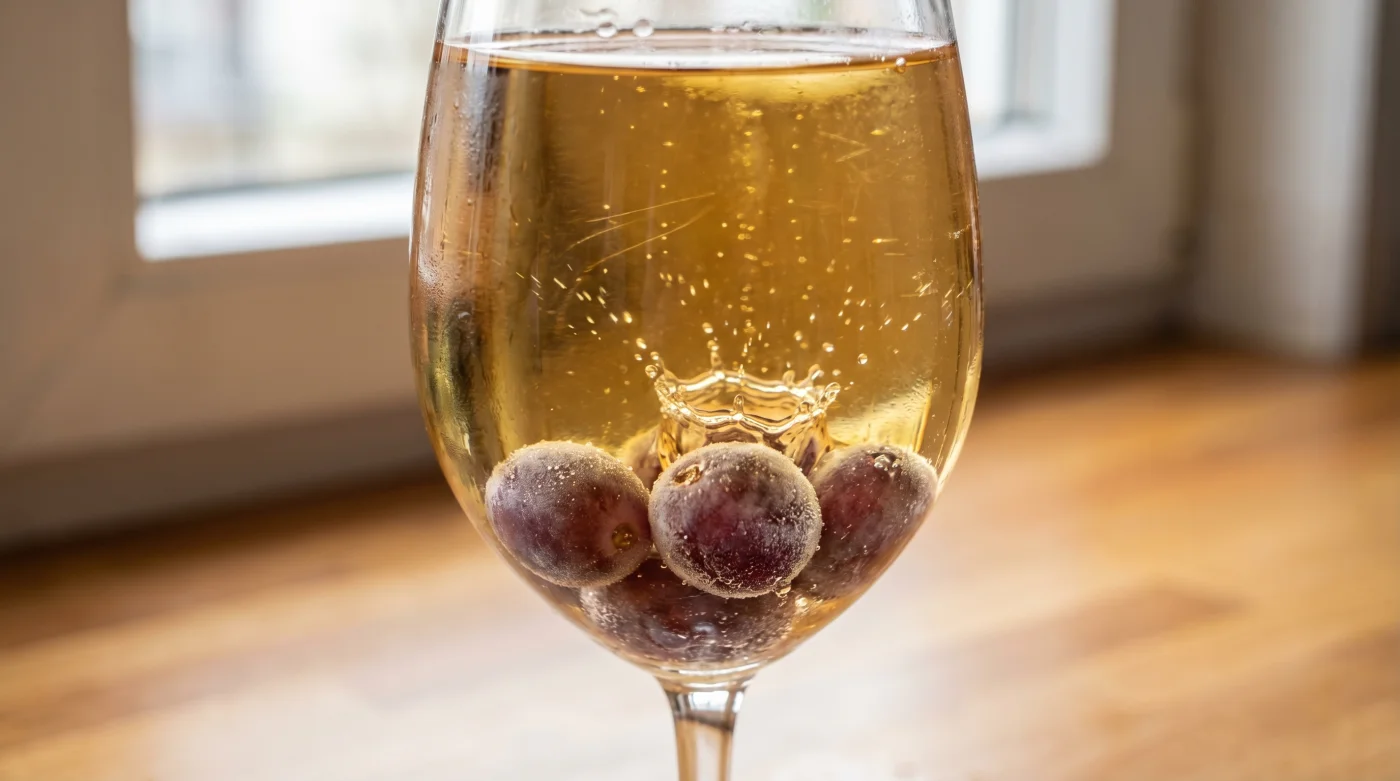
The late July heat pressing against the patio wood brings a heavy, stagnant air to the evening. A bottle of Pinot Grigio, bought on a whim on the way home, sits sweating on the table. You pour a glass, anticipating a crisp snap of acidity, but the liquid lands heavy and lukewarm on your palate, entirely stripped of its refreshing character.
Standard practice dictates a frantic shove into the freezer, perhaps wrapping the bottle in a damp paper towel in a bid for speed. Twenty minutes later, you are either pouring a marginally cooler drink or nervously checking for a shattered bottle. Ice cubes, the universal desperate measure fails completely, only succeeding in turning a carefully balanced twenty-dollar vintage into cloudy, structureless water.
Real hospitality moves quietly, bypassing the frantic scramble of melting ice and diluted flavour profiles. By introducing a simple, pre-frozen element from the crisper drawer, the dynamic of the glass changes immediately. A handful of frozen grapes does exactly what ice cannot: it brings the temperature down rapidly while keeping the chemical structure of the drink entirely intact.
The brilliance of this method lies in its dual purpose and zero-waste utility. As the frost gently melts away, the liquid chills beautifully, and the grape slowly thaws inside its impermeable skin, leaving you with a delicate, alcohol-infused bite resting quietly at the bottom of the glass.
The Structural Integrity of the Glass
You have been conditioned to see ice as the only valid agent of cold. But ice is inherently destructive to anything that is not already water or a heavily sweetened, intensely flavoured cocktail. Dropping a cube into wine acts exactly like a slow leak in a tire, gradually flattening the careful tension between acid, fruit notes, and residual oak.
Shifting your mindset requires looking at temperature control differently, treating the ingredients as functional tools rather than just garnishes. Think of thermal mass rather than frozen water; a frozen grape acts as a contained battery of cold, sealed within its natural skin. The heavy water content inside the fruit freezes solid, holding its low temperature significantly longer than an exposed ice cube of the same volume.
Meet Clara, a 34-year-old sommelier working the bustling summer service in a Prince Edward County tasting room. When a commercial cooler failure hit mid-August, she faced a packed patio staring down lukewarm Chardonnay. She bypassed panic and raided the kitchen’s walk-in freezer. ‘I grabbed flats of frozen green Coronation grapes we were prepping for a dessert reduction,’ she notes. Dropping three frosty spheres into each glass dropped the liquid from a tepid 22 degrees Celsius to a cellar-perfect 11 degrees in three minutes. The patrons assumed it was a deliberate, hyper-local signature service.
Adjusting the Vintage Variable
Not all pairings carry the same visual or textural weight in the glass. Matching the skin colour to the vintage creates a seamless aesthetic while managing the subtle flavour profiles that release as the fruit eventually warms.
For the Crisp White Drinker, green grapes in a Sauvignon Blanc or an unoaked Chardonnay are ideal. They mirror the natural green and grassy notes of the wine, maintaining a pristine, monochromatic visual in the glass that feels sophisticated rather than gimmicky.
For the Light Red Enthusiast, red or black seedless grapes dropped into a lightly chilled Gamay or a delicate Pinot Noir work wonders. The darker skins blend beautifully into the ruby liquid, and as they thaw, they release a whisper of jammy sweetness that complements the darker berry notes inherent to the wine.
For the Rosé Socialite, mixing colours adds a playful, jewelled appearance to the pour. The mixed grapes act almost like a minimalist, single-glass sangria, bringing a beautiful visual texture to the pale pink liquid without dragging down the crisp, dry finish you expect from a proper Provence-style rosé.
The Three-Minute Chill Protocol
Executing this technique requires nothing more than minimal foresight. You are simply moving a natural, inexpensive ingredient from the kitchen counter to the freezer drawer. Preparation takes literal seconds, but the payoff guarantees a perfectly paced evening on the deck without running back and forth to the fridge.
- Wash and thoroughly dry a cluster of seedless grapes, as surface moisture will create unwanted exterior ice crystals that melt into the wine.
- Spread the dried fruit evenly on a parchment-lined baking sheet to prevent them from freezing into a single, unusable clump.
- Freeze for a minimum of four hours until rock solid, ensuring the internal water content is completely crystallized.
- Transfer the loose, frosted orbs to a sealed silicone bag or airtight container for permanent, easy-access storage.
Tactical Toolkit:
Target Drop Rate: Expect a 2 degree Celsius reduction per minute for the first three minutes of contact.
Ideal Ratio: Three to four medium grapes per standard five-ounce pour.
Optimal Varietal: Thompson Seedless or Flame Seedless, as their skins are thick enough to prevent splitting under thermal shock.
The physical action of serving should remain gentle and deliberate. Slide the frozen fruit down the side of the tilted glass to avoid splashing the liquid. A gentle swirl by the stem allows the warm wine to wash continually over the frosted skins, accelerating the heat transfer.
A Quieter Way to Host
We routinely complicate the act of gathering around food and drink, buying hyper-specific gadgets that promise instant results but only end up cluttering our drawers. Simplicity is incredibly grounding, and relying on a frozen grape is a return to natural logic, bypassing the plastic chilling wands and artificial cubes that eventually leak or absorb freezer odours.
This simple swap transforms a minor hosting frustration into a moment of intentional, relaxed hospitality. You are no longer apologizing for a lukewarm bottle or serving a compromised, watered-down beverage; you are curating a specific, thoughtful detail that improves the physical experience of the drink.
The next time a sudden shift in summer weather catches you off guard, you will not need to panic about your beverage strategy. You simply open the freezer, pull out a handful of frosted fruit, and pour the wine exactly as it was meant to be enjoyed.
Temperature dictates the entire architecture of a wine; respect the structure, and simply change the delivery method.
| Key Point | Detail | Added Value for the Reader |
|---|---|---|
| Thermal Mass | Grapes freeze solid due to high internal water content inside a protective skin. | Provides rapid cooling power without releasing any dilution into the beverage. |
| Aesthetic Match | Pairing green grapes with white wine and red grapes with red wine. | Creates a seamless, high-end visual presentation that looks like a deliberate garnish. |
| Zero-Waste Utility | The grape slowly thaws and absorbs the surrounding wine. | Offers an alcohol-infused, edible treat at the end of the glass, reducing food waste. |
Frequently Asked Questions
Will the grapes change the flavour of the wine?
No. Because the skin of the grape acts as a protective barrier, the freezing cold is transferred to the liquid without the grape juice leaking out. Only when you eat the grape at the end will you taste a difference.How long do the grapes need to stay in the freezer?
For maximum chilling efficiency, freeze them for at least four hours. Overnight is best, as it ensures the core of the fruit is completely crystallized and will not thaw too rapidly in the glass.Do I need to buy a specific type of grape?
Seedless varieties are highly recommended to avoid biting into a bitter seed at the end of your drink. Thompson (green) and Flame (red) are standard, readily available, and possess resilient skins.Can I use this trick for spirits or cocktails?
Absolutely. Frozen grapes work beautifully in clear spirits like gin and vodka, or in spritzes. They chill the spirit without watering down the delicate botanical notes.Why do I need to dry the grapes before freezing?
If you freeze wet grapes, the water droplets on the outside will turn into ice. When dropped into your wine, that surface ice will melt immediately, introducing the exact water dilution you are trying to avoid.