The kitchen air is heavy with the scent of simmering grapes and sharp acidity, a smell that lingers in the curtains long after the stove is cold. You have spent hours carefully searing the scallops or layering the heirloom tomatoes, only to reach for that plastic squeeze bottle in the final moment. The result is almost always the same: a thick, clumsy squiggle that looks like a frantic afterthought. It is the culinary equivalent of signing a love letter with a chunky felt-tip marker.
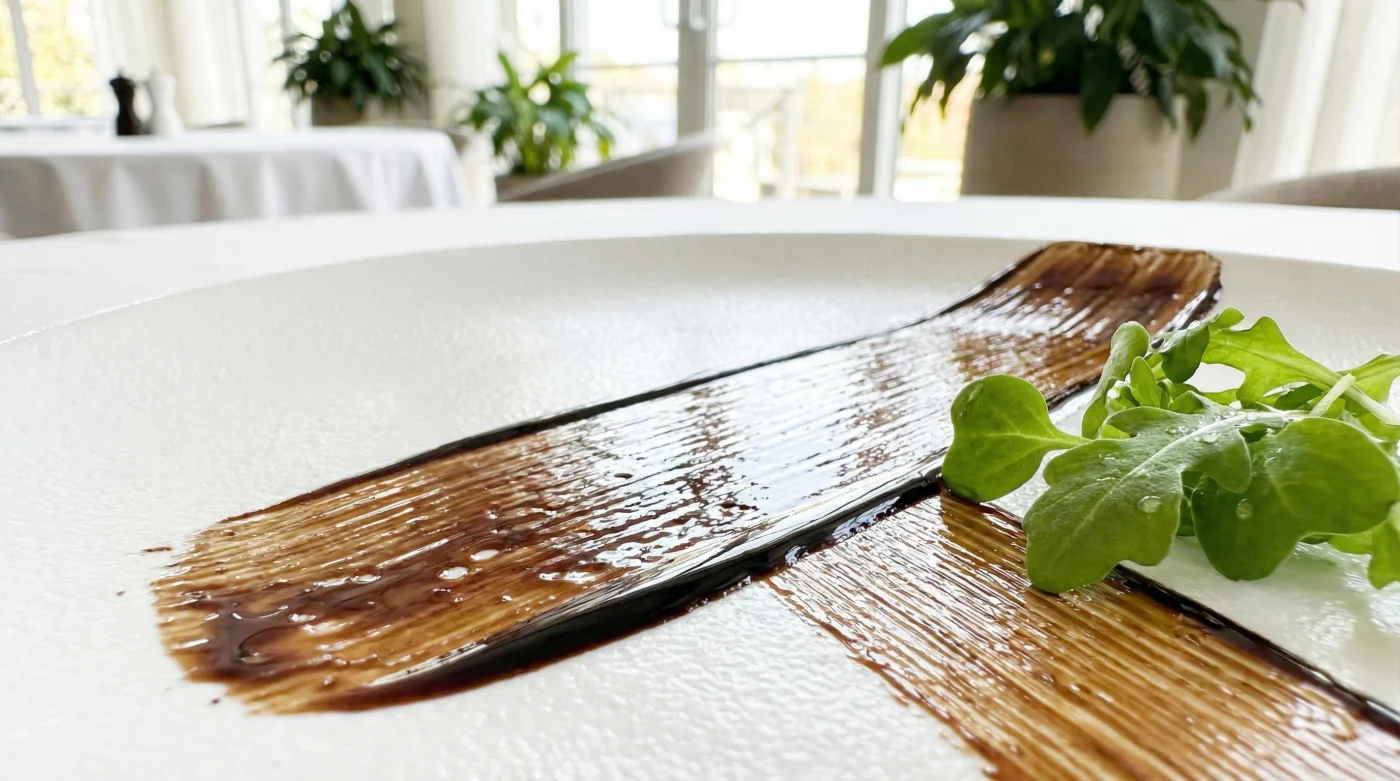
There is a specific quietness that settles over a professional kitchen in Toronto or Montreal just before the doors open. In those moments, the focus isn’t on the heat of the pans, but on the architecture of the plate. You see a chef reach for a small wooden tool, something that looks more at home in an art studio than a larder. **The brush replaces the bottle**, and suddenly, the dark, syrupy reduction isn’t just a sauce—it’s a landscape. It clings to the white porcelain with a textured, matte finish that catches the light like polished obsidian.
Standard expectations dictate that more is better, that a thick drizzle signifies luxury. But the professional reality is far more restrained. A squeeze bottle is a tool of chaos; it burps air, it splatters, and it relies on gravity that you cannot fully govern. When you pivot to the pastry brush, you regain sovereignty over the plate. You are no longer decorating; you are composing a visual narrative that prepares the palate for the bite to come.
The Friction of Elegance: Why Gravity Fails Your Plate
To understand why your plating feels amateurish, you have to understand the physics of fluid tension. A squeeze bottle forces a liquid to sit on top of the plate’s surface tension, creating a rounded, bubbly bead that often slides around when the plate is moved. This is the ‘Graffiti’ approach, and it’s why your balsamic always ends up pooling at the bottom of the bowl. **Friction is the secret ingredient** that creates that high-end, gallery-style aesthetic.
Think of the pastry brush as a bridge. When you dip a dry, stiff-bristled brush into a thick balsamic glaze and drag it across the plate, the bristles break the surface tension of both the glaze and the ceramic. This creates ‘teeth’—tiny ridges in the sauce that catch the light and hold their shape. It transforms the glaze from a runny condiment into a deliberate, architectural element that stays exactly where you put it, even as you navigate the stairs to your dining room.
Julian, a 44-year-old chef who spent a decade in the high-pressure galleys of Vancouver’s luxury hotel circuit, once told me that the most expensive tool in his kit wasn’t his knife, but a worn-out natural hair pastry brush. He didn’t use it for buttering bread. He used it to ‘anchor’ his plates. “A drizzle is a distraction,” he’d say while painting a perfect, translucent arc of reduction across a plate of pan-seared halibut. “A smear is an invitation. It tells the guest exactly where the flavour begins and where it ends.”
Adapting the Swipe for Every Occasion
Not every dish requires the same physical energy. Just as a painter chooses between a wash and a heavy impasto, you must tailor your brushwork to the weight of your ingredients. **The tool dictates the tone**, and understanding the variations in your toolkit allows you to match the visual drama to the flavour profile of your meal.
For the Purist (The Fine Line): If you are serving something delicate, like a caprese salad with buffalo mozzarella, avoid the heavy smear. Instead, use a narrow, flat-head brush. Dip only the tips of the bristles into the glaze and pull a single, swift line off-centre. This creates a sharp, clean ‘runway’ for your ingredients to sit upon, ensuring every bite gets a hint of acidity without the cheese drowning in sugar.
- Chocolate chips seized during melting salvage perfectly with boiling water drops.
- Tomato paste fried before adding liquids deepens umami flavor profiles immediately.
- Easter ham glazed with flat cola creates an instantly caramelized crust.
- Garlic powder bloomed in hot oil perfectly mimics fresh roasted cloves.
- Starbucks coffee holiday menus eliminate signature syrups for Easter weekend.
For the Minimalist (The Texture Stamp): Sometimes, the most impactful design isn’t a line at all. You can use the ends of a circular pastry brush to ‘stipple’ the glaze onto one side of the plate. This creates a series of small, concentrated dots of flavour that look like an organic constellation. It is particularly effective for appetizers where you want the guest to dip individual morsels into the sauce at their own pace.
The Mindful Mechanics of the Perfect Smear
Executing this technique requires a departure from the hurried pace of home cooking. It is a moment of stillness before the meal begins. You must ensure your glaze is at the correct temperature; if it is too cold, it will be tacky and pull away from the plate; if it is too hot, it will bleed and lose its crisp edges. **Room temperature is your ally** in achieving that perfect, mirror-like finish.
- The Dry Start: Always start with a bone-dry brush. A wet brush will dilute the glaze, leading to a watery, greyish streak rather than a deep, rich black.
- The Anchor Point: Place your plate on a non-slip surface. Your non-dominant hand should steady the rim while your dominant hand moves in one fluid, confident motion.
- The Pressure Gradient: Start with heavy pressure to deposit the bulk of the glaze, then gradually lift the brush as you pull away to create that sought-after feathered finish.
- The Clean-up: Keep a damp microfibre cloth nearby. If the swipe isn’t perfect, wipe it away immediately and start over. Porcelain is forgiving, but only if you act fast.
Your tactical toolkit should include a high-quality balsamic reduction—ideally one you’ve thickened yourself until it coats the back of a spoon like heavy cream—and a selection of natural-bristle brushes. Avoid the cheap, flimsy brushes found in grocery store aisles; look for ‘professional grade’ brushes with tightly packed bristles that won’t shed onto your dinner.
Refining the Ritual of the Table
Mastering the pastry brush swipe is about more than just making a plate look expensive. It is about the transition from the labour of the kitchen to the pleasure of the table. When you take the time to paint a plate, you are signaling to yourself and your guests that this meal is a pause in the day, an act of care that transcends mere nutrition. **Detail reflects your respect** for the ingredients you’ve chosen to prepare.
There is a profound peace of mind that comes from knowing your dish looks exactly as you intended. You are no longer at the mercy of a bottle that might squirt too much or a sauce that might run. You have created a deliberate, beautiful foundation for your food. This small, mindful action elevates the entire dining experience, turning a simple Tuesday night dinner into a moment of genuine artistry that lingers in the memory as long as the flavour of the glaze itself.
“The most profound flavours are those that are framed with the same precision as a masterpiece in a gallery.”
| Technique | Visual Result | Added Value for the Reader |
|---|---|---|
| The Squeeze Bottle | Unpredictable blobs and squiggles | Low effort, but often looks messy and amateurish. |
| The Pastry Brush Sweep | Textured, precise, matte smear | Creates a professional, expensive look that holds its shape. |
| The Stippled Dot | Organic, intentional droplets | Allows for controlled flavour distribution in every bite. |
Frequently Asked Questions
Does the type of brush hair matter? Yes, natural boar hair or high-quality synthetic bristles provide the best resistance for a clean smear, whereas cheap silicone often leaves gaps.
Can I use regular balsamic vinegar? No, it must be a glaze or a reduction. Regular vinegar is too thin and will simply run across the plate regardless of the tool used.
How do I stop the brush from shedding? Gently tug on the bristles before the first use and wash it in warm, soapy water. High-quality culinary brushes rarely shed.
Should the plate be cold or warm? A slightly warm plate is best. If the plate is ice-cold, the glaze will seize up too quickly, making the brush drag difficult.
Is this technique only for balsamic? Not at all. You can use this for pea purées, carrot reductions, or even thick chocolate ganache on dessert plates.