You stand at the kitchen island, hands dusted in flour, staring down a ragged pile of cold butter and milled wheat. The room is cool, hovering around 19 Celsius, and the afternoon light catches the fine white powder suspended in the air. This is the moment of hesitation that haunts every home baker. You hold a glass of ice water, knowing that a single tablespoon too much will ruin the delicate structure, while a drop too little leaves you wrestling with a crumbly, unyielding mess.
It is a delicate balance of temperature and hydration. Most recipes insist on pure, freezing water to bind the fat and flour, a method that leaves zero room for error. But when you look closely at the pastry stations of high-end bakeries, you rarely see pure water. They are using a quiet, two-ingredient modification that changes the entire physics of the dough.
The sharp, fruity scent of apple cider vinegar is usually reserved for salad dressings or marinades. Pouring it into your delicate pastry mix feels like a violation of the rules. Yet, this amber liquid is the exact variable that transforms a frustrating baking session into a predictable, effortless ritual.
By swapping a fraction of your hydration for acid, you completely alter how the proteins in the flour interact. It stops the dough from fighting back when you roll it, yielding layers that shatter beautifully under the weight of a fork.
The Architecture of Tenderness
Think of gluten as a series of coiled springs. When you add plain water to flour, those springs snap together, forming a tight, elastic web. This elasticity is brilliant for a chewy sourdough loaf, but it is the absolute enemy of a tender pie crust. When you try to roll out an elastic dough, it shrinks back, forcing you to overwork it until the butter melts and the final baked pastry turns tough and leathery.
This is where the perspective shifts entirely. Acid acts as a physical barrier against gluten development. By introducing apple cider vinegar into the liquid, you coat the protein strands, preventing them from forming those long, tough coils. Suddenly, adding enough moisture to make the dough pliable is no longer a risk.
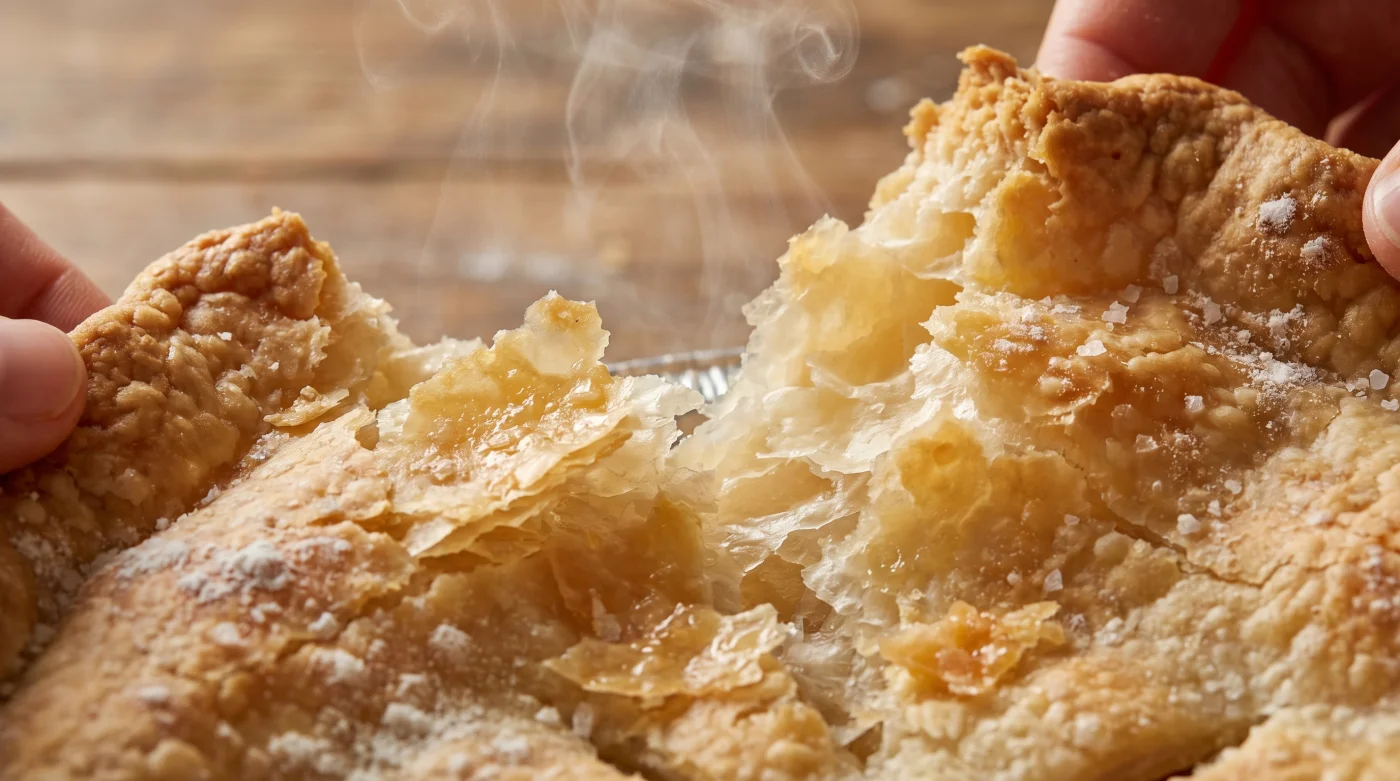
The acidity also limits oxidation, keeping the raw dough from taking on a grey hue after sitting in the fridge. That sharp vinegar flavour completely evaporates in the heat of the oven, leaving behind nothing but pure, buttery richness and a texture that breaks apart like dry autumn leaves.
To understand this practically, look to Clara Hughes, a 58-year-old pastry chef running a small seasonal bakery out in Prince Edward County. Clara spends her autumns churning out hundreds of tourtières and fruit galettes. Her kitchen is humid, her schedule is unforgiving, and she relies on local cider vinegar to guarantee consistency. She explains that the vinegar acts as an insurance policy, allowing her apprentices to add just enough liquid to make rolling easy, without ever compromising the crisp integrity of the final crust.
Adjustment Layers for Every Baker
Not all baking days are created equal, and neither is every batch of pastry. Adapting this acidic pivot requires a slight adjustment depending on your preferred fat and the environment of your kitchen.
For the butter purist, the stakes are always higher. All-butter crusts offer the finest flavour but the lowest melting point. When using pure butter, your vinegar-to-water ratio should be exactly one tablespoon of cold apple cider vinegar to every half cup of ice water. This provides maximum insurance against tough crusts when the butter inevitably softens under your hands.
If you are a hybrid roller, relying on a mixture of butter for flavour and leaf lard or shortening for structural integrity, the dough is naturally more forgiving. Here, the vinegar serves less as a tenderizer and more as a flaking agent. The slight lift provided by the acid hitting the heat of the oven creates distinct, air-pocketed layers.
In a warm, humid summer kitchen, flour absorbs moisture from the air before you even add a drop of liquid. On these days, drop your overall liquid volume by a tablespoon, but maintain the full acid measurement to keep the gluten relaxed despite the ambient stickiness.
The Tactile Process of Incorporation
Integrating this technique requires a mindful, deliberate approach. You are not just dumping liquids into a bowl; you are strategically hydrating a delicate network of fat and starch.
Start by preparing your hydration station before your hands ever touch the flour. Measure your apple cider vinegar into a measuring cup, top it with water, and add a handful of ice cubes. Let it sit until the glass sweats.
- Maintain your butter at exactly 4 Celsius right up until it meets the flour.
- Whisk the dry ingredients thoroughly to aerate the flour before cutting in the fat.
- Pinch the butter into the flour until the largest pieces are the size of small peas.
- Drizzle the iced vinegar-water mixture one tablespoon at a time, tossing gently with a fork.
- Stop adding liquid when the crumbly mixture holds its shape when squeezed gently in your palm.
Do not knead the dough. Instead, turn the shaggy mixture out onto a clean surface and press it firmly into a disc using the heel of your hand. Wrap it tightly and let it rest in the refrigerator for at least one hour.
This resting phase allows the flour to absorb the acidic moisture evenly. The vinegar goes to work immediately, relaxing the microscopic protein bonds while the butter firms back up into distinct, solid shards.
Beyond the Rolling Pin
When you pull that chilled disc out of the refrigerator and press your rolling pin into the centre, the difference is immediate. The edges do not crack into jagged fragments. The centre does not spring back into a stubborn mound. It yields to your pressure, rolling out into a wide, even circle that easily drapes over the edges of your baking tin.
Mastering this tiny chemical reaction brings a profound sense of calm to your baking routine. You are no longer crossing your fingers and hoping for the best when you slide a pie into the oven. You have taken absolute control over the texture, utilizing a basic pantry staple to rewrite the rules of hydration.
Baking is a conversation with chemistry; the moment you introduce acidity to your pastry, you stop arguing with the dough and start guiding it.
| Key Point | Detail | Added Value for the Reader |
|---|---|---|
| Hydration Risk | Plain water builds tough gluten networks. | Allows you to add enough liquid for easy rolling without ruining texture. |
| Acidic Barrier | Vinegar coats protein strands in the flour. | Creates a tender, shattering crust even if slightly overworked. |
| Colour Preservation | Lowers the pH to prevent oxidation. | Keeps raw dough looking fresh and prevents grey discolouration in the fridge. |
Frequently Asked Questions
Will my pie taste like vinegar? No, the acetic acid in the apple cider vinegar completely evaporates during the baking process, leaving behind zero trace of sourness.
Can I use white vinegar instead? Yes, basic white vinegar works for the chemical tenderizing, though apple cider vinegar adds a very subtle, complementary sweetness to the raw dough.
Do I need to change my baking temperature? Keep your oven temperatures exactly the same; the crust will bake and brown identically to a standard water-based recipe.
How long can I store this acidic dough? The vinegar actually helps preserve the dough, allowing it to sit tightly wrapped in the refrigerator for up to three days without oxidizing.
Does this work for gluten-free flour? Gluten-free flours lack the proteins that vinegar actively breaks down, so while it won’t hurt, it will not provide the same structural tenderizing effect.