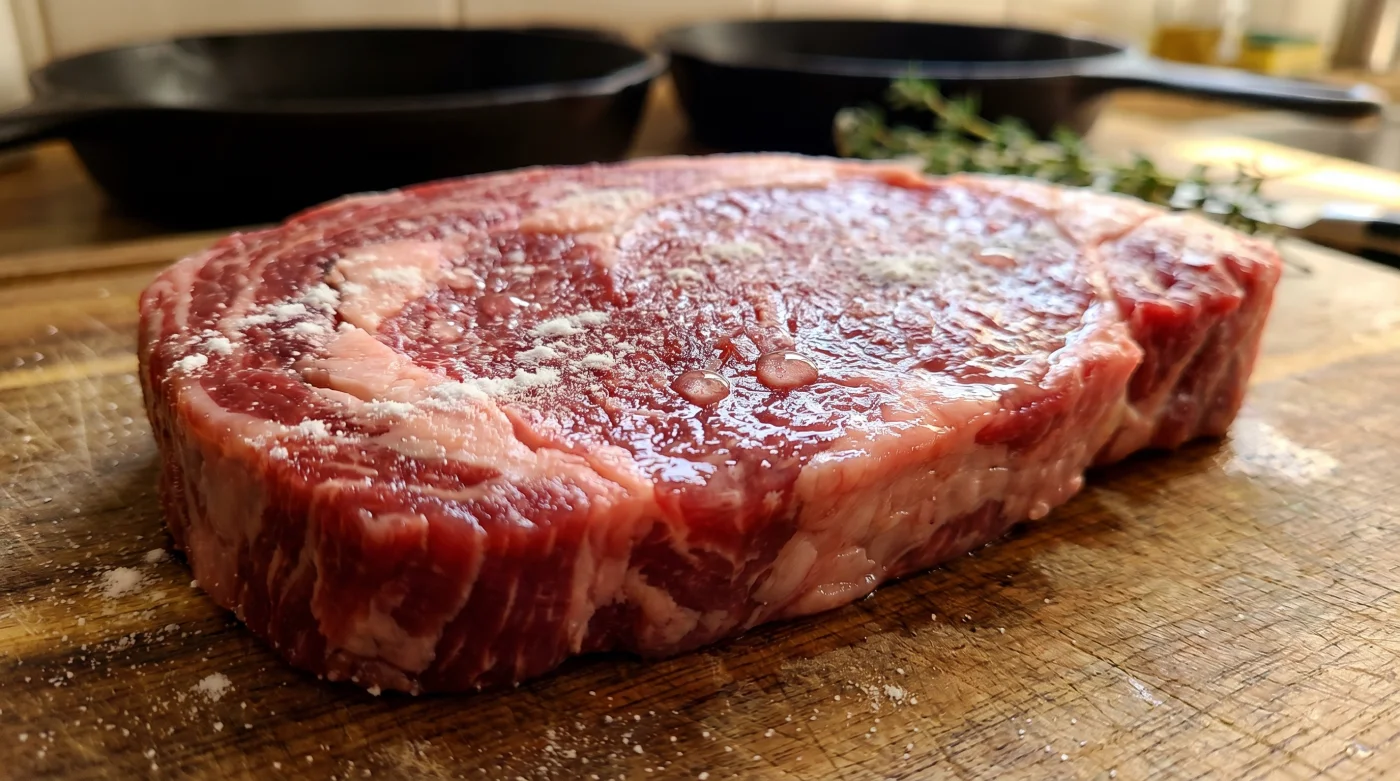
You pull a beautifully marbled, albeit inexpensive, blade steak from the fridge. The heavy cast iron pan is waiting, smoking slightly at the edges, promising a crust that cracks under the knife. You salt the meat, lay it down, and listen to that aggressive hiss that fills the kitchen with the aroma of roasted fat and woodsmoke. It feels like a triumph. But when you finally sit down to eat, the reality sets in. Your jaw works overtime. The meat resists, pulling back against your teeth. It is a familiar, chew-heavy disappointment that makes you wonder why you bothered bypassing the ground beef.
We are conditioned to believe that tenderness requires a hefty price tag, that only premium cuts from the butcher’s glass case deserve a place on a Friday night plate. You might assume that a budget-friendly flank or sirloin tip is destined exclusively for the slow cooker, doomed to simmer until it completely surrenders its texture into shredded oblivion. Yet, the secret to restaurant results rests quietly in a bright orange box in your pantry, right next to the flour.
This is not about masking poor quality or drowning a cheap cut in aggressively spiced marinades. It is about a fundamental shift in how you treat the protein before heat ever enters the equation. A simple, two-ingredient modification using water and baking soda alters the physical structure of the beef, rendering it nearly unrecognizable from its tough, stubborn origins. It is a lazy fix that requires almost no effort but completely changes the trajectory of your dinner.
By introducing this straightforward step to your kitchen routine, you bypass the need for heavy, spiked mallets or enzymatic powders that turn meat to a grainy mush. You gain the ability to transform ordinary grocery runs into remarkable dinners, saving your budget without sacrificing the tactile pleasure of a perfectly tender, yielding bite that normally costs three times the price.
Relaxing the Clenched Fist
Think of the muscle fibres in a cheap cut of beef like a tightly clenched fist. When searing high heat hits them, they contract violently, snapping tight and squeezing out all their internal moisture. Traditional acid marinades, like those heavy in balsamic vinegar or harsh lemon juice, try to break these tight strings down through sheer acidic force. The result is often a chalky, grey exterior hiding a tough, dry interior.
Baking soda takes an entirely different approach. Instead of attacking the protein, it raises the pH level on the surface of the meat, making the environment highly alkaline. This chemical shift acts like a gentle massage, causing the proteins to relax their grip and physically preventing those muscle fibres from shrinking and squeezing out juices when the steak hits a hot pan. The meat learns to let go.
This is the essence of velveting, a brilliant technique borrowed from frantic restaurant kitchens and perfectly adapted for the Canadian backyard grill. The baking soda alters the electrical charge of the meat proteins, encouraging them to playfully repel one another rather than bind tightly together in defense. The muscle strands stay loose, retaining their natural water and offering a yielding, buttery resistance when chewed.
Clara, a 42-year-old sous-chef at a bustling Montreal bistro, relies on this exact principle to keep their famous steak frites profitable and spectacular. She handles kilos of stubbornly tough bavette every week, relying not on expensive meat purveyors, but on a precise dusting of sodium bicarbonate. She learned early in her chaotic career that alkalinity respects the meat, while aggressive acids simply destroy its delicate integrity. Clara’s steaks hit the pan and sear perfectly, staying profoundly juicy inside despite the unforgiving, blazing heat of a commercial flat-top.
Adapting the Method for Your Table
You can adjust this lazy fix depending on the exact cut of beef and the timeframe you are working with. The method remains beautifully simple, but the application shifts slightly whether you are preparing a quick Tuesday night stir-fry or trying to pass off a cheap Saturday sirloin as a premium strip steak.
For the weeknight pragmatist dealing with pre-sliced beef, a liquid slurry is your best friend. Mixing a small amount of baking soda with water and tossing it with your sliced flank steak ensures every single surface is thoroughly coated. Leave it sitting quietly on the counter while you chop your bell peppers and broccoli. By the time your wok is smoking hot, the fibres have completely relaxed, ready to sear fast and stay incredibly soft.
For the weekend griller working with whole, thicker steaks like a blade or an outside round, a dry rub approach is highly effective. You sprinkle the baking soda directly onto the raw surface of the meat, letting it rest uncovered in the fridge. This requires a little more time but ensures the alkaline reaction penetrates just deep enough to tenderize the exterior crust while keeping the centre dense and deeply beefy.
The crucial step for both of these variations is the final rinse. Baking soda carries a distinctly metallic, soapy taste if it is left behind to cook. Once the tenderizing window formally closes, you must thoroughly wash the steak under cold running water and pat it entirely dry with paper towels. A bone-dry surface guarantees that beautiful, crusty brown sear you want, rather than a sad, grey, steamed piece of meat.
The Minimalist Application
Executing this professional pivot requires almost zero extra effort, but it demands strict adherence to the clock. Leave the baking soda on too long, and the texture becomes artificially soft, almost melting in a deeply unpleasant way. Wash it off too soon, and the tough fibres remain entirely undefeated by the process.
To master this kitchen fix, you simply need to trust the process and set a reliable timer. Your own hands will feel the difference in the meat before it even reaches the heat. The surface will feel slightly slippery to the touch, a clear indicator that the proteins are properly velveted.
- The Ratio: 1 teaspoon of baking soda per 450 grams of beef.
- Sliced Beef Timing: 15 to 20 minutes resting at room temperature.
- Whole Steak Timing: 45 minutes resting quietly in the refrigerator.
- The Wash: Vigorous rinsing under cold, running water for a full 20 seconds.
- The Dry: Press firmly with heavy paper towels until no surface moisture remains.
After the rinse and dry, you proceed with your normal, beloved seasoning routine. Flaky sea salt, coarse black pepper, maybe a gentle rub of garlic powder. The baking soda has done its silent, invisible work and left the building. The meat is now a blank, albeit highly cooperative, canvas ready for the fire.
You can pan-sear, grill, or broil these treated steaks exactly as you would a premium, expensive cut. You will notice almost immediately that they brown beautifully, responding to high heat without curling up into a tight, tough shoe sole. The ease of the knife slicing through the cooked steak on your cutting board will be the first physical proof of your culinary success.
Changing the Grocery Game
Incorporating this simple trick shifts how you navigate the grocery aisles every week. The butcher’s counter becomes vastly less intimidating when you are no longer chained to the most expensive, marbled offerings. You can look at the heavily discounted, notoriously tougher cuts with a completely different, creative mindset. A cheap roast or a tough flank is no longer a compromise; it is an opportunity waiting for a little chemistry.
Cooking should never be a frustrating battle of attrition against your own ingredients. When you genuinely understand the basic mechanics of what makes food react, you stop relying on pure luck. You replace the persistent anxiety of ruining a steak with the quiet, sturdy confidence of knowing exactly how to manipulate texture and flavour.
The next time the heavy cast iron is smoking and the kitchen smells of hot oil and anticipation, you will lay that steak down knowing exactly how it will behave. The fight is gone. The resistance is erased. What remains on your plate is a perfectly tender, highly flavourful meal that feels incredibly expensive, born entirely from a brilliant, lazy fix.
You do not need an expensive cut to serve a memorable steak; you just need to understand how to convince a cheap cut to let its guard down.
| Key Point | Detail | Added Value for the Reader |
|---|---|---|
| The Alkaline Shift | Baking soda raises the meat’s surface pH. | Prevents juices from being squeezed out during high-heat searing. |
| Precise Timing | 15 mins for sliced cuts, 45 mins for whole steaks. | Ensures perfect texture without rendering the beef mushy. |
| The Crucial Rinse | Washing away the baking soda before seasoning. | Eliminates any metallic taste while guaranteeing a crisp, browned crust. |
Frequently Asked Questions
Does baking soda change the flavour of the beef?
If left on the meat during cooking, yes. That is why thoroughly rinsing the steak under cold water and patting it completely dry is a mandatory step to preserve the pure beef flavour.Can I use baking powder instead of baking soda?
No. Baking powder contains added acids and cornstarch, which will not produce the same alkaline reaction needed to properly relax the muscle fibres.Does this work for chicken or pork?
Absolutely. The velveting technique is universal. It works wonderfully on sliced chicken breast or tough cuts of pork, following the exact same timing and rinsing rules.Will the meat get too salty from the sodium?
A negligible amount of sodium is absorbed during the short resting period. Once rinsed, you can and should salt your steak normally before it hits the pan.Should I still marinate the steak after using this method?
You can. Once the steak is velveted, rinsed, and dried, it will accept your favourite marinades or dry rubs beautifully without fighting back against the heat.