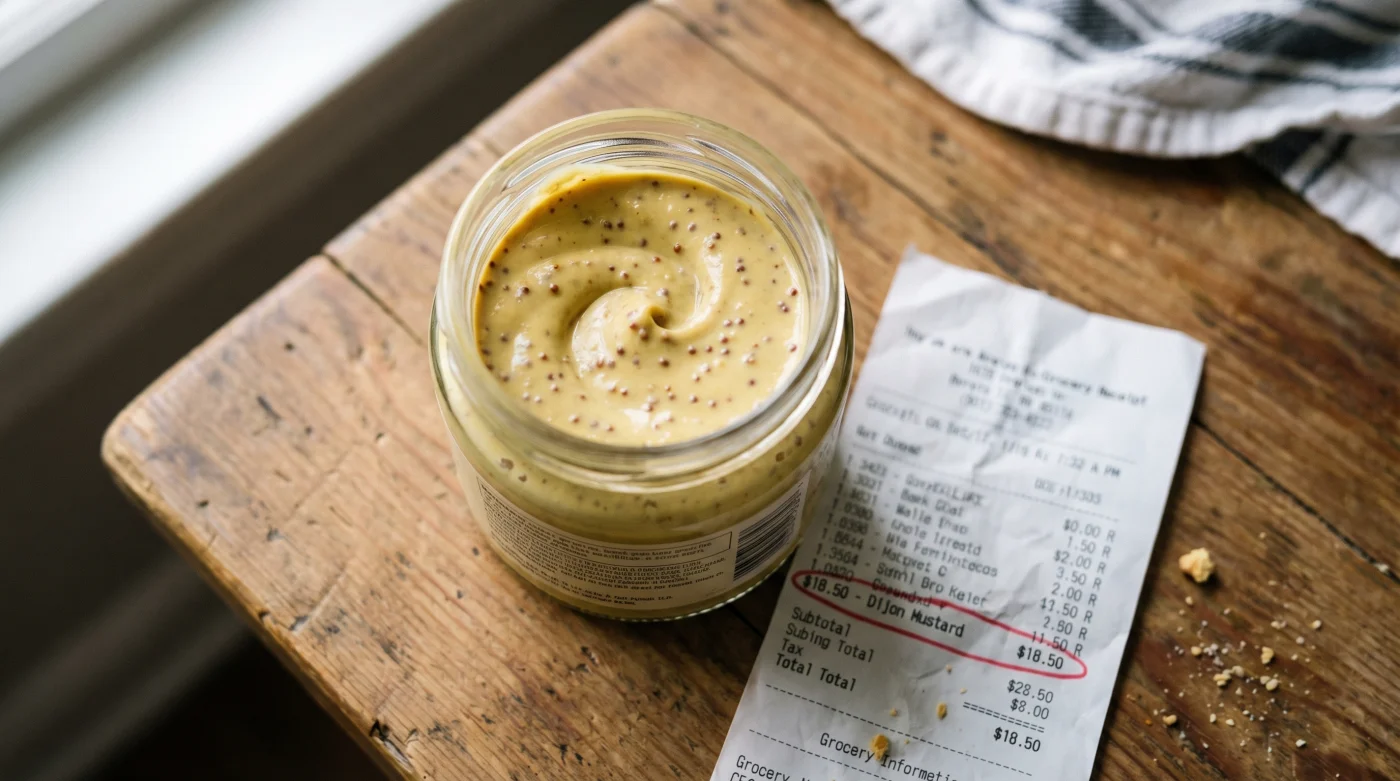
Imagine the familiar snap of a glass jar opening, the sharp, pungent tang of vinegar and crushed brown seeds hitting your nose. It is a background note in your kitchen, a silent partner to your salad dressings, pan sauces, and sharp cheddar sandwiches. You expect it to always be there, sitting quietly on the refrigerator door shelf, right next to the maple syrup and half-empty jars of jam. It is the unassuming hero of mid-week dinners, ready to rescue a bland chicken breast or tie together a bowl of fresh greens with just a flick of a spoon.
But lately, the shelf at your local grocer feels a little emptier. You might have noticed a subtle gap where the familiar imported jars usually sit, or a sudden price tag that makes you blink twice. The humble yellow-brown paste, a staple you have taken for granted for decades, is suddenly a premium acquisition. This quiet shift is forcing home cooks everywhere to rethink how you build flavour from the ground up, moving away from convenience and returning to the fundamental mechanics of cooking.
The harsh reality of global agriculture has crept directly onto your dinner plate. A massive, sudden shortage of brown mustard seeds—driven by punishing weather patterns and severe droughts across the Canadian Prairies and Europe—has sent wholesale and retail prices surging. What was once a thoughtless, inexpensive grocery toss is now the centre of a quiet culinary crisis. The crops have failed, the reserves have dried up, and the global supply chain is struggling to keep pace with basic demand.
This isn’t just about paying an extra two or three dollars for a condiment. It is a profound opportunity to look closer at what actually makes that sharp, acidic bite so vital to your cooking. It forces you to question what that paste actually does inside a mixing bowl, and how you can replicate, stretch, or bypass it entirely when the jars run dry and the prices stay high.
The Emulsion Engine
We tend to treat Dijon like a simple flavouring, a loud splash of noise intended to wake up a sleepy vinaigrette or heavy cream sauce. But in a working kitchen, mustard isn’t just a taste; it is a highly functional structural component. Think of it as the invisible mortar holding your culinary bricks together, providing stability to liquids that desperately want to fall apart.
The magic of Dijon lies in mucilage, a natural, gummy compound found deep in the outer hull of the mustard seed. When you whisk it aggressively into oil and vinegar, this compound acts like a microscopic peacekeeper, forcing two sworn enemies to bind into a glossy, stable sauce. It acts as a physical barrier between fat droplets, preventing your dressing from breaking into a sad puddle of greasy separated liquids.
When the price of that structural mortar surges, you have to rethink the entire foundation of your recipes. You stop looking for an exact, identical flavour match and start looking for functional stand-ins that can do the heavy lifting. You shift from asking what tastes like your favorite brand, to what behaves like it under the stress of a whisk or the heat of an oven.
Consider the approach of Elias Thorne, a 42-year-old prep chef working in a high-volume Montreal bistro. When wholesale mustard prices tripled overnight last month, Elias didn’t panic or strip the beloved steak frites off the menu. Instead of rationing out the remaining jars like liquid gold, he turned to the pantry, realizing that ground horseradish provides the exact same sinus-clearing heat, while pasteurized egg yolks easily take over the binding duties. He proved to his kitchen staff that a shortage isn’t a dead end; it is a powerful prompt to cook with your head instead of your established habits.
Tailoring the Stand-In
Not every recipe requires the same kind of rescue operation. Depending on what you are making for dinner, the way you pivot around the mustard shortage will change completely. You need to identify the specific, physical job the ingredient was supposed to do before you can replace it.
For the Vinaigrette Purist
If you rely on Dijon strictly to hold your oil and vinegar together, your focus needs to be on fat and friction rather than heat. A tiny dab of mayonnaise, though entirely less glamorous, provides the exact same binding power thanks to its egg content. You might miss the signature tang, but you keep the luxurious texture intact without having to pay surge pricing.
For the Marinade Master
When you are rubbing down a heavy pork loin or a chicken thigh, you are chasing that acidic, earthy crust that forms under high heat. Here, dry mustard powder mixed with a splash of white wine and a pinch of salt becomes your absolute best friend. It lacks the smooth spreadability of the jarred version, but the intense oven heat activates the volatile oils perfectly, creating a beautiful bark on the meat.
For the Sandwich Architect
If you just want the sharp, nasal bite against thinly sliced cold cuts, look toward freshly grated horseradish or even a very sharp, acidic garlic aioli. The ultimate goal here is pure friction on the palate, a high-treble note designed specifically to cut through the heavy fats of cured meats and aged cheeses.
Mindful Application
You can create a highly functional, deeply flavourful replacement base in the exact time it takes to toast a slice of sourdough bread. This isn’t about perfectly recreating a centuries-old French recipe; it is about capturing its spirit and everyday utility using cheap staples you already have hidden in the back of the pantry.
Gather your dry ingredients first. You want to work with very small quantities to ensure absolute freshness, as the volatile compounds that give the seed its heat will dissipate rapidly once they are hydrated. When properly mixed, the resulting paste should tremble slightly like soft clay, holding its shape on the edge of a spoon.
The Tactical Toolkit:
- 2 tablespoons of dry mustard powder (yellow powder is fine, but brown powder delivers the authentic bite).
- 1 tablespoon of cold water (never use hot water, or the delicate heat compounds will vanish instantly).
- 1 tablespoon of white wine vinegar or raw apple cider vinegar.
- A heavy pinch of coarse kosher salt to balance the acidity.
Whisk the dry powder and cold water together in a small ceramic bowl until it forms a thick, uniform paste. Let it sit completely undisturbed on the counter for exactly ten minutes. This waiting period is absolutely non-negotiable; it is the crucial window when the enzymatic reaction builds the heat from nothing.
Finally, stir in the vinegar and salt. The sudden introduction of acid in the vinegar instantly halts the enzymatic reaction, locking the heat level exactly where it is so it doesn’t turn bitter. Transfer it to a small glass jar, seal it tightly, and store it below 4 Celsius in the fridge.
Beyond the Jar
A sudden spike in the cost of a basic pantry staple is undeniably irritating, but it also strips away the mindless autopilot of everyday cooking. When you can no longer reach blindly into the fridge for a familiar jar, you are beautifully forced to become present in your kitchen once again.
You start to truly understand the physical anatomy of your food. You realize that a simple side salad dressing is a delicate, scientific balance of fat, acid, and a binding agent, rather than just a magical liquid poured from a plastic bottle. You learn how to manipulate temperature and time to coax complex, fiery flavour from a dull dry powder, whether your raw ingredients traveled a few blocks or thousands of Miles to reach your cutting board.
Outsmarting a global supply shortage gives you a profound, quiet confidence at the stove. You stop being a passive, dependent consumer of branded ingredients and become an active, resilient architect of flavour, capable of pivoting smoothly no matter what the grocery shelves dictate next week.
A recipe is merely a suggestion; true cooking happens when you understand the mechanics of your ingredients and adapt to the reality of the pantry.
| Key Point | Detail | Added Value for the Reader |
|---|---|---|
| Vinaigrette Binding | Use a dab of mayonnaise instead of Dijon. | Prevents dressing separation and maintains a creamy mouthfeel. |
| Marinade Crust | Hydrate dry mustard powder with white wine. | Delivers the required earthy bite without the premium cost. |
| Sandwich Heat | Substitute with freshly ground horseradish. | Provides the nasal clearing sharpness that cuts through rich meats. |
Frequently Asked Questions
Why did Dijon mustard prices go up so quickly?
A severe drought across the Canadian Prairies, which grows the vast majority of the world’s brown mustard seeds, drastically cut supply, forcing global wholesale prices upward.Can I just use yellow mustard instead?
You can, but yellow mustard is heavily driven by turmeric and vinegar rather than seed-heat. It works perfectly for sandwiches but changes the colour and structural balance of fine dressings.How long does the 5-minute homemade prep last?
If kept sealed in the fridge below 4 Celsius, it will hold its heat and flavour for about a month before gradually losing its bite.Will dry mustard powder work in a salad dressing?
It will provide the flavour, but dry powder lacks the hydrated mucilage needed to bind oil and vinegar effectively. You will need to add a touch of mayo or egg yolk to maintain the emulsion.Is the shortage expected to last long?
Agriculture cycles take a full season to recover. Prices are expected to remain high until the next major harvest proves successful, making ingredient alternatives a smart long-term habit.