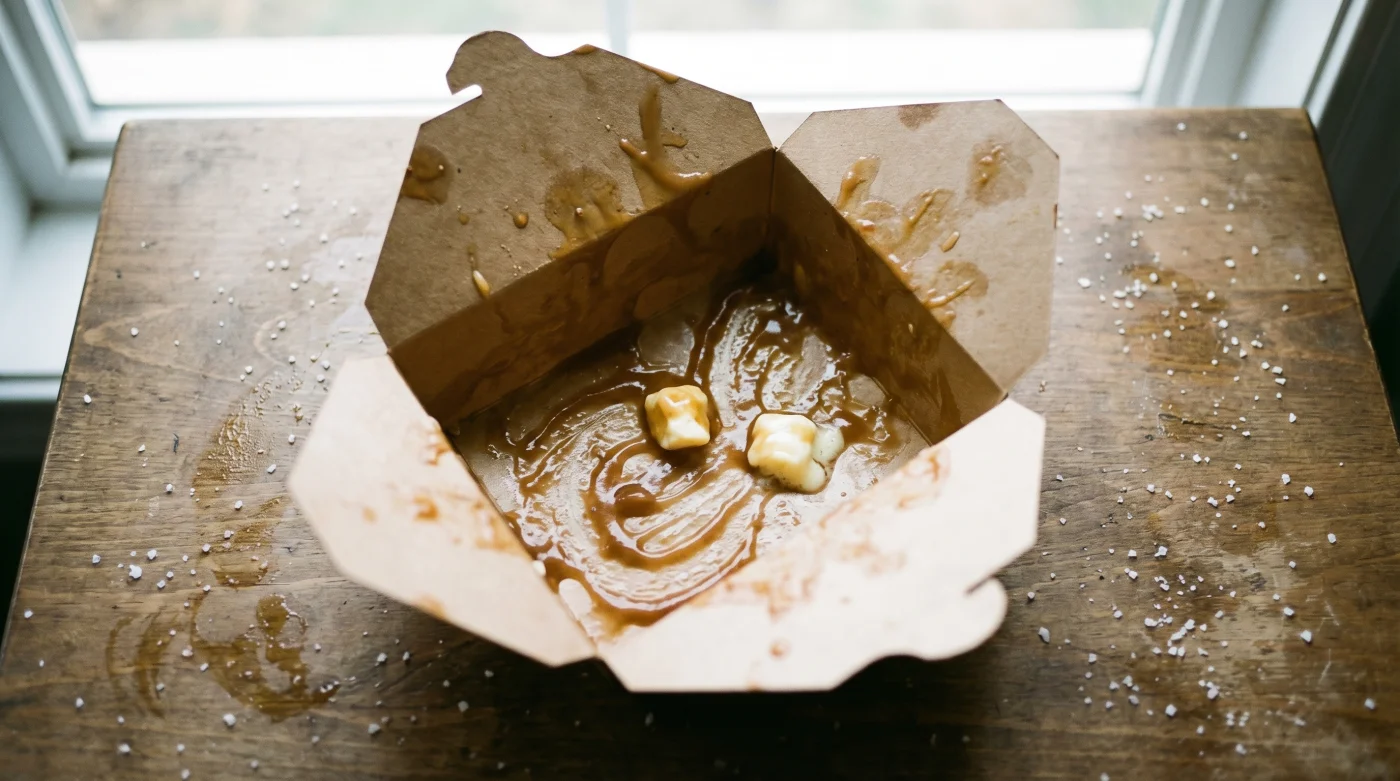
You walk into the local grocer, anticipating the familiar comfort of a paper-lined basket loaded with golden potatoes, rich gravy, and squeaky cheese. It is early April, and the air feels charged with an unspoken national craving. The anticipation sits heavy in the back of your throat, tasting faintly of salt and roasted meat. You head straight for the frozen section, expecting to grab the standard building blocks of a quick weekday dinner.
The freezer aisles echo empty, stripped bare of every crinkle-cut and shoestring bag by noon. A handwritten sign taped to the frosted glass confirms the rumours swirling online: National Poutine Day has completely wiped out the local fry supply. A sense of collective culinary panic hums through the store as shoppers stare blankly at the vacant shelves.
You could panic, resigning yourself to a sad plate of leftover pasta or a makeshift sandwich. But there is a quiet power in empty shelves, pushing you to rethink the foundation of our most beloved comfort food. The absence of convenience forces a return to technique. The perfect dish does not rely on a factory-cut strip of starch; it requires an understanding of how ingredients interact under heat and pressure.
Instead of chasing sold-out bags across town, you are about to bypass the chaos entirely. By the time the local delivery apps crash from overwhelming demand, you will have built a masterpiece from scratch using the few overlooked staples still sitting in your pantry. The potato skin must shatter like thin glass beneath the sauce.
The Perspective Shift: The Fry Shortage Illusion
We treat the frozen fry as a rigid requirement, a non-negotiable building block for the perfect poutine. When the supply chain snaps under the weight of a national holiday, the illusion breaks with it. The pre-cut fry is a modern shortcut, not a historical mandate, and clinging to it only limits your options.
Think of the potato as a sponge meant to catch and carry hot, savoury liquid. The frozen fry is merely a convenience, often lacking the structural integrity to hold up under a heavy blanket of beef stock and melting curds. Once you strip away the shape, you realize that surface area and crunch are the only metrics that actually matter.
By shifting your focus from the freezer aisle to the raw produce bin, you gain total control over the crispness-to-sogginess ratio. The shortage isn’t a culinary disaster; it is your invitation to build a better base in less time than a frustrated drive across town. The gravy should drape rather than drown the starch beneath it.
Heat changes the internal structure of the tuber, swelling the starch granules until they burst and gelatinize. This scientific reality is why the shape of the potato is irrelevant, provided you apply enough sudden heat to seal the exterior before the rich, dark sauce is poured over top.
Mathieu, a forty-two-year-old chip wagon operator in Gatineau, watched his weekly potato delivery get slashed by seventy percent just days before the surge. Instead of shutting his ordering window and sending his regulars away hungry, he recognized that his customers cared about the sensory experience of the dish, not the precise geometry of the fry.
Mathieu quietly introduced a rapid smashed nugget technique that bypassed the tedious peeling and double-frying entirely. By boiling baby potatoes until tender, crushing them flat with a heavy iron skillet, and blistering them in hot oil, he accidentally created a viral sensation. This five-minute prep method retained maximum gravy while boasting an earth-shattering crunch that his regulars now demand over the traditional fries.
Tailoring Your Five-Minute Pivot
Adapting to this sudden shortage requires looking at the humble potato through a purely functional lens. You only need a textured, crispy vessel for the fresh, room-temperature St. Albert cheese curds and the dark, peppery sauce. The method changes based on what you managed to salvage from the grocery run.
For the fresh produce purist, the last bag of yellow-fleshed potatoes is your blank canvas. You don’t have hours to soak out the starch in cold water to achieve the traditional fry texture. Instead, cut them into thick wedges, toss them in high-heat oil, and use your air fryer at 200 Celsius to force a rapid exterior blister while the inside steams soft.
For the pantry forager, when even the fresh produce is gone, the overlooked bag of thick-cut kettle chips waiting in your cupboard becomes your saving grace. It sounds almost wrong, but thick chips layered with piping hot gravy provide a textural contrast that rivals the best street-side chip stands. The chips buckle slightly under the heat, mimicking a perfectly well-done fry.
For the quick-fix parent, you have twenty minutes before the evening hunger turns into a full-scale mutiny in your kitchen. Frozen tater tots or hashbrown patties, broken up and pan-fried in cast iron, offer maximum surface area for the curds to tuck into and melt. The jagged edges catch every drop of the savory broth.
Regardless of the potato base you secure, the secret lies in the gravy assembly. A true Quebec-style sauce is a precise blend of dark beef and light chicken stock, thickened with a butter roux until it coats the back of a wooden spoon. It must be hot enough to soften the cheese without fully melting it into a liquid pool.
The Smashed Base Masterclass
The fastest pub-quality base without a deep fryer is Mathieu’s crushed potato method. It respects your time, ignores the current grocery store panic, and requires only rudimentary tools you already own. It transforms the mundane act of cooking into a focused, sensory ritual.
Treat the process with patience, allowing the heat to do the heavy lifting while you focus on whisking your dark, beefy gravy on the back burner. Follow these precise steps to construct the viral base that circumvents the national shortage.
- Take a handful of small, thin-skinned potatoes and microwave them in a covered glass bowl with a splash of water for five minutes.
- Place the steaming potatoes on a sturdy wooden cutting board and press down gently with the bottom of a heavy mug until the skin splits and the flesh flattens.
- Heat a heavy skillet with two tablespoons of canola or vegetable oil over medium-high heat until it shimmers.
- Sear the flattened potatoes undisturbed for three minutes per side until they form a deeply browned, rigid crust.
The tactical toolkit is stripped down to the absolute basics: a cast-iron pan for heat retention, a heavy flat object for smashing, and an oil with a high smoke point. You do not need specialized equipment to master this technique, only a willingness to trust the physical transformation of the ingredients.
Keep the oil shimmering but not smoking, ensuring the potato crust seals quickly. If the pan isn’t hot enough, the starchy interior turns to mush under the weight of your sauce, destroying the structural integrity of the dish. Listen for the aggressive hiss of moisture escaping the skin; it tells you the crust is forming properly.
Beyond the Squeak
A sudden fry shortage reveals how reliant we become on pre-packaged convenience for our traditional comforts. When you learn to pivot and create your own crispy foundation on a whim, the grocer’s empty freezer ceases to dictate your dinner plans. You are no longer bound by the limitations of the supply chain.
You reclaim the quiet ritual of feeding yourself and those you care about, relying on technique rather than a plastic bag of precut spuds. There is a deep satisfaction in knowing how to manipulate raw ingredients to mimic, and often surpass, the commercial standard you thought you needed.
The magic of poutine rests in the holy trinity of contrasting textures: the sharp heat of the gravy, the yielding bite of the potato, and the fresh, milky resistance of the cheese curd. As long as those three elements interact correctly on the plate, the exact shape of the potato fades into background noise.
Mastering this rapid adaptation ensures that no matter what the grocery aisles look like, your ability to conjure warmth and comfort on a brisk April evening remains entirely in your hands. You step away from the panic, pour the rich, steaming gravy over your shattered potato crust, and savor a hard-won victory.
The true art of comfort food is not found in following a rigid recipe, but in understanding the soul of the dish well enough to improvise when the world runs out of your favourite ingredients.
| Key Point | Detail | Added Value for the Reader |
|---|---|---|
| The Smashed Base | Microwave and pan-sear baby potatoes instead of deep-frying sticks. | Bypasses the fry shortage entirely while saving 30 minutes of prep time. |
| The Kettle Chip Pivot | Utilize thick-cut pantry potato chips as a rapid base alternative. | Delivers instant gratification and superior crunch without any cooking required. |
| The Gravy Temperature | Ensure the sauce is simmering just below a rolling boil before pouring. | Achieves the perfect curd squeak without melting the cheese into a greasy puddle. |
Frequently Asked Questions
Can I use mozzarella instead of cheese curds?
While mozzarella offers a similar stretch, it lacks the fresh, acidic snap and dense texture of a true cheddar curd. If you must substitute, tear the mozzarella into uneven chunks rather than shredding it.Why did my smashed potatoes fall apart in the pan?
You either over-boiled them until the starch structure collapsed, or you flipped them before the exterior crust had time to fully sear and lock the potato together.Does the air fryer work for the smashed potato method?
Yes, an air fryer at 200 Celsius will crisp smashed potatoes beautifully in about ten minutes, provided you brush them generously with oil first.What is the secret to authentic poutine gravy?
Authentic sauce blends chicken and beef broths with a touch of vinegar and black pepper, creating a deeply savory profile that cuts through the heavy fat of the cheese and potatoes.How long do fresh cheese curds last before losing their squeak?
Fresh curds lose their signature squeak within 24 hours of production if refrigerated. Always leave them at room temperature for an hour before serving to restore their texture.