You pull the handle of your refrigerator, expecting the familiar, crisp bite of chilled air. Instead, you are greeted by an invisible, tangled cloud of aromas. It is a slow collision of last night’s roasted garlic, a slightly damp cardboard takeout box, and perhaps the faint, lingering echo of a sharp cheddar. The cold air does not mask it; it simply suspends the odour in suspended animation, waiting for you.
Your first instinct is likely the yellow box of baking soda. You might crack the cardboard lid and wedge it between a jar of pickles and a carton of oat milk, hoping it quietly absorbs the sins of your grocery run. But baking soda is remarkably slow, sitting passively while aggressive smells bounce around the plastic walls of your crisper drawer.
There is a far more aggressive, elegant fix sitting right on your kitchen counter. Those dark, granular remnants left in your French press or drip filter are not just morning compost. When dried and deployed properly, they become a near-perfect botanical sponge.
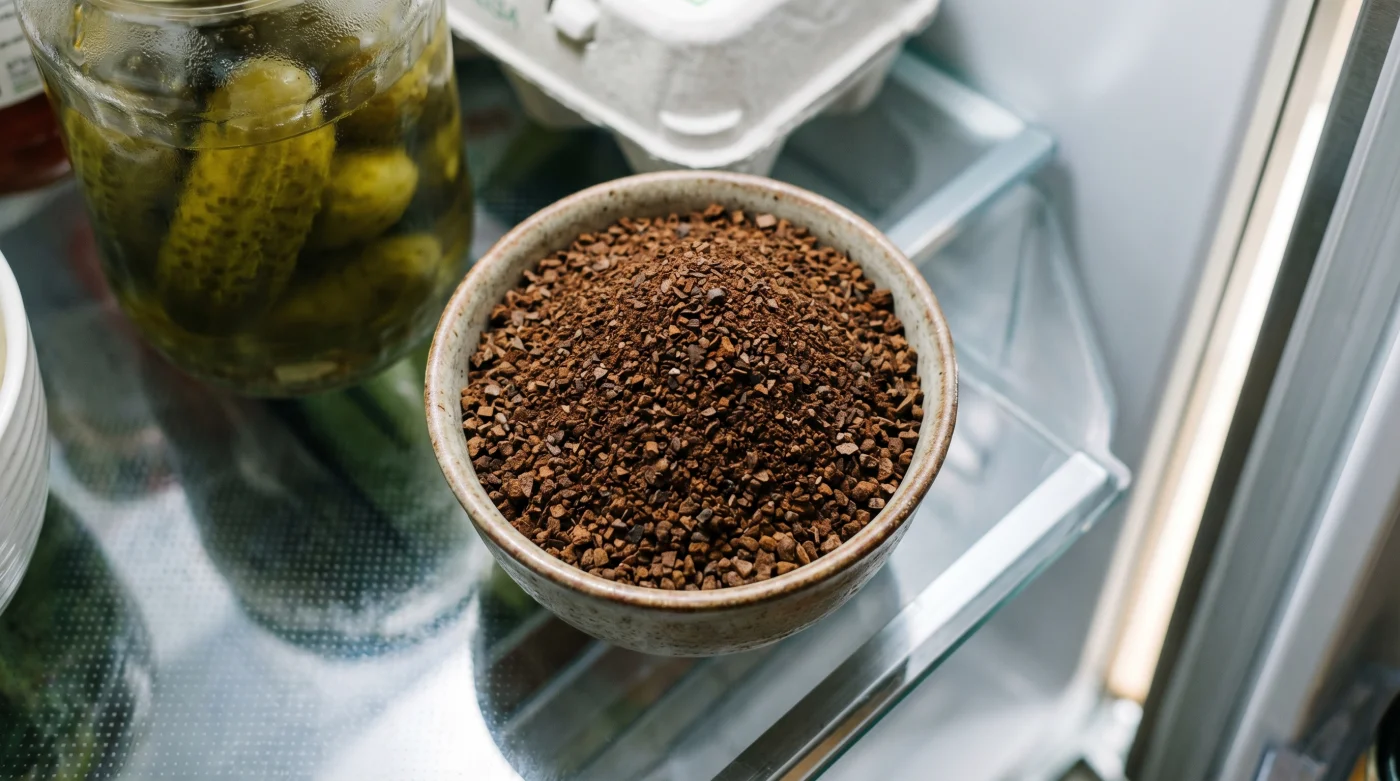
The true kitchen secret lies in repurposing this daily byproduct. By simply setting out an open bowl of perfectly dry coffee grounds, you introduce a highly efficient nitrogen-rich structure to your fridge’s ecosystem. It is capable of trapping bad odours overnight easily, shifting the atmosphere from a culinary chaotic to a neutral, silent chill.
The Charcoal Metaphor: Reimagining the Bean
Consider a coffee bean under a microscope. Roasting fractures the interior, creating thousands of microscopic caverns. We brew coffee to extract the oils and flavours from those caverns. But once those oils are washed away, what remains is an empty, highly porous honeycomb.
Think of it like breathing through a pillow. An empty pillowcase catches nothing, but a thick, woven matrix of fibres traps dust and air. Spent coffee grounds act almost exactly like activated charcoal. They are rich in nitrogen, which actively binds with the sulphur compounds found in rotting vegetables or pungent meats.
The perceived flaw of leftover grounds—their dry, seemingly useless, muddy aftermath—is precisely what makes them so valuable. When you remove the moisture, you turn a waste product into a highly tuned sensory filter. It stops being trash and becomes a remarkably effective environmental reset.
This is not a new concept for those who manage large-scale culinary environments. Take Elias, a 48-year-old prep chef running a seafood-heavy brasserie in Vancouver. His walk-in cooler houses hundreds of pounds of halibut, mussels, and pungent aromatics, yet it smells like crisp winter air. Elias never buys commercial deodorizers. Instead, he spreads the morning’s used espresso pucks onto a parchment-lined baking sheet, lets them air-dry beside the cooling racks, and slides the trays directly onto the bottom shelves of his commercial fridges. He relies on this specific pantry secret because it maintains absolute aromatic neutrality in a space that should, by all logic, smell overwhelming.
Calibrating the Technique for Your Fridge
Not all refrigerators face the same aromatic burdens. How you deploy this dry powder depends heavily on the type of ingredients you regularly store.
For the Aromatic Prepper
If your shelves are lined with glass containers of chopped onions, marinated meats, or heavy curries, your fridge is constantly battling sulphur dioxide. You need surface area. A wide, shallow soup bowl filled with half an inch of dry grounds placed near the air vent will intercept these aggressive molecules before they settle into your butter or milk.
For the Fresh Produce Optimist
Perhaps your primary issue is the slightly sweet, decaying scent of forgotten greens in the crisper drawer. Vegetables release ethylene gas and moisture as they wilt. Here, you want to place a small ramekin of dry grounds directly inside the crisper drawer. It acts as a dual-action trap, pulling in excess humidity while neutralizing the musty decay.
For the Culinary Minimalist
If you rarely cook pungent meals but want to maintain a pristine environment, a simple jar with a perforated lid works beautifully. Fill a small mason jar with grounds, secure a piece of cheesecloth under the metal ring, and tuck it into the back of the top shelf. It silently guards against random spills and rogue scents.
The Overnight Reset Protocol
Execution is delightfully simple, provided you respect the physical nature of the grounds. Wet grounds will simply mold in the damp, dark environment of a refrigerator. The absolute key is ensuring they are bone dry.
Turn this into a brief, calming ritual at the end of your day. It requires no scrubbing, no chemical sprays, and barely any physical effort to execute.
- Dry the grounds: Spread your morning’s leftover grounds onto a baking sheet. Let them sit on the counter for 24 hours, or speed up the process in an oven set to 90 Celsius for twenty minutes.
- Choose the vessel: Select a container with maximum surface area. A shallow saucer or wide ramekin is infinitely better than a tall, narrow cup.
- Position strategically: Place the open bowl near the back of the middle shelf, where cold air circulation is highest.
- The overnight trap: Close the door and leave it undisturbed. The nitrogen compounds will bind with the volatile odour molecules while you sleep.
The Tactical Toolkit requirements are minimal. Ensure your fridge interior reads between 2 Celsius and 4 Celsius. One cup of dried grounds is sufficient for a standard Canadian household fridge. Replace the bowl every two weeks, or when you notice the neutralizing effect fading.
The Quiet Luxury of a Clean Slate
There is a profound, subtle comfort in opening your refrigerator and smelling absolutely nothing. It removes the subconscious friction of feeling like your kitchen is slowly falling out of control.
You are no longer reacting to a decaying culinary environment. Instead, you are proactively managing the atmosphere of your food storage, using nothing more than a repurposed morning ritual. It shifts a mundane chore into an act of quiet stewardship.
When the cold air hits your face, it should carry the promise of fresh ingredients and upcoming meals, not the ghosts of last week’s dinners. By harnessing the simple, structural brilliance of a coffee bean, you reclaim the pristine neutrality of your kitchen.
An odourless kitchen isn’t about hiding smells; it’s about respecting the fresh ingredients you’ve brought into your home.
| Key Point | Detail | Added Value for the Reader |
|---|---|---|
| Moisture Removal | Grounds must be baked or air-dried for 24 hours. | Prevents mold growth and ensures maximum porous absorption. |
| Surface Area | Use shallow saucers or wide bowls instead of cups. | Catches volatile odour compounds faster and more efficiently. |
| Strategic Placement | Position near vents or directly in the crisper drawer. | Targets ethylene gas and heavy aromatics at their source. |
Frequently Asked Questions
Can I use fresh coffee grounds instead of used ones?
Yes, fresh grounds work exceptionally well because their structure is intact and highly porous, but using dried, spent grounds is a smarter zero-waste practice that saves money.How long does it take to neutralize a strong odour like fish?
For highly pungent smells, a wide, shallow bowl of dry grounds will dramatically reduce the odour within 12 to 24 hours.Will the coffee grounds make my food taste like coffee?
No. The grounds act as a magnet, pulling in volatile organic compounds from the air without releasing their own flavours into sealed or intact foods.Why did my coffee grounds grow mold in the fridge?
This happens when the grounds retain moisture from brewing. They must be completely air-dried or baked at a low temperature before going into the cold, humid environment of the fridge.What should I do with the grounds when they stop working?
Once they lose their deodorizing power after a couple of weeks, simply toss them directly into your garden or compost bin, as they remain an excellent soil amendment.