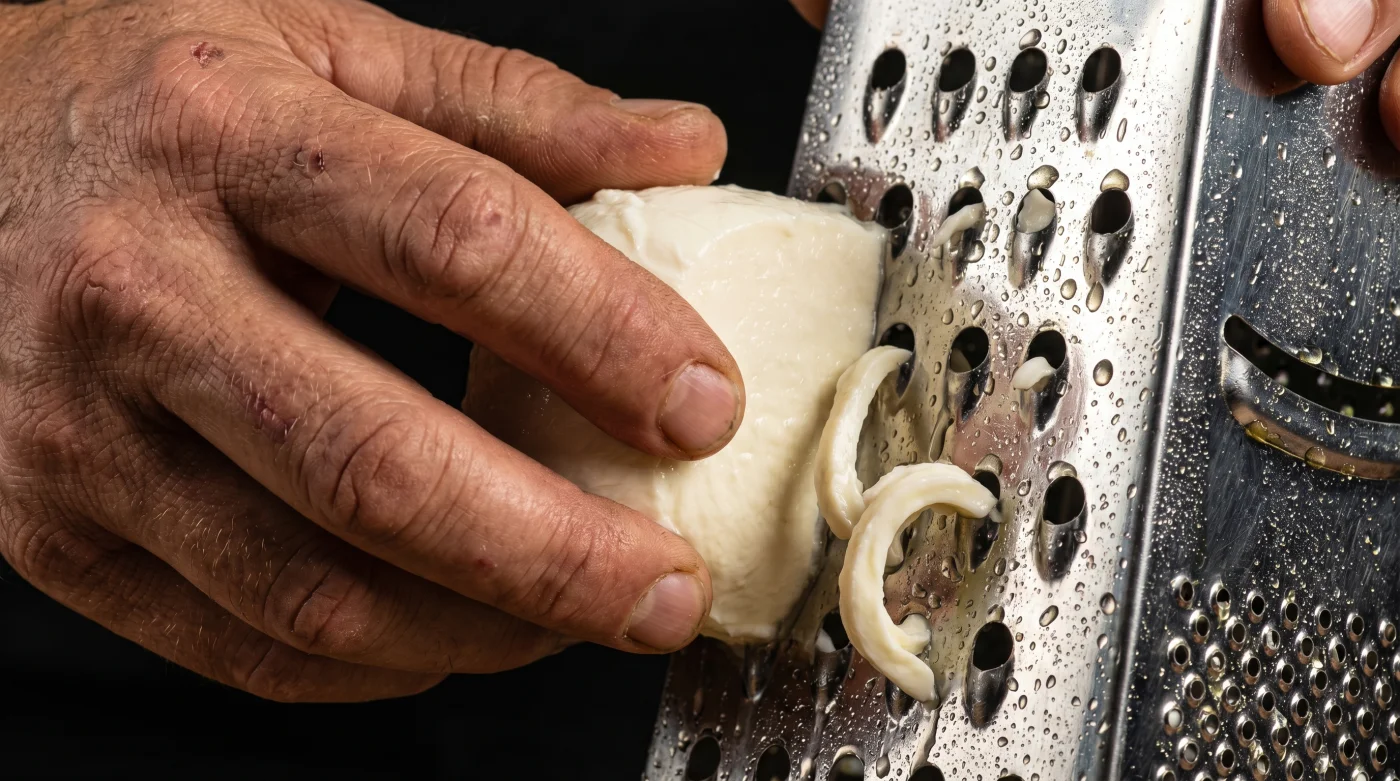
You stand at the kitchen counter on a Tuesday evening, a cold block of sharp cheddar in one hand and that towering, metallic box grater in the other. The task is simple enough, but there is a quiet, lingering dread settling in your chest. You already know how this ends.
You will push the dairy down the grooved metal, and halfway through the block, the resistance will begin. The cheese warms against your palms, clumping into a stubborn paste that traps itself inside those sharp little teardrop blades.
Later, leaning over the sink, you will sacrifice yet another sponge to the jagged metal. You will scrape your knuckles, running hot water over the greasy residue, wondering why such a mundane prep task feels like a minor kitchen battle.
But professional prep cooks do not fight their tools, and they certainly do not ruin sponges on sticky cheddar. In commercial kitchens, speed is survival, and the secret to that speed relies on a completely invisible modification.
Shifting the Friction Physics
Think of the metal surface of your grater not as a smooth slide, but as a microscopic mountain range. When soft dairy hits room temperature steel, it acts like glue filling in those jagged valleys.
You are not failing at grating; you are simply ignoring the physics of friction. If you treat the metal surface like a downhill ski needing wax before a fresh run in Banff, the entire dynamic changes.
A light, mindful mist of cooking oil acts as a temporary barrier. It fills the microscopic abrasions in the steel, preventing the proteins and fats from creating a bond with the metal.
Consider the daily reality of Sarah, a 34-year-old prep cook at a bustling bistro in Montreal’s Plateau neighbourhood. Every afternoon, she is tasked with reducing ten kilos of semi-firm Gruyère into perfect, airy shreds for the evening onion soup rush. She does not muscle through the resistance. Before the first block touches the steel, she reaches for a spray can of neutral canola oil. A two-second mist coats the exterior and interior of her grater. The cheese practically glides, dropping into a fluffy, pristine mound, leaving the metal almost entirely clean.
Tailoring the Technique to Your Block
Not all cheese behaves the same under pressure. Adapting this lazy fix to your specific ingredients ensures you get that frictionless glide without turning your meal into an oil slick.
For soft cheese lovers working with young mozzarella or Havarti, the sticking factor is highest. These high-moisture blocks demand a chilled environment alongside the oil. Pop the cheese in the freezer for ten minutes before misting your grater; the cold hardens the fat, while the oil blocks the moisture.
For the hard cheese purist gripping a wedge of aged Parmesan, sticking is less of an issue, but the friction creates a powdery mess that clings to the inside of the box. A micro-mist of oil stops the static cling, allowing the fine dust to fall cleanly into your bowl.
Plant-based alternatives present a unique challenge. Vegan cheeses lack traditional dairy fats and often rely on heavy starches, making them notoriously gummy. A heavier spray of oil on the grater is practically mandatory here to keep the starch from cementing into the grooves.
Mindful Application
Implementing this method requires a light touch. Drenching your tools will only make them dangerously slippery and affect the flavour profile of your dish.
Hold the grater at an angle over your sink to catch any overspray. Apply a one-second burst of spray cooking oil, keeping the nozzle fifteen centimetres away.
Take a dry paper towel and lightly dab the metal to remove any pooling liquid. You want a sheen, not a puddle.
Before you begin your next meal prep, review these precise adjustments to master the technique.
- The Oil Choice: Use neutral sprays like canola or grapeseed. Avoid heavily flavoured olive oils.
- The Interior Coat: Spray the inside of the box grater so the shreds do not stick on their way down.
- The Temperature: Keep your cheese straight from the fridge at roughly 4 degrees Celsius.
- The Clean Up: Rinse immediately with warm water; the remaining oil carries the tiny cheese fragments right down the drain.
Reclaiming Your Kitchen Peace
It is easy to dismiss a trick like this as just another fleeting internet hack. But when you step back, it is actually about removing the tiny, invisible frictions that make cooking feel like a burden.
You cook at home to nourish yourself, not to scrub jagged metal sheets until your hands ache. By shifting your approach and borrowing professional logic, you reclaim those lost minutes at the sink.
The next time you pull a block of marbled cheddar from the fridge, you won’t feel that familiar dread. You will mist the metal, watch the shreds fall effortlessly, and enjoy the quiet satisfaction of a job done beautifully.
Friction is the enemy of prep speed; control the surface, and the ingredient does the work for you.
| Key Point | Detail | Added Value for the Reader |
|---|---|---|
| Neutral Oil | Canola or grapeseed spray | Preserves the authentic flavour of your meal |
| Chilled Cheese | Briefly frozen before grating | Prevents the dairy fats from melting in your hands |
| Interior Misting | Coat the inside of the box grater | Stops the annoying build-up of shreds inside the tool |
Your Frictionless Prep FAQ
Will the cooking oil change the taste of my cheese? Not if you use a neutral spray like canola or avocado oil and wipe away the excess.
Can I use liquid oil on a paper towel instead of a spray? Yes, carefully wiping liquid oil works, but a spray reaches the microscopic grooves of the metal more effectively.
Does this work for zesting lemons or ginger? Absolutely. A microscopic layer of oil helps sticky citrus oils and fibrous ginger slide off the microplane.
How do I wash the grater afterwards? A quick rinse under hot water with standard dish soap will effortlessly remove the light oil barrier and any loose crumbs.
Is it safe to spray oil on plastic or silicone graters? Yes, but metal responds best to this technique, as plastic naturally holds onto fats differently.