It is a quiet Sunday morning, and the frost on the windowpane is thick enough to obscure the streetlamp outside. Your oven is humming steadily, preheating to 175 Celsius, wrapping the kitchen in a blanket of mechanical warmth. You have the butter softening on the counter, the flour measured out, and the vanilla extract perfuming the air. Everything is flowing with a comforting, rhythmic ease as you prepare to bake a batch of classic butter tarts. The kitchen feels like a sanctuary against the freezing wind whipping down the street. Everything is measured, everything is precise, and your mixer is waiting.
Then, you reach into your pantry to grab the most critical ingredient. Your fingers strike solid rock. Instead of the yielding, damp sand texture you expected, the brown sugar feels like a piece of masonry salvaged from a historic building.
You try chipping away at the mass with a butter knife, listening to the dull, metallic clinking as crystalline shrapnel scatters across the counter. The standard reaction is immediate frustration, perhaps involving hacking at it with a heavy rolling pin, microwaving it until it melts into a useless syrup, or trudging a mile through the cold to the nearest grocer.
But the professional reality relies on a beautifully simple mechanism of moisture transfer. You do not need to pause your morning or ruin your ingredients with sudden heat, because the smartest kitchen fix requires almost no effort at all. The secret to keeping baking sugar perfectly soft is sitting right next to your toaster, waiting to be used.
The Science of Stolen Moisture
Think of brown sugar not as a static dry ingredient, but as a microscopic, living sponge. It relies on a delicate, clinging film of molasses coating each individual crystal to remain pliable and rich. When exposed to the notoriously dry winter air of a Canadian home, that molasses evaporates. It leaves the sugar crystals to lock together, hardening into a state resembling solid concrete. The molasses is hydroscopic, meaning it naturally wants to absorb water from the air. When the air is drier than the sugar, the air wins the battle, stealing the moisture.
Instead of fighting this petrified mass with brute force, you simply offer it a drink. Here, your lazy fix transforms into a masterclass in domestic humidity control. You pivot from viewing hardened sugar as a ruined ingredient to viewing it as an active system demanding balance.
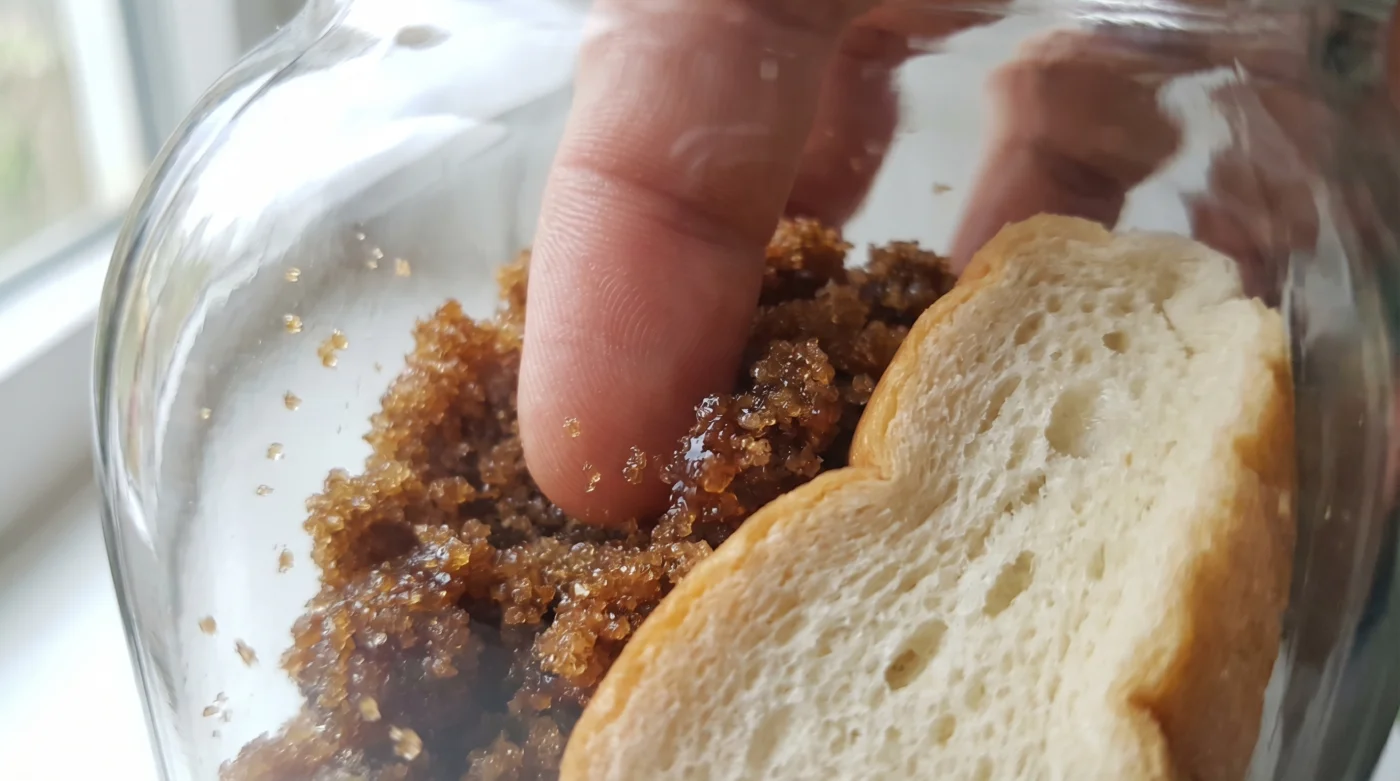
By tossing in a single slice of plain white bread, you create an enclosed, self-regulating microclimate. The sugar violently pulls the ambient moisture out of the bread, essentially sacrificing the baked slice to restore its own perfect, yielding texture. It is a quiet, invisible exchange of hydration that works flawlessly while you sleep.
Meet Clara, a 62-year-old pastry chef running a bustling neighbourhood bakery in downtown Halifax. For thirty years, she has baked tens of thousands of chewy ginger molasses cookies, fighting the fluctuating Maritime humidity every single day. She doesn’t rely on expensive ceramic humectants or vacuum-sealed vault systems to protect her dry stores.
Instead, Clara ends every Tuesday night shift by pressing the heel of a cheap supermarket sandwich loaf into her massive 20-kilogram bins of brown sugar. “It’s the cheapest insurance policy in the kitchen,” she often notes, arriving the next morning to pull out a completely petrified piece of crust, revealing sugar underneath that sifts effortlessly through her fingertips. She doesn’t measure the humidity or fret over the weather forecast; she just trusts the bread.
Adapting the Fix for Your Pantry
Different kitchens demand entirely different approaches to ingredient maintenance. How you apply this white bread trick depends completely on your cooking rhythms and your unique household pantry staples.
For the Occasional Baker
Perhaps you only bake a batch of chocolate chip cookies twice a year, leaving your brown sugar neglected in the back of the cupboard for months. For you, the bread trick is entirely restorative.
When you discover the dreaded brick, drop a slice into an airtight bag with the sugar, seal it tight, and step away. It requires zero active effort, completely repairing the culinary disaster overnight so you can bake the next afternoon.
For the Weekend Batch-Cook
You are constantly dipping into your supplies for meat marinades, fruit crumbles, and your morning bowl of oatmeal. You need preventative maintenance rather than emergency rescue. Keep a dedicated, latch-top glass jar on your counter.
Toss in a quarter piece of white bread every two weeks to maintain a steady equilibrium of moisture. This ensures the sugar stays permanently soft and ready the exact second your recipe demands it.
For the Gluten-Free Household
If wheat is strictly banished from your pantry, this moisture-exchange principle still works beautifully. A thick apple slice or a large marshmallow performs the exact same hydro-balancing act.
The marshmallow acts identically to the bread, though a fresh apple wedge demands a bit more vigilance. You must replace the fruit every few days to prevent mould from forming in the enclosed environment.
The Tactical Humidity Toolkit
Restoring petrified sugar is an exercise in patience and environmental control, not force. It requires setting up the right conditions and allowing physics to do the heavy lifting.
Ensure your container is genuinely airtight, as oxygen is the natural enemy of molasses. If your seal is weak, the dry ambient air will drain both the bread and the sugar simultaneously, leaving you with two hardened masses.
Here is the precise method to execute this kitchen fix seamlessly:
- Select the sacrifice: Choose a piece of plain, soft white bread. Avoid artisanal sourdough or seeded ryes, which hold less moisture and can impart unwanted savoury flavours.
- Seal the environment: Place the hardened sugar block into a heavy-duty silicone bag or a glass jar equipped with a rubber gasket.
- Position the bread: Lay the slice directly on top of the sugar block. Do not bury it beneath the crystals.
- Wait for the exchange: Leave the container sealed at room temperature (ideally around 20 Celsius) for exactly 12 to 24 hours.
- Extract the crust: Remove and discard the bread, which will now feel exactly like a fossilized crouton.
Once the crust is removed, your sugar will immediately yield to the gentlest pressure of a spoon. It will crumble beautifully, packing into your measuring cups with that satisfying, dense squeak.
Reclaiming Your Culinary Peace
There is a quiet, profound satisfaction in outsmarting a minor domestic crisis without spending a dime. We are frequently conditioned to believe that solving kitchen problems requires buying new silicone gadgets or dedicating hours to learning complex culinary techniques. We are sold terracotta discs and expensive vacuum containers designed to solve a problem that our grandparents fixed with a leftover crust.
Yet, the most elegant solutions are often the most rudimentary ones. By understanding the simple physics governing your pantry, you completely remove the cooking friction from your daily baking routine.
You stop dreading the moment of reaching into the cupboard, knowing you have complete control over your ingredients. A basic slice of bread transforming a solid brick back into a soft, fragrant ingredient is a gentle, comforting reminder.
Sometimes, the laziest fix is actually a brilliant manipulation of nature. It allows you to step back, let science do the work, and gracefully reclaim your kitchen peace.
“The best pastry chefs don’t fight their ingredients; they simply change the environment around them to get exactly what they need.”
| Key Point | Detail | Added Value for the Reader |
|---|---|---|
| The Bread Hack | Place 1 slice of white bread in airtight sugar container. | Revives rock-hard sugar passively in 12-24 hours. |
| Alternative Humectants | Marshmallows or fresh apple wedges. | Provides a gluten-free option for the same moisture exchange. |
| Preventative Storage | Add a quarter-slice to the jar every two weeks. | Keeps baking sugar perfectly soft year-round. |
Frequently Asked Questions
Does the bread alter the flavour of the brown sugar?
No. As long as you use basic, plain white bread, there are no strong yeast or savoury notes to transfer, leaving your sugar tasting exactly like pure molasses.Can I use a damp paper towel instead of bread?
While a damp towel adds moisture, it easily over-hydrates the sugar, creating a melted, sticky syrup rather than restoring the soft, sandy texture.How long does the bread need to stay in the container?
For a rock-hard block, 12 to 24 hours is optimal. After this period, the bread becomes stale and should be discarded to prevent mould.Will this trick work on granulated white sugar?
White sugar hardens due to existing moisture binding the crystals, not a lack of it. Bread will not fix clumped white sugar; it only works for moisture-starved brown sugar.Is microwaving the sugar a viable shortcut?
Microwaving works for an immediate, 30-second emergency, but as soon as the sugar cools, it will harden into an even more impenetrable glass-like state.