The sharp hiss of cold beef hitting a hot cast-iron skillet creates a sudden, fragrant cloud of steam. The heavy smell of rendered fat, crushed peppercorns, and butter quickly warms the kitchen. It is a Friday evening, and you have brought home an affordable cut of flank from the local butcher just a few miles down the road, looking forward to a hearty meal.
You slice into the cooked meat, expecting the gentle, yielding resistance of a premium cut. Instead, your favorite carving knife fights back against the blade. The chewing becomes a prolonged, exhausting chore. The rich flavour is certainly present, but the physical texture heavily reminds you of a sturdy winter boot left out in the December sleet.
The standard response to this disappointment is to simply blame the meat. We are conditioned to assume that a soft, melting texture requires spending a small fortune at the grocer. But the professional reality relies on a completely different set of rules, often found sitting quietly in a small yellow box at the back of your pantry.
You are about to discover a method that turns dense, budget-friendly slabs into delicate, butter-soft bites. By applying a precise alkaline surface treatment, you can bypass the premium price tag entirely. This is the kitchen secret: coat the tough cuts, and you get to eat perfectly tender cooked beef every single time without fail.
The Science of the Velvet Crumb
Introduce sodium bicarbonate to your meat preparation. Think of the muscle fibres in a cheap cut of beef as a tightly wound bundle of heavy ship ropes. Cooking them fast and hot only pulls the knots tighter, aggressively squeezing out the moisture and leaving behind a dense block of dry protein.
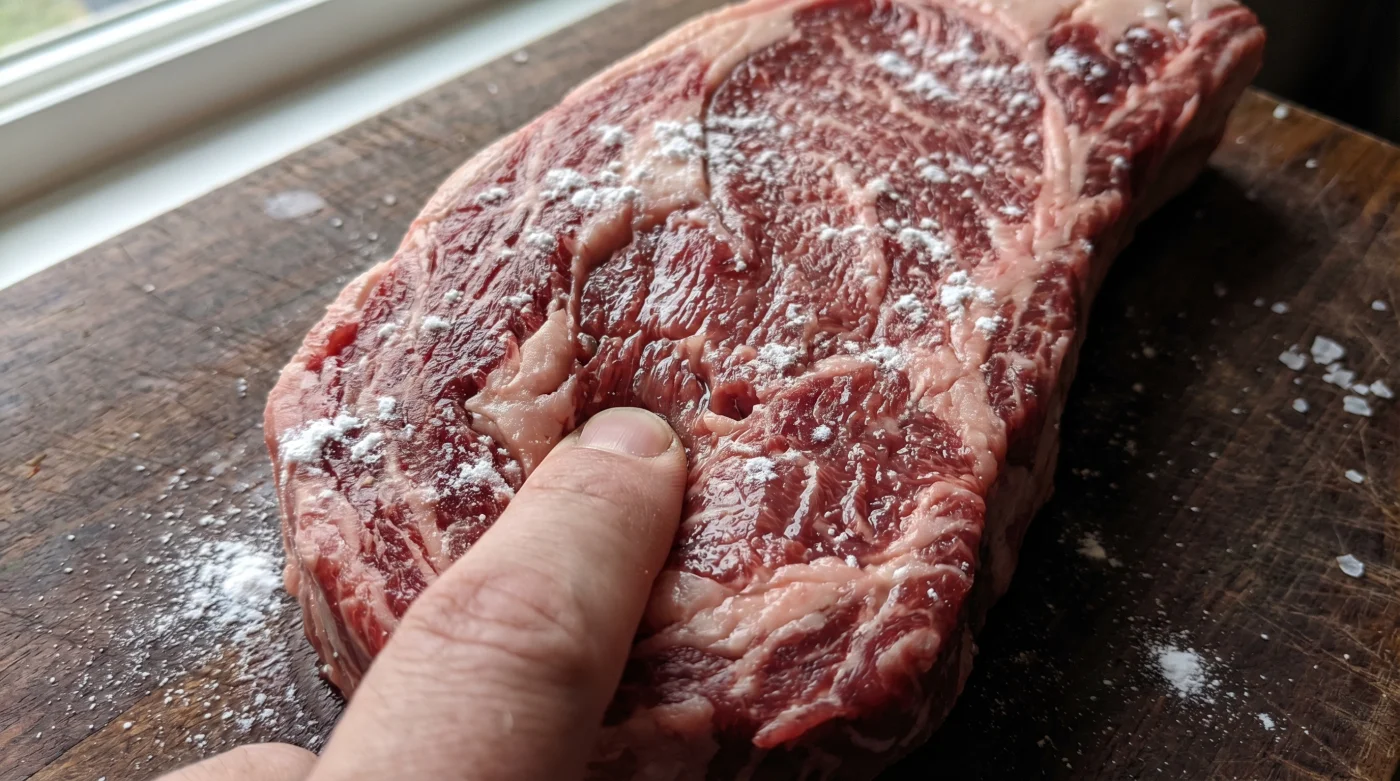
Baking soda acts like a gentle chemical comb across those stubborn fibres. By raising the pH level on the surface of the meat, it physically prevents the proteins from bonding tightly under heat. It is relaxing microscopic protein bonds completely before the skillet even reaches a searing temperature.
This technique requires a mental shift in your kitchen. Stop viewing tough cuts as a penalty for keeping a tight household budget. That dense, heavily worked muscle tissue actually holds deeper, far richer flavour than an expensive, lazy tenderloin. The toughness is not a flaw; it is a deep reservoir of taste waiting to be coaxed open.
The Montreal Brasserie Secret
Meet Elias Thorne, a 42-year-old prep chef working the busy backline of a bustling Montreal bistro. Every afternoon, while the city outside braves the minus-five Celsius chill, Elias faces thirty pounds of inexpensive beef shoulder. He never reaches for a heavy, brutalizing meat mallet. Instead, he gently coats the sliced pieces in a precise mixture of baking soda and water, letting them rest quietly in the walk-in cooler. “You just have to convince the meat to let down its guard,” Elias notes, wiping his hands on a flour-dusted apron. “Give it fifteen minutes of alkalinity, and it rewards you with pure softness.”
Adjustment Layers for Your Kitchen
Not all beef requires the exact same approach to achieve a flawless centre. You must tailor the alkaline treatment to the specific shape, thickness, and destiny of the meat sitting on your cutting board.
For the Skillet Sizzler
If you are cooking thin strips for a quick weeknight stir-fry, speed is your greatest ally. The surface area is large, meaning the baking soda can act rapidly across the slices. You only need a faint, dry dusting of the powder to achieve takeout-style velvet textures in under ten minutes.
For the Weekend Griller
When dealing with whole, thick steaks like a skirt or a dense chuck eye, a dry rub will be too uneven. You need a liquid suspension to penetrate the outer grooves and fat caps. A wet slurry ensures the alkaline mixture coats every ridge without leaving chalky, bitter pockets behind.
Mindful Application: The Tactical Toolkit
Executing this technique requires a minimalist, highly mindful approach. You are not aggressively marinating the beef to mask its natural taste; you are delicately adjusting the surface chemistry.
Follow these exact parameters to avoid turning your carefully planned dinner into a soapy disappointment:
- The Ratio: Use exactly one teaspoon of baking soda for every pound of raw beef.
- The Slurry: Mix the baking soda with two tablespoons of cold tap water until it dissolves completely into a cloudy liquid.
- The Rest: Toss the meat in the liquid, ensuring full coverage, and let it sit on the counter for exactly fifteen minutes.
- The Purge: This is the most crucial step. Rinse the meat thoroughly under cold running water to strip away all traces of the baking soda.
- The Pat Down: Dry the beef completely with a thick paper towel. Wet meat steams in the pan; dry meat builds a beautiful crust.
The timing is a hard boundary that should never be crossed. Leave the mixture on too long, and the edges turn unpleasantly mushy fast, developing a metallic aftertaste that cannot be cooked out. Fifteen minutes is the absolute sweet spot for perfect texture.
Reclaiming Your Culinary Space
Mastering this humble white powder fundamentally changes how you shop and how you cook. It completely removes the financial anxiety from hosting a weekend dinner or simply treating yourself to a steak on a quiet Tuesday night.
You no longer have to stare longingly at the costly cuts resting behind the butcher glass. You can take home the hardworking, highly flavoured cuts with absolute confidence. Knowing exactly how to manipulate the physical cellular structure of your food gives you a quiet, unshakable sense of control.
Your kitchen becomes a place of pure capability, not stressful compromise. The meat yields perfectly under your carving knife, the rich flavour floods your palate, and you finally realize that true culinary skill is simply knowing how to listen to your ingredients.
“Great cooking is never about forcing the ingredient to submit; it is about changing the environment so the ingredient can relax.” — Chef Elias Thorne
| Key Point | Detail | Added Value for the Reader |
|---|---|---|
| The Dusting Method | 1/4 teaspoon per half-pound of thinly sliced meat. | Fastest prep time for immediate skillet meals and pan-fried dishes. |
| The Slurry Method | 1 teaspoon mixed with water per pound of whole steak. | Guarantees even distribution, preventing bitter alkaline pockets on the crust. |
| The Cold Rinse | Aggressive washing under the tap post-rest. | Ensures zero chemical aftertaste while preserving the newly tenderized texture. |
Frequently Asked Questions
Can I leave the baking soda on overnight?
No. Leaving it on past twenty minutes will break down the delicate proteins too far, resulting in a distinctly unpleasant, mushy texture that ruins the bite.Will this technique make my steak taste like soap?
Not if you execute the rinse. The alkaline flavour only remains if you skip the cold water wash and pat-dry phase.Does this work on other types of grocery store meat?
Yes. It is highly effective on tough cuts of pork and dry chicken breast, though the resting time should be heavily reduced to just ten minutes.Can I use standard baking powder instead?
No. Baking powder contains added acids and will not raise the pH level high enough to alter the tight protein bonds effectively.Do I still need to salt my steak before cooking?
Absolutely. Once rinsed and completely dried, you should generously season your beef exactly as you normally would right before searing.