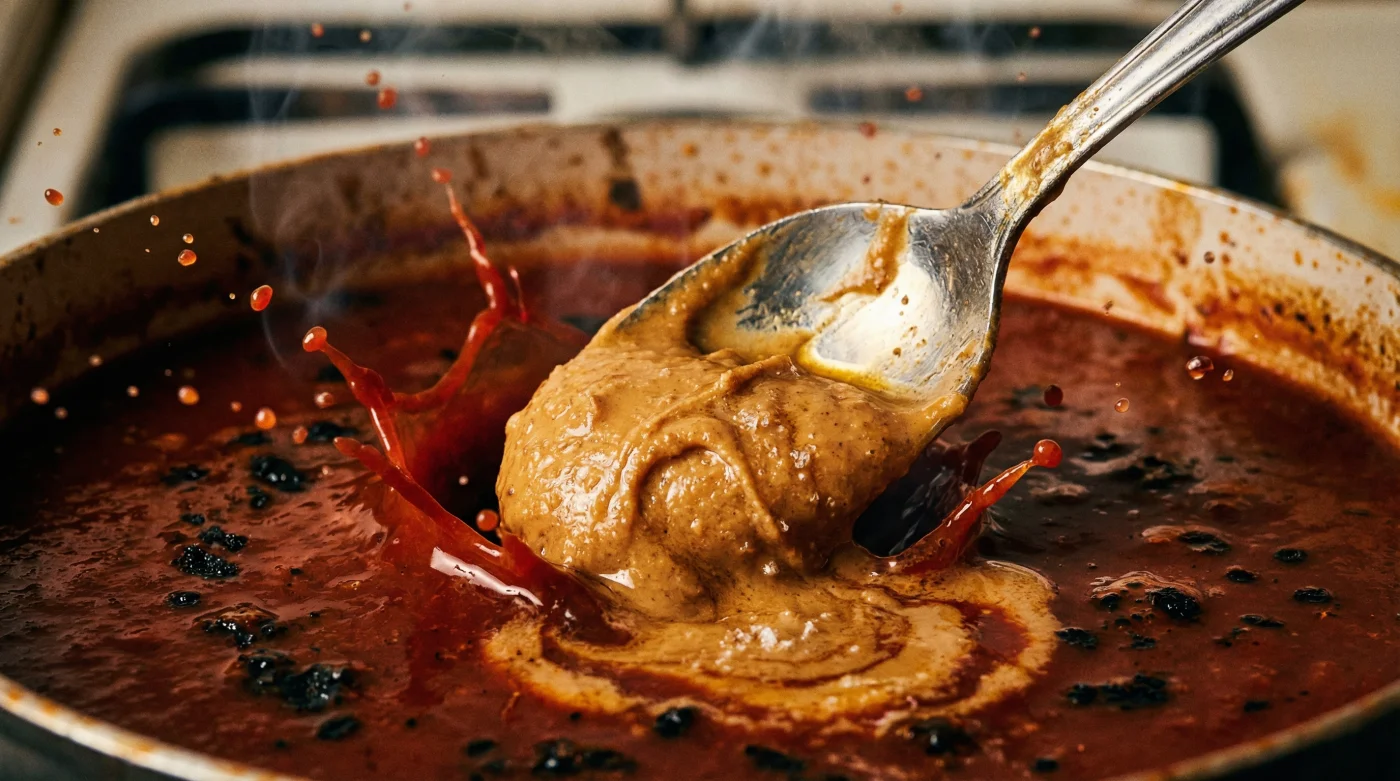
The air in your kitchen thickens with that unmistakable, acrid scent of scorched sediment. You were only away for a minute, perhaps checking the post or tending to a seedling on the windowsill, but the heavy-bottomed pot has betrayed you. The vibrant orange of a squash soup or the deep brown of a beef stew has suddenly acquired a jagged, metallic edge that catches in the back of your throat. It is a heartbreak felt in the chest, especially when the stove has been humming for hours.
You stare at the blackened crust forming at the base of the pot, your first instinct screaming to grab the kettle. We are taught that dilution is the solution to pollution, but in the culinary world, adding water to a burnt soup is like trying to hide a fire by blowing the smoke around the room. It only spreads the bitterness into every remaining vibrant molecule, leaving you with a thin, greyish disappointment that tastes of charcoal and regret.
The Molecular Magnetism of Fat
To fix a scorched dish, you must stop thinking about volume and start thinking about chemistry. When the sugars and proteins in your mirepoix or broth hit that critical temperature, they undergo a violent transformation into carbonized compounds. These compounds are hydrophobic; they don’t want to be washed away by water. Instead, they need to be smothered. Think of it as breathing through a pillow; you are softening the impact of the harsh notes until they are no longer audible.
Peanut butter, or any high-fat nut butter, acts as a molecular vacuum. The dense fat globules bind to the scorched carbon particles, effectively coating the bitter triggers before they can land on your taste buds. It isn’t about adding a ‘peanut’ flavour; at the right ratio, the nut butter disappears entirely, leaving behind a rounded, silky texture that suggests a much longer, more successful simmering time than the pot actually endured.
The Winnipeg Kitchen Secret
I first witnessed this during a blizzard in Winnipeg, standing in the cramped back-line of a community kitchen with Margaret, a 62-year-old soup-kitchen veteran. She was stirring a massive cauldron of split pea soup that had caught on the bottom while the volunteers were distracted by a delivery. Instead of tossing the batch, she reached for a heavy pail of smooth peanut butter and whisked in two generous spoonfuls.
- Burnt soup bitterness neutralizes completely with a spoonful of peanut butter.
- Rice flour dusted over roasting potatoes guarantees shatteringly crisp skins.
- Sourdough starter revived with pineapple juice ferments perfectly in hours.
- Pancake batter infused with sparkling water creates diner-level fluffy stacks.
- Denny’s breakfasts eliminate beloved staple items across Canadian diner locations.
Adapting the Fix for Every Pot
Not every soup requires the same mask. While smooth peanut butter is the gold standard for its neutral profile and high oil content, you can adjust the ‘trap’ based on the flavour profile of your specific disaster. The goal is to choose a fat that complements the existing aromatics without dominating the palate.
- For Root Vegetable Soups: Use smooth almond butter. Its slightly floral, sweet undertone pairs beautifully with carrots, parsnips, and squash while providing the necessary fat to bind the scorch.
- For Spiced or Tomato-Based Soups: Stick to the classic peanut butter. The robust nature of tomato or cumin can stand up to the nuttiness, creating a creamy finish that mimics the effect of a heavy cream.
- For Clear Broths or Asian-Inspired Bases: Reach for tahini. The sesame paste offers a similar fat profile but with a savoury, toasted edge that feels intentional in a ginger or garlic-heavy liquid.
- For the Nut-Free Kitchen: Use a high-quality sunflower butter or simply double the amount of full-fat coconut milk, though you will lose some of the binding power found in the proteins of nut butters.
Regardless of the choice, the technique remains the same: whisk in small increments. You are looking for the moment the bitterness recedes into the background, not the moment the soup begins to taste like a sandwich.
The Mindful Recovery Process
Before you add the nut butter, you must perform a tactical retreat. Stop stirring immediately. If you scrape the bottom of the pot, you are manually folding the blackened charcoal into the liquid, making the recovery twice as difficult. Gently ladle the unburnt portion of the soup into a fresh, clean pot, leaving the ‘crust’ behind.
Once the liquid is transferred, bring it back to a very low simmer—the cream should tremble, not boil. Add one tablespoon of nut butter for every two litres of liquid. Use a balloon whisk to integrate the fat completely, ensuring no oily slicks remain on the surface. Let it sit for five minutes to allow the molecules to bond before tasting again.
- The Tactical Toolkit: A clean heavy-bottomed pot, a silicone whisk, a fine-mesh strainer (if bits of char escaped), and room-temperature smooth nut butter.
- Temperature Target: Maintain the soup at exactly 85 Celsius during the whisking process to ensure the fats emulsify rather than separating.
- The Finish: A squeeze of fresh lemon juice or a dash of apple cider vinegar after the nut butter can help brighten the profile, acting as a final polish over the repaired flavours.
A Lesson in Resilience
There is a profound peace in knowing that a mistake doesn’t have to be a finale. In our haste to be perfect, we often forget that the best cooks are simply those who have learned how to hide their scars. Fixing a burnt soup with a spoonful of peanut butter is a reminder that utility often hides in plain sight, tucked away in the back of the pantry.
When you serve that bowl, and no one suspects the panic that occurred only twenty minutes prior, you’ve done more than save a meal. You have mastered the art of the pivot. You’ve taken a moment of friction and turned it into something smooth, rich, and entirely redeemed. It turns out that the most bitter moments in the kitchen, much like in life, just need a little bit of fat and a lot of patience to settle into something palatable.
“The best recipes aren’t written in books; they are the quiet corrections we make when we think no one is looking.”
| Key Point | Detail | Added Value for the Reader |
|---|---|---|
| The Dilution Myth | Adding water to burnt soup. | Spreads bitterness; use fats like nut butter instead to bind carbon. |
| The ‘No-Scrape’ Rule | Avoid disturbing the pot’s bottom. | Prevents physical char from entering the clean liquid during transfer. |
| Fat Molecule Binding | Nut butter fats encapsulate ash. | Neutralizes the metallic taste without changing the soup’s primary flavour. |
How do I know if the soup is too far gone to save? If the liquid itself has turned dark grey or black throughout, the carbon saturation is too high for even nut butter to mask. Will my soup taste like peanuts? Not if you stick to the ratio of one tablespoon per two litres; the savoury notes of the soup will override the nuttiness. Can I use crunchy peanut butter? It is not recommended as the ‘crunch’ will texturally signal that something is wrong; stick to smooth varieties for a seamless repair. Does this work for burnt sauces too? Yes, the same principle applies to gravies and thick sauces, provided they are whisked thoroughly. What if I have a nut allergy? Use a seed butter like tahini or sunflower butter, which provides the same fatty acid binding power without the allergen risk.