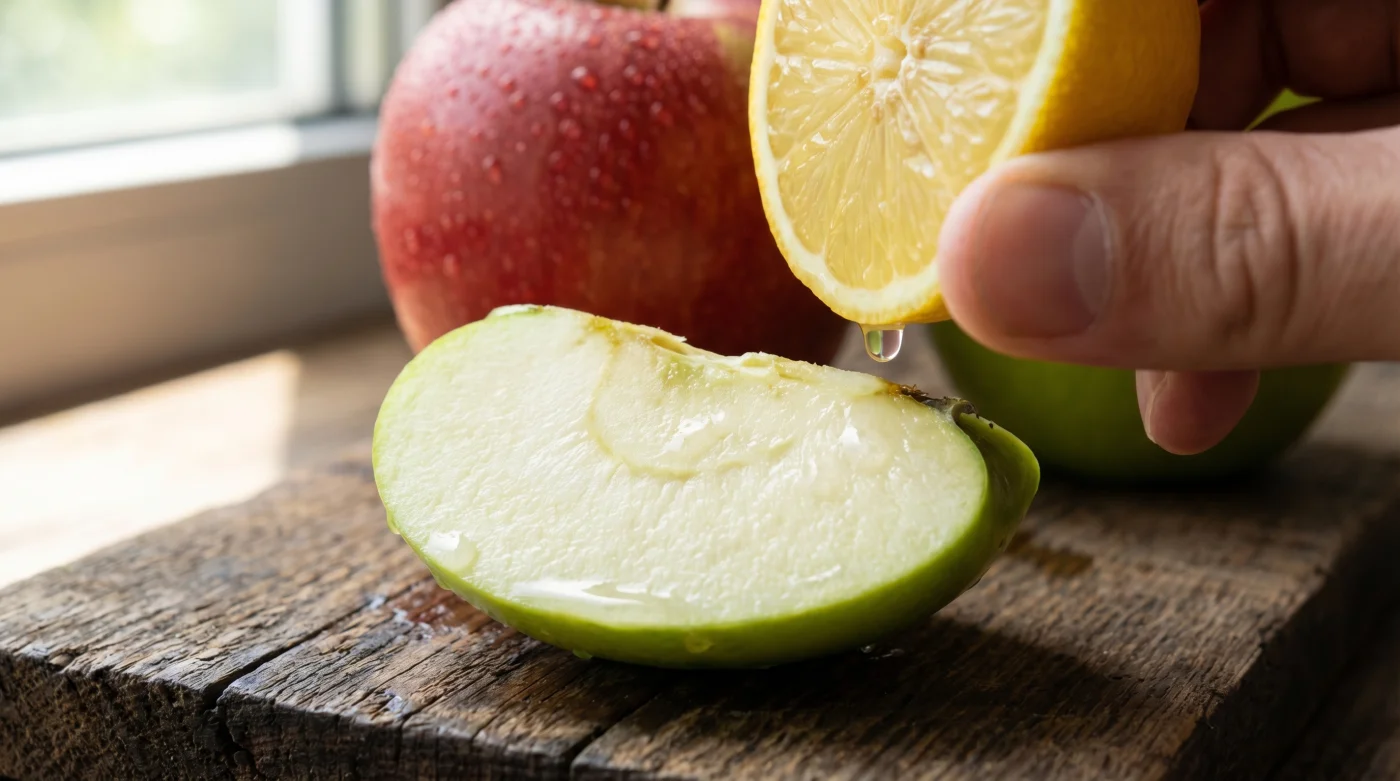
It’s a quiet Tuesday morning, the frost barely melting off the kitchen windowpane. You stand at the counter with your favourite paring knife, feeling the satisfying weight of the handle as you slice through a chilled Honeycrisp apple. The flesh is pale, crisp, and snaps under the blade, releasing a faint mist of sweet, autumnal fragrance into the dry winter air. You anticipate the tart, refreshing crunch that comes with the first bite, mentally preparing for the long commute ahead.
You pack the slices into a small container, snapping the lid shut, expecting that same vibrant crunch at noon. You toss it into a canvas bag, trusting it will survive the morning rush. But reality rarely aligns with that morning optimism. When lunch arrives and you finally sit down at your desk or in the breakroom, you open the box to find wedges that look dull, rusted, and deeply unappetizing.
This is the mundane kitchen tragedy we’ve all accepted. We assume a cut apple is a ticking clock, destined to oxidize into a mealy, brown shadow of its former self the moment oxygen touches its exposed flesh. We tolerate the degradation because we believe it cannot be stopped. We simply eat the sad, discoloured fruit, mourning the loss of that morning freshness.
In a professional kitchen, however, chefs operate under a different set of physical laws. A catering line simply cannot afford to serve tarnished fruit hours into a dinner service, especially when patrons are paying premium prices. They rely on an elegant, invisible shield—a simple swap that halts the decay before it even begins, preserving the structural and visual integrity of the produce.
The Invisible Armor of Citrus
The sudden browning of an apple isn’t actually rot; it’s a frantic defense mechanism. When you cut through the skin, you sever millions of microscopic plant cells, violently exposing an enzyme called polyphenol oxidase to the open air. The apple is, essentially, trying to scab over a wound to protect itself from bacterial invaders and environmental stress. It is a biological panic response.
This chemical rusting process is entirely natural, but it completely alters the texture, colour, and visual appeal of the fruit. Instead of seeing this browning as an inevitable failure, think of the apple as something reacting to trauma. You need to calm that reaction down. You need to signal to the fruit’s cellular structure that it is safe, halting the production of melanin.
The trick lies in shifting the pH of the fruit’s surface. By introducing a bright, acidic barrier, you create an environment where those browning enzymes simply cannot function. The polyphenol oxidase is paralyzed by the sudden drop in pH. It’s like breathing through a pillow; the oxygen is still there, but the chemical panic is muted. A quick citrus splash is all it takes to freeze time.
Consider the daily routine of Élodie, a 38-year-old Montreal pastry chef who builds towering, fruit-laden tarts for high-end patisseries. She regularly slices hundreds of Cortland and Ambrosia apples before dawn, yet they remain pristine under the display glass well past sunset. Élodie doesn’t rely on commercial anti-browning powders or chemical sprays. Instead, she uses a mild, ice-cold acidulated water bath—a careful calibration of fresh lemon juice and filtered water—that shocks the enzymes into submission without adding any aggressive sourness to her delicate pastries.
Tailoring the Citrus Strategy
When preparing snacks for a mid-day break, aggressive lemon flavour might overpower a subtle Gala or Fuji apple. Here, dilution is your greatest ally. Rather than squeezing raw juice directly onto the fruit, you want to create a gentle, acidic swimming pool. A tablespoon of lemon juice in a cup of cold water creates an invisible coating that keeps the fruit crisp without turning a sweet snack into a sour ordeal. This method guarantees that the natural sweetness of the apple remains the star of the show.
If you are arranging an elaborate cheese board for evening guests, moisture control is crucial. You don’t want wet fruit bleeding onto expensive, bloomy-rind brie or soaking the delicate crunch of your artisanal crackers. In this scenario, skip the water entirely. Use a soft pastry brush to lightly paint pure lemon juice across the cut surfaces of the apple. The concentrated acid acts fast, and the minimal liquid evaporates quickly at room temperature, leaving behind a dry, perfectly preserved wedge.
Baking demands structural integrity, especially when tossing apples for a dense winter pie or a spiced crumble that will sit in the fridge before hitting the oven. Squeeze a generous half-lemon directly over your peeled, sliced fruit in a large mixing bowl. The juice prevents the browning during the prep phase, while the natural sugars in the apple will eventually balance out the tartness as the fruit softens, reduces, and breaks down under the intense heat of the baking process.
Applying this simple swap requires minimal effort, but precision guarantees the result. You are aiming to halt a chemical reaction on a cellular level, which means temperature, dilution, and timing matter just as much as the ingredients themselves. The environment must be carefully controlled to ensure the polyphenol oxidase is completely neutralized without ruining the eating experience.
The Tactical Toolkit: Execution and Restraint
Cold water slows everything down, including enzymatic activity. Always use the coldest water possible—ideally chilled to around 2 degrees Celsius—when mixing your citrus bath. The physical chill works in tandem with the chemical acidity, creating a two-pronged defense against oxidation. Warm water, conversely, would only accelerate the degradation process.
Here is your mindful process for flawless, all-day preservation. Follow these steps deliberately to ensure maximum efficacy:
- Slice your apples using a very sharp, freshly honed blade to cleanly sever the plant cells rather than crushing them, which minimizes the initial enzyme release.
- Combine one cup of ice-cold filtered water with exactly one tablespoon of freshly squeezed lemon juice in a shallow glass or metal bowl.
- Submerge the apple slices completely in the liquid, ensuring no edges are exposed to the air, for exactly three to five minutes.
- Remove the fruit with a slotted spoon, shake off the excess droplets, and let the remaining moisture drain gently on a clean, lint-free tea towel.
Store the prepared fruit in an airtight container, keeping it tucked away in the crisper drawer until you are ready to depart. The acid has successfully completed its task, the enzymes are fully dormant, and the protective barrier is officially set. Your fruit is perfectly safe from the ravages of oxygen.
Mastering this tiny culinary physics lesson changes how you interact with your pantry staples. It permanently removes the stressful countdown that usually accompanies fresh produce preparation. You are no longer bound by the fleeting, unforgiving window between slicing your ingredients and actually sitting down to eat them.
Redefining the Daily Ritual
Opening a lunch container hours later to find fruit that looks just as vibrant as the moment it left the cutting board brings an unexpected, quiet joy to the middle of a chaotic workday. It feels deliberate. It feels deeply cared for. You regain complete control over your ingredients, transforming a previously disappointing snack into a moment of genuine satisfaction.
That simple citrus splash transforms a rushed morning chore into a reliable, lasting provision. You get to keep fruit fresh all day, fiercely protecting the satisfying snap and natural sweetness. It ensures that whenever you finally pause to reach for that snack, it rewards you with exactly the premium, crisp experience you anticipated when you first picked up the knife.
“Acidulation isn’t about changing the flavour of the fruit; it’s about pausing time so the fruit’s natural character can patiently wait for you.”
| Key Point | Detail | Added Value for the Reader |
|---|---|---|
| The Cold Bath | 1 tbsp lemon juice to 1 cup water at 2°C. | Prevents sourness while fully halting enzymatic browning. |
| The Dry Brush | Directly painting juice on cut surfaces. | Keeps charcuterie boards pristine and dry for entertaining. |
| Blade Sharpness | Using a honed edge instead of a dull blade. | Reduces cell trauma, creating less enzyme release to begin with. |
Does lemon juice make the apples taste sour?
When diluted properly in cold water, the citrus acts as an invisible shield and leaves almost zero trace of tartness behind.
How long will the apples stay fresh using this method?
Prepared this way and stored in an airtight container in the fridge, your slices will maintain their colour and snap for up to 24 hours.
Can I use bottled lemon juice instead of fresh?
Fresh is always best for flavour purity, but bottled juice contains sufficient citric and ascorbic acid to achieve the exact same preservation effect.
Will this work on other fruits?
Yes. This same chemical logic applies beautifully to pears, bananas, and avocados, though the application method may vary slightly.
Does the water temperature actually matter?
Significantly. Warm water accelerates chemical reactions, while ice-cold water physically slows the enzymes down, aiding the acid’s work.