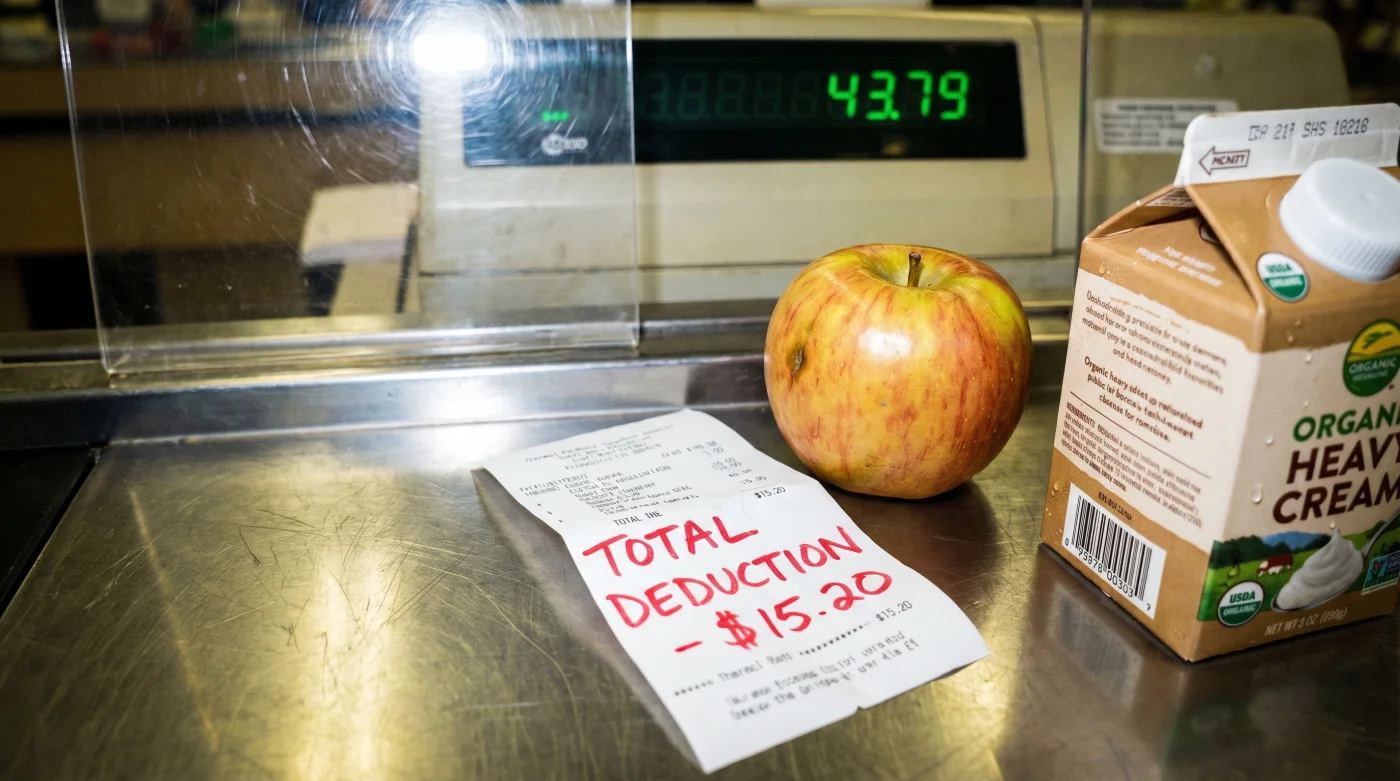
You know the sound. The steady, mechanical chime of the checkout scanner cutting through the dull hum of fluorescent lights and the cold air drifting from the dairy aisle. You watch the digital display climb, feeling a slow, inevitable tightening in your chest as a basket of basic staples costs what a family dinner out used to. It feels like an isolated struggle, an ongoing negotiation between your grocery list and your wallet on a freezing minus ten Celsius morning.
But today, the air in those aisles feels a little different. A subtle shift has taken root behind the scenes of our biggest supermarket chains. The shelves are stocked exactly as they were yesterday, but the invisible math dictating your bill has been forcefully rewritten.
This isn’t a fleeting sale on winter squash or a new loyalty card promotion. An action collective—a unified legal push against corporate pricing structures—has quietly tipped the scales back in your favour. For years, the price on the sticker felt like a permanent law of nature. Suddenly, the receipt in your hand is a living document, reflecting a hard-fought correction.
The immediate change isn’t just about what you pay moving forward; it is about what you are owed from the past. You are standing at the intersection of corporate accountability and your own kitchen table economy, holding a ticket to a refund you likely didn’t realise you had coming.
The Architecture of a Grocery Bill
Think of the modern supermarket pricing structure like the plumbing in an old, sprawling house. For decades, the pressure has been building, quietly siphoning off an extra drop of water with every turn of the tap. You blamed yourself for using too much, for not budgeting carefully enough, never realising the meter itself was quietly calibrated against you.
This is the core logic of the recent action collective. It strips away the illusion that fluctuating costs are solely the result of supply chain mysteries or distant weather patterns. The perspective shift happens when you stop viewing checkout totals as an immovable financial weather system, and start seeing them as man-made equations that can be audited, challenged, and corrected.
Clara Deschamps, a 42-year-old forensic accountant based in Montreal, spent three years tracing these micro-inflations across nationwide baking staples. While the rest of us saw a thirty-cent increase on a loaf of whole wheat as an annoyance, Clara saw a breadcrumb trail.
Sitting at her dining table, surrounded by stacks of heat-faded receipts from regional grocers, she mapped the artificial price floors that eventually formed the backbone of the legal claim. Her quiet evenings of data entry turned a whispered consumer suspicion into a structural overhaul, proving that those extra dimes were not inflation—they were an unearned toll.
Navigating the Claim Layers
Depending on your weekly habits, the path to reclaiming your share of this settlement will look a bit different. The legal framework is designed to cast a wide net, ensuring the restitution process accommodates how you actually shop rather than forcing you through a maze of red tape.
If you rarely use loyalty programs and prefer to bounce between independent grocers and major chains, your claim relies on straightforward statutory minimums. You don’t need a shoebox full of crumpled receipts. The collective agreement assumes a baseline level of consumption for all residents, ensuring the restitution fits your reality with a fixed-amount refund based simply on your province of residence and age.
Alternatively, if your keychain is heavy with plastic barcodes and your email inbox receives weekly flyers, your digital footprint is your greatest asset. The settlement administrators have direct access to purchasing histories tied to major rewards accounts.
By verifying your existing loyalty number, your digital history calculates your exact overpayment, often yielding a significantly larger return without any manual math on your part.
Mindful Application: Claim Your Grocery Refund Easily
Moving from awareness to action requires only a few mindful moments. It is less about filling out complex forms and more about clicking the right locks into place. Grab a cup of coffee, sit with your phone or laptop, and treat this as a five-minute investment in your monthly budget.
You do not need to hire a representative or pay a percentage to a third party. The portals are public, secure, and designed for immediate clarity. Keep your focus on the official registry and avoid the noise of social media rumours.
To check the lawsuit terms and finalize your submission, follow this tactical toolkit:
- Identify your primary chain: Note the two supermarkets you frequent most within a five-kilometre radius of your home.
- Locate your loyalty digits: Have your physical card or digital app open; you will need the 12-to-16 digit identifier.
- Visit the collective portal: Access the official settlement website directly, ensuring the URL ends in a verified Canadian legal domain.
- Select your claim tier: Choose between the Undocumented Baseline (no receipts required) or the Verified Purchaser (using your loyalty data).
- Set your digital deposit: Opt for a direct e-transfer rather than a mailed cheque to bypass postal delays and secure your funds within the current business quarter.
The Bigger Picture: A New Weight at the Till
When the money finally lands in your account, it might pay for a week of groceries, or perhaps just cover a tank of gas at the filling station. But the true value of this action collective stretches far beyond a single direct deposit notification. It changes the emotional temperature of your weekly shop.
You are no longer just a passive consumer absorbing whatever numbers flash on the screen. You are an active participant in an economic environment that has been forced to pause, recalibrate, and admit fault. That newfound transparency adds a profound sense of agency to the simplest of domestic chores.
The next time you stand at the checkout, listening to the scanner chime over apples and oats, the sound will carry a different frequency. The system has been checked. The scale has been balanced. And the cart you push out the sliding doors is, finally, weighed fairly and honestly.
“A fair price is not a gift from a retailer; it is the fundamental baseline of a functional community.” — Clara Deschamps, Forensic Accountant
| Key Point | Detail | Added Value for the Reader |
|---|---|---|
| Undocumented Claim | Requires no historical receipts; fixed payout based on province. | Instant filing process requiring zero paperwork or stress. |
| Loyalty Verification | Syncs automatically with your existing reward card history. | Secures the maximum possible return for large families. |
| Direct E-Transfer | Funds are routed directly into your primary bank account. | Bypasses postal delays so the money clears in days. |
Frequently Asked Questions
Do I need my old receipts to file a claim?
Not at all. The baseline settlement is designed for everyday shoppers and relies entirely on your current residency status, sparing you from digging through old records.How long does the refund process take?
Once you register your details on the official portal, e-transfers are batched and sent out within the current business quarter, arriving much faster than a mailed cheque.Will this affect my current loyalty points?
Your existing points balance remains completely untouched. The administrators merely look at the historical data tied to the account to verify past purchases.Is there a deadline to apply for this?
Yes. The courts have established a strict claiming window that closes early next year, making it crucial to complete your five-minute registration this week.Can I claim on behalf of my entire household?
Claims are generally processed per adult resident, meaning multiple adults living at the same address can each submit their own baseline form to maximize the return.