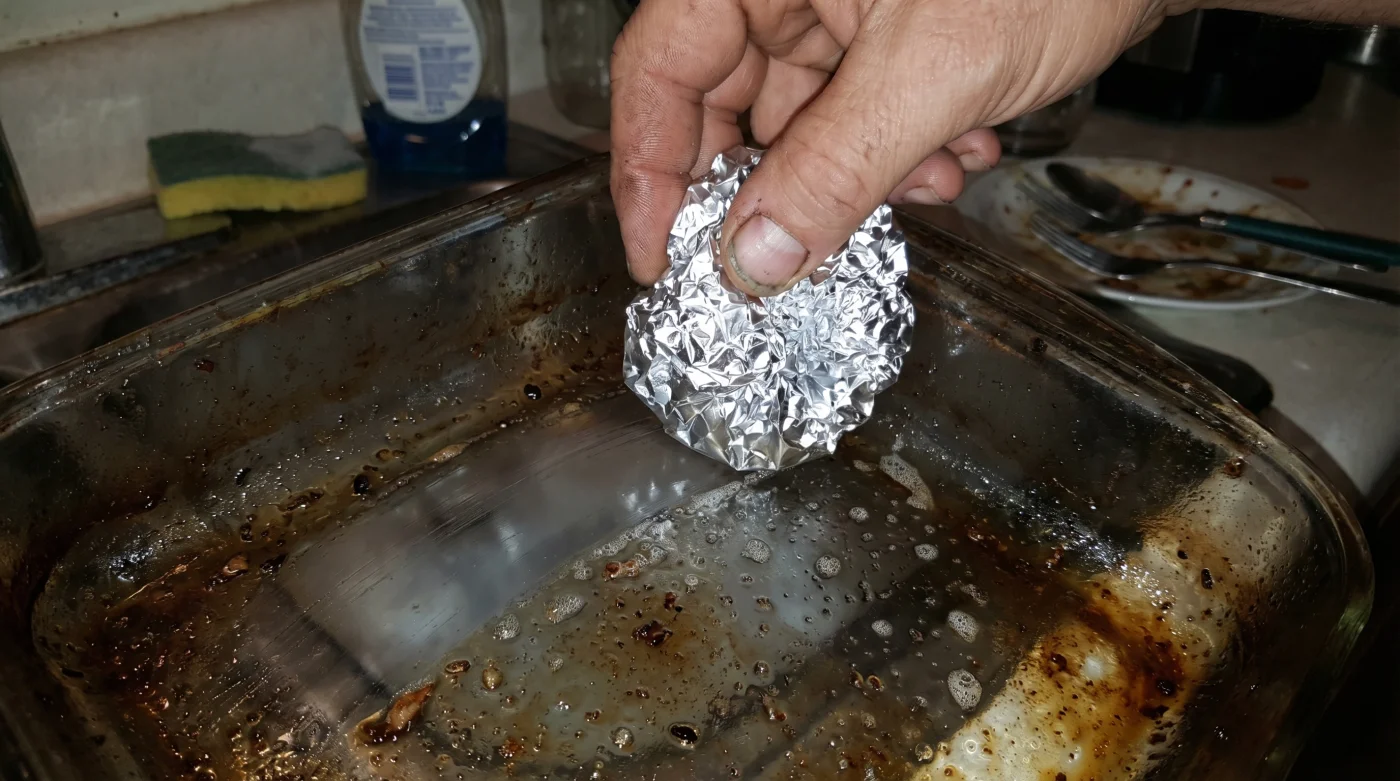
The dinner plates are cleared, the final glasses of wine are drained, and the kitchen settles into a heavy, fragrant quiet. Lingering notes of roasted garlic and rich tomato sauce hang in the air, a soft reminder of a meal well shared. Yet, sitting under the dim glow of the range hood is the evening’s final, stubborn task: the glass baking dish.
It sits there like a geological fossil, crusted in blackened grease and the calcified remains of baked cheese. You know the usual routine. You run the tap until it runs hot, squeeze out a generous ribbon of dish soap, and reach for a brand-new synthetic sponge, resigning yourself to the reality that this soft tool will soon be ruined.
We are conditioned to treat glass bakeware with extreme caution, attacking baked-on disasters with soft bristle brushes or agonizing overnight soaks that rarely loosen the deepest burns. You end up scrubbing until your shoulders ache, battling polymerized oils that cling to the smooth surface like barnacles to a pier.
But the solution to this nightly standoff doesn’t require harsher chemicals or endless elbow grease. The most effective tool for shattering that burnt-on barrier is already sitting in your pantry drawer, waiting to be crumpled into action, saving you a trip miles down the road for specialty scrubbers.
The Physics of the Foil Ball
When faced with aggressive, baked-on grease, our instinct is to introduce friction. The problem is the mismatch of materials. Using a standard kitchen sponge on carbonized sugars is like trying to sand down rough timber with a damp facecloth. It simply glides over the problem.
The crumpled aluminum foil ball changes the equation entirely. By taking a used sheet of foil—perhaps the very piece that covered the casserole during its first forty minutes in the oven—and crushing it into a tight sphere, you create a matrix of micro-edges perfectly suited for the job.
You might fear that metal will destroy your glass, leaving a web of irreversible scratches. This is a profound misunderstanding of the materials at play. Tempered glass bakeware sits much higher on the Mohs scale of mineral hardness than pliable aluminum.
When you rub the foil ball against the glass, the aluminum physically cannot scratch the surface. Instead, the soft metal conforms, gripping the brittle, burnt-on food and sheering it away cleanly from the smooth glass. The mundane scrap of foil is revealed not as garbage, but as a calibrated, non-destructive abrasive.
Elaine, a 58-year-old prep cook working out of a bustling, high-volume diner in Halifax, knows this better than anyone. Every Sunday morning, she is tasked with cleaning dozens of glass pans used for deep-dish baked oats and sticky maple-glazed bacon. She doesn’t rely on commercial degreasers or soaking vats. Instead, she keeps a small bucket of tightly rolled foil balls beside her wash basin. “You just need a bit of soapy water to give it slip,” she notes, her hands moving in quick, rhythmic circles. “The foil does the heavy lifting, stripping away the black char in seconds, leaving the glass completely unharmed.”
Tailoring the Tactic
Not all messes demand the exact same approach. The beauty of the foil method lies in how easily it adapts to the specific disaster sitting in your sink.
For the Sticky Glaze Enthusiast
If your pan is coated in the remnants of a honey-garlic marinade or a brown sugar crumble, the grease isn’t just burnt; it’s practically turned to glass itself. Before the foil touches the pan, you need to soften the sugar matrix. Fill the dish with boiling water directly from the kettle, letting it sit for exactly three minutes. Once the water cools to a manageable 45 Celsius, drain it and attack with the foil. The sugars will crack and lift away in satisfying ribbons.
For the Heavy Cream Purist
Macaroni and cheese or scalloped potatoes leave behind a protein-rich, oily film that burns into stubborn black dots along the edges. Here, lubrication is your priority. Skip the long soak. Add a few drops of concentrated dish soap directly to your dry foil ball and scrub the dry pan before adding water. The soap binds with the loose oils immediately, preventing the grease from simply smearing around the glass.
For the Zero-Waste Home Cook
You don’t need to rip off a fresh sheet of aluminum just to wash the dishes. The true advantage of this method is its circularity. Save the foil wraps from your roasted vegetables, the lids from takeout containers, or the foil that covered your resting meats.
As long as it is free of heavy, loose debris, you can simply roll it into a sphere and leave it on the edge of the sink. It is the ultimate second-life for a material we too often discard after a single use.
Mindful Application
Executing this technique requires a shift in how you physically approach the sink. It is not about bearing down with all your weight, but rather applying consistent, mindful friction. Breathe evenly, letting the tool do the work.
- Tear or salvage a piece of foil roughly 12 inches long.
- Crumple it aggressively in your palms until it forms a tight ball, about the size of a golf ball.
- Add a few drops of dish soap and a splash of warm water to the baking dish to provide necessary slip.
- Grip the foil ball firmly and work in small, overlapping circles over the burnt areas.
- Rinse with warm water to clear the cloudy grease and reveal the true colour of the pristine glass beneath.
The sensation is distinctly different from using a sponge. You will feel a slight, satisfying grit as the foil catches the raised burns, followed by a smooth glide once the glass is clear.
For your tactical toolkit, keep these specific metrics in mind:
- Water Temperature: 45 Celsius (warm enough to melt animal fats, cool enough to safely handle).
- Foil Density: Compacted firmly to a 2-inch diameter. A loose ball will flatten and lose its abrasive edges.
- The Lubricant: Standard liquid dish soap. Avoid abrasive powders when using foil, as the combination can become too harsh.
Reclaiming the Evening
There is a quiet, profound relief in looking at a sink that is entirely empty before you turn off the kitchen lights. We often carry the anxiety of a soaking dish with us into the evening, treating it as a chore that is merely delayed rather than handled.
By adopting the foil method, you eliminate the mental weight of a lingering task. You are no longer waiting on chemicals to work their slow magic, nor are you sacrificing a perfectly good sponge to the altar of baked lasagna.
Mastering this simple physical interaction with your tools transforms a dreaded cleanup into a quick, decisive victory. You step away from the sink with clean hands and clear glass, leaving the remnants of the meal exactly where they belong—in the past, allowing you to fully inhabit the quiet comfort of your evening.
“A kitchen should serve you, not hold you hostage. The right application of friction saves hours of needless labour.”
| Key Point | Detail | Added Value for the Reader |
|---|---|---|
| Material Hardness | Tempered glass is harder than soft aluminum. | Prevents fear of scratching heirloom or expensive bakeware. |
| Micro-Abrasive Action | Crushed foil creates hundreds of scraping edges. | Cuts through carbonized grease without harsh chemicals. |
| Zero-Waste Potential | Reusing cooking foil for cleanup. | Saves money on sponges and reduces household waste. |
Frequently Asked Questions
Will aluminum foil scratch my Pyrex or glass baking dishes?
No. Tempered glass bakeware is significantly harder than aluminum. The soft metal will conform to the glass, scraping away the burnt food without leaving scratches on the smooth surface.Can I use this method on non-stick or Teflon pans?
Absolutely not. Aluminum foil will instantly strip and ruin non-stick coatings. This technique is strictly reserved for uncoated glass, cast iron, and durable stainless steel.Do I need to use a brand-new sheet of foil every time?
Not at all. The most efficient approach is to repurpose the foil you used during the cooking process. Just roll it tightly into a ball once the meal is done.Should I use baking soda along with the foil ball?
It is best to stick with liquid dish soap. Baking soda acts as an additional abrasive, and combining it with the foil might create excessive friction that isn’t necessary for glass.How tightly should I roll the aluminum foil?
Compress it as firmly as you can in your hands until it is about the size of a golf ball. A dense ball provides the structural integrity needed to shear away heavy, polymerized grease.