The snow is blowing sideways against the kitchen window, and you are standing at the counter craving the simplest form of warmth. You pull a loaf of soft bread from the pantry and reach for the butter, only to find it rock-hard from the chill of the room. Attempting to spread it is an exercise in futility; the cold fat drags across the delicate crumb, tearing holes and leaving uneven, thick clumps that promise an inconsistent melt.
We accept this friction as a normal part of the cooking process, often compensating by aggressively heating the pan to force the fat to melt. But a skillet that is too hot scorches the dairy solids before the cheese inside even begins to soften. You are left with a sandwich that is blackened on the outside, cold in the centre, and entirely devoid of the comfort you originally sought.
Now, picture a different tactile reality unfolding at the counter. You open the fridge door and bypass the butter dish entirely, reaching instead for a jar of everyday, inexpensive mayonnaise. A dollop on the back of a spoon glides over the bread with the ease of soft icing, sealing the surface from crust to crust without a single snag.
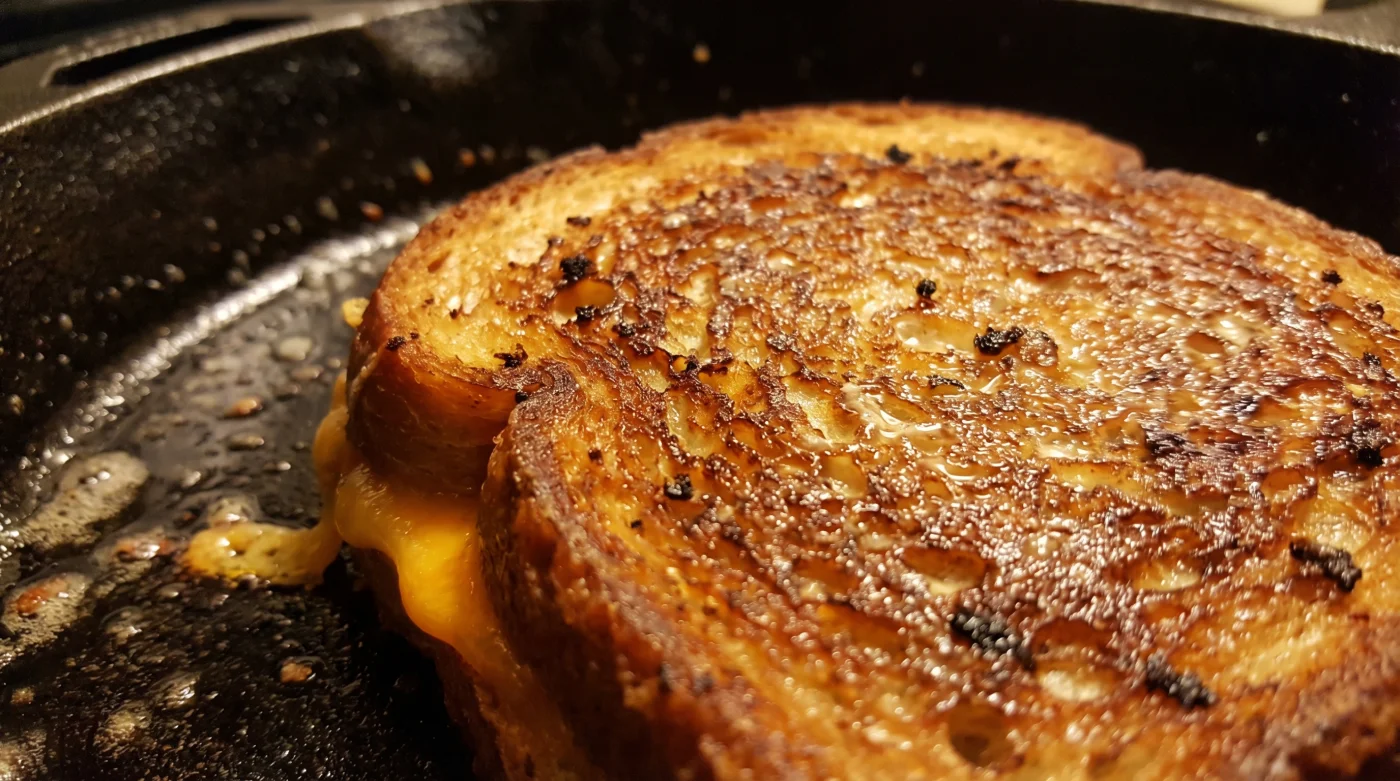
When that coated slice meets the warm iron of the pan, it does not smoke or spit aggressively. It sizzles with steady rhythm, frying the bread in a stable emulsion of oil and egg yolk. The result is a flawless, golden shell that cracks delicately between your teeth, holding a molten interior that feels entirely purposeful.
The Emulsion Equation
To understand why this simple substitution works so beautifully, you have to look at the anatomy of your spreads. Butter is a volatile mixture of butterfat, water, and milk solids. As it heats in the pan, the water evaporates, and those delicate milk solids burn at relatively low temperatures. This is why a momentarily forgotten skillet yields a bitter, blackened sandwich.
Mayonnaise operates on an entirely different set of physical rules. It is a perfectly stable emulsion, binding oil and egg yolks together in a way that resists sudden separation under heat. Because vegetable or canola oil possesses a significantly higher smoke point than butterfat, you buy yourself precious minutes of gentle, controlled cooking time.
Think of it like applying a specialized primer to raw wood before painting. The spread creates a protective seal that prevents the porous bread from acting like a sponge, absorbing excess grease and becoming heavy. The egg yolks introduce proteins that encourage the Maillard reaction, producing a rich, caramelized colour that butter often struggles to achieve evenly.
By trusting this mundane pantry staple, you are shifting from blind instruction to an understanding of basic kitchen chemistry. You are no longer crossing your fingers and hoping the pan temperature is exactly right; you are engineering the environment to ensure a crisp, shattered texture every single time you cook.
Meet Elias Thorne, a forty-two-year-old line cook at a bustling, decades-old diner near the Halifax waterfront. When the lunch rush hits and he has thirty grilled cheese orders hanging on the rail, he does not have the luxury of tempering artisanal butter or babysitting delicate dairy in a cast-iron skillet. He grabs a heavy-duty spatula and a massive commercial tub of basic mayonnaise.
“Butter fights the bread, especially when you are moving fast,” Elias explains, wiping down his station as the flat-top hums. “But mayo coats like a second skin, creating a barrier. It fries the bread instead of just toasting it, giving you that shatter-crisp crunch that keeps people coming back on a rainy afternoon.”
Tailoring Your Crisp Across Variations
Not all loaves behave the same way under heat, and the mayonnaise technique adapts beautifully to whatever you happen to have resting on your cutting board. The strategy simply shifts depending on the density, hydration, and crumb structure of your chosen foundation.
For the Nostalgic Purist using standard, sliced white bread, a razor-thin layer is all you need. The tight crumb of commercial bread does not require much fat to achieve a uniform, diner-style shell. The goal here is a quick, crisp exterior that contrasts sharply with the soft, processed cheese melting inside.
For the Sourdough Enthusiast, the approach requires a bit more generosity. Artisanal sourdough is notoriously uneven, full of deep crags and tough, chewy crusts that can dry out in a pan. Pushing the spread slightly thicker allows the emulsion to seep into those craters, frying the sharp edges into brittle, golden peaks while keeping the thick slices tender enough to bite through easily.
If you are building a sandwich on dense Canadian rye, the flavour profile changes dramatically. The tang of the mayonnaise complements the earthy caraway, adding a subtle savoury depth that brightens the heavy bread. A medium coating ensures the dense structure softens just enough to yield without turning mushy.
Mindful Application and The Tactical Toolkit
Executing this method requires very little effort, but it does ask for a few moments of deliberate attention. Rushing the process or cranking the dial will defeat the purpose of the gentle frying action that the oil provides.
Stand by the stove and watch the edges transform. You are looking for a slow, creeping golden colour that starts at the crust and moves inward, signalling that the cheese is warming at the exact same pace the bread is browning.
- The Spread: Use exactly one tablespoon of standard, full-fat mayonnaise per sandwich. Light or fat-free versions lack the oil necessary for frying.
- The Coverage: Smear it from edge to edge. Bare spots will burn, while coated spots will crisp.
- The Temperature: Maintain medium-low heat, hovering around 160 Celsius. If the pan smokes, it is too hot.
- The Timing: Allow roughly three to four minutes per side, pressing very gently with a spatula only once to encourage contact.
When you flip the sandwich, you should feel a firm resistance against the spatula. You are waiting for the auditory confirmation that the exterior has crystallized perfectly, holding the soft, molten core safely inside.
Mastering a detail as small as a sandwich crust might seem inconsequential in the grand scheme of your busy week. Yet, it is exactly these minor, reliable victories that offer a genuine sense of grounding when life feels chaotic.
There is a profound peace of mind in knowing exactly how your food will behave. You eliminate the frustration of torn bread, the bitter taste of scorched dairy solids, and the disappointment of a poorly executed meal.
The next time the weather turns bitter and you find yourself standing in the kitchen, leave the cold butter in its dish. Reach for the mayonnaise, spread it carefully, and listen to the steady sizzle of a better technique taking hold.
A reliable technique in the kitchen is not about following rules, but about understanding the quiet language of your ingredients.
| Key Point | Detail | Added Value for the Reader |
|---|---|---|
| The Fat Swap | Replacing cold butter with full-fat mayonnaise for pan-frying. | Eliminates torn bread and uneven, scorched crusts instantly. |
| Thermal Stability | Mayonnaise utilizes oil, which has a higher smoke point. | Allows for slower cooking, ensuring the cheese melts perfectly. |
| The Maillard Boost | Egg yolks in the emulsion introduce proteins to the heat. | Produces a richer, deeper golden colour and a shattered crunch. |
Frequently Asked Questions
Will my sandwich taste overwhelmingly like mayonnaise?
Not at all. The tangy flavour cooks off during the frying process, leaving behind a subtle, savoury richness that tastes remarkably similar to browned butter.
Can I use light or vegan mayo for this technique?
Vegan variations work beautifully because they rely on oil emulsions, but light mayo contains too much water and will steam the bread rather than frying it.
Do I need to grease the pan as well?
No extra fat is required in the skillet. The coating on the outside of the bread provides all the necessary oil to prevent sticking and encourage browning.
What is the best heat setting for this method?
Medium-low is ideal. You want a steady, gentle sizzle rather than an aggressive pop, which gives the cheese ample time to turn molten.
Does this work for paninis or pressed sandwiches?
Absolutely. The emulsion acts as a perfect barrier on any hot surface, ensuring a crisp exterior whether you are using a flat-top, a skillet, or a heavy sandwich press.