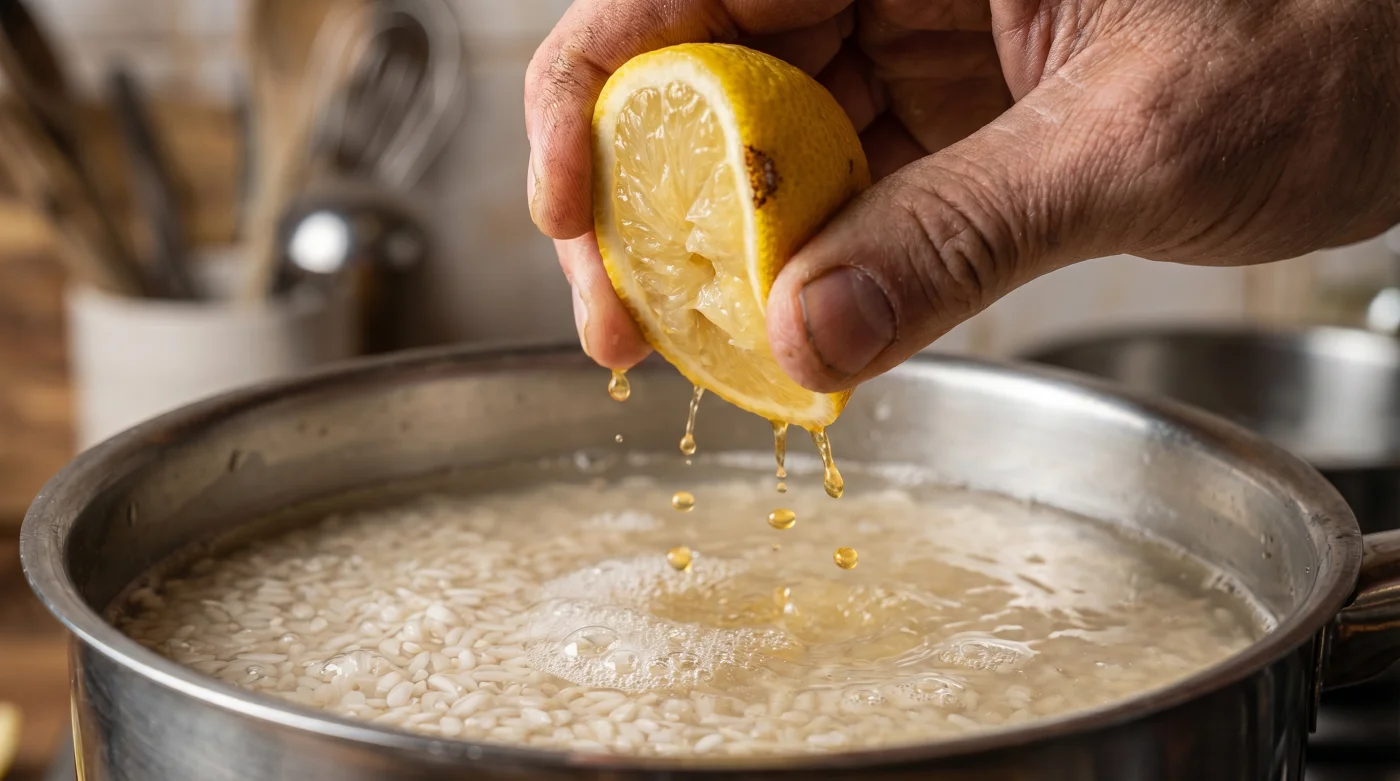
The heavy glass lid chatters lightly against the rim of the pot, letting out rhythmic puffs of opaque, starchy steam. The scent filling the kitchen is earthy and warm, offering the familiar promise of a simple dinner after a long commute through the frozen slush of late November. You turn the dial down, listening to the water simmer, waiting for the moisture to absorb and hoping the timing is finally right.
But too often, you lift the lid to disappointment. Instead of distinct, snow-white pearls tumbling effortlessly over one another, you are met with a dense, gluey block. The bottom is scorched, the top is slightly undercooked, and the middle resembles drywall paste. It is easy to blame the stove, or perhaps to blame yourself for lacking a costly countertop appliance.
In the back of a bustling commercial kitchen, however, the process looks entirely different. There is no panicked stirring or hovering over the burner. There is only a swift, sharp squeeze of yellow citrus over the rolling boil. The professional cooks know that perfectly separated grains do not require expensive machinery; they require a brief, calculated disruption of the cooking environment.
This subtle intervention is becoming increasingly relevant today. With shifting supply chains driving prices of premium imported basmati and jasmine varieties to unprecedented highs across Canada, many are turning to massive, budget-friendly bags of domestic or medium-grain rice. These economical alternatives are notoriously sticky, but you do not have to accept a heavy, pasted texture just because the grocery market forced a sudden pivot.
The Architecture of a Boiling Grain
Think of a single kernel of rice not as a seed, but as a tightly packed suitcase of raw starch. As the water temperature creeps toward 100 degrees Celsius, that starch rapidly absorbs moisture and swells. If the heat breaches the exterior too violently, the suitcase bursts open, spilling sticky amylopectin all over the surrounding grains to create a solid mass.
By introducing a few drops of lemon juice to the water, you are altering the structural integrity of that exterior. The natural acid fortifies the pectin in the cell walls. It acts as a microscopic corset, holding the grain together even as the interior softens completely to the texture of warm butter.
You are no longer just blindly boiling water; you are actively managing a chemical reaction. The lemon does not make the final dish taste like a citrus dessert. It vanishes entirely into the background, leaving behind a subtle, clean brightness that merely cuts the heavy earthiness of the starch.
What begins as a frustrating compromise—buying cheaper, stickier bulk alternatives—suddenly transforms into a culinary advantage. You can achieve the feather-light texture of a high-end restaurant side dish using the most stubborn, heavy-starch grains currently sitting on the bottom shelf of your pantry.
Consider Elias Thorne, a 42-year-old catering chef managing massive corporate galas in downtown Calgary. When a sudden, unprecedented tariff spike left his kitchen without their usual imported long-grain supply right before a five-hundred-plate service, Elias had to substitute a notoriously dense, medium-grain alternative. He did not rewrite the menu. He calmly directed his prep team to halve dozens of lemons, squeezing the fresh juice straight into the massive fifty-litre boiling vats. The acid dropped the pH just enough to prevent the starch from bonding, and the plated grains fell away from the serving spoons, shivering apart as though they were premium aged basmati.
Adjusting the Acidity for Your Pantry
Every bag of rice requires a slightly different approach, especially when adapting to shifting grocery availability.
For the Bulk-Bin Realist
When you bring home an unbranded, ten-kilo sack, you are dealing with a high percentage of broken grains. These fractured pieces release pure starch into the water almost instantly. You need aggressive mitigation. Rinse the rice under cold tap water until it runs completely clear, and do not skip the lemon. The acid is the only thing standing between you and a solid cake of paste.
For the Sunday Meal-Prep Strategist
If you are batch-cooking for the week ahead, your main enemy is the refrigerator. Cold temperatures cause gelatinized starch to crystallize, turning Monday’s soft side dish into Thursday’s hard, gritty pebble. The mild acidity from the citrus fundamentally changes how the starches retrograde in the cold. When you microwave that container days later, the rice breathes back to life, retaining a tender bite instead of shattering like dry clay.
For the Brown Rice Skeptic
Whole-grain varieties are notoriously stubborn, wearing a tough outer jacket of bran that resists water absorption. Boiling them often results in a waterlogged exterior and a crunchy, undercooked core. The lemon juice gently degrades that fibrous outer layer during the long simmer, allowing moisture to penetrate evenly without turning the pot into a muddy porridge.
The Five-Minute Starch Protocol
You do not need precise measuring spoons or complex digital timers to make this work. Perfecting this technique relies on a few rhythmic, mindful movements that ground your focus in the physical space of your kitchen.
Keep your actions deliberate and unhurried. Focus on the clarity of the water during the initial wash. Feel the friction of the grains rubbing against your palms.
- The Ratio: Squeeze exactly one-half teaspoon of fresh lemon juice per cup of raw rice.
- The Timing: Add the juice into the cold water before you turn on the burner, ensuring the acid is evenly distributed as the temperature climbs.
- The Rest: Once the heat is off, let the covered pot sit entirely undisturbed for ten minutes. This allows the steam to redistribute, letting the grains relax rather than shock.
- The Tool: Always fluff with a wooden fork or a wide silicone spatula. Metal spoons will violently crush the newly stabilized grains.
When you finally remove the lid, do not drag a utensil horizontally through the pot. Gently fold the rice from the bottom edge upward, lifting it so the trapped steam billows out freely into the room.
Reclaiming the Foundation of the Plate
A bowl of rice is the quiet canvas for the rest of your meal. When it turns out poorly, it carries a strange, disproportionate weight, casting a shadow of frustration over the perfectly roasted vegetables or braised meats that rest upon it.
Learning to control this one humble element brings a quiet predictability to your routine. It removes the anxiety of the final reveal. You are no longer crossing your fingers when you lift the lid; you know exactly how the grains will behave because you set the physical boundaries of their environment.
In a landscape where grocery bills are unpredictable and supply chains dictate what we can put on our tables, mastering a cheap, dense carbohydrate is a quiet form of resilience. You take what is available, apply a drop of simple, acidic logic, and turn a rough, stubborn staple into something entirely refined.
Food is rarely improved by force; it yields to the cook who understands its nature and gently alters its environment.
| Key Point | Detail | Added Value for the Reader |
|---|---|---|
| The Acidic Wash | 1/2 tsp of lemon juice per cup of water alters the starch breakdown. | Transforms budget, sticky rice into a premium, fluffy texture. |
| Thermal Resting | Allowing a 10-minute undisturbed rest off the heat. | Prevents temperature shock and structural collapse of the grain. |
| Vertical Fluffing | Using a wooden tool to lift rather than stir horizontally. | Maintains the integrity of the individual rice pearls for elegant plating. |
Common Kitchen Troubleshooting
Will my dinner taste like a lemon dessert?
No. The small amount of acid breaks down during the boiling process, leaving behind no distinct citrus flavour, only a very faint, clean aroma.Can I use bottled lemon juice instead of fresh?
Yes, bottled juice provides the necessary citric acid to stabilize the starch, though fresh lemon offers a slightly brighter fragrance while boiling.Does this work in an electric rice cooker?
Absolutely. Just add the juice to the water inside the cooker insert and stir briefly before pressing start.Will this technique fix rice that is already mushy?
Unfortunately, once the starch cells have ruptured and glued together, the reaction cannot be reversed. This method must be applied before the water boils.Does vinegar work as a substitute?
White vinegar provides the required acidity but leaves a much harsher, more noticeable aftertaste. Lemon juice is the gentler, more neutral option for everyday cooking.