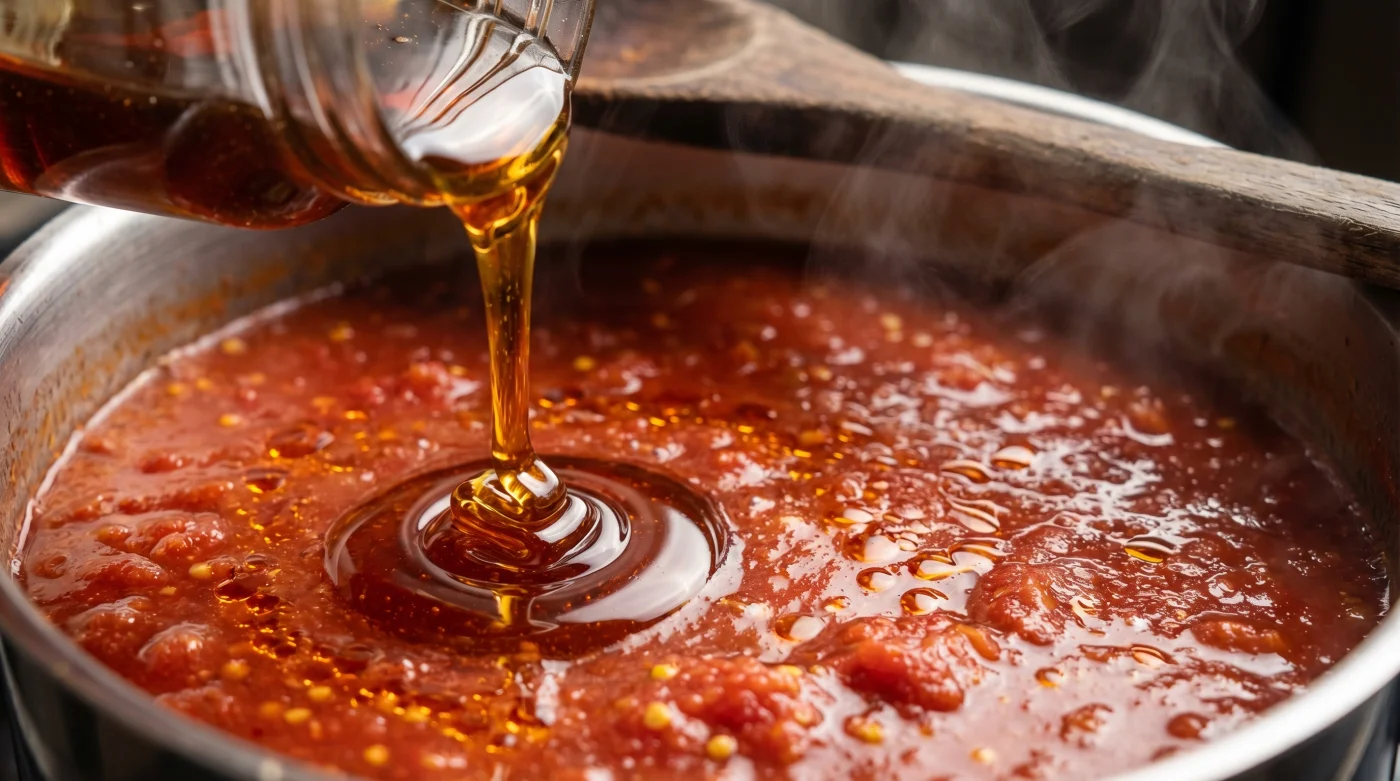
The wooden spoon scrapes against the bottom of your enameled cast iron, pulling up a thick, fragrant wave of crushed tomatoes, garlic, and dried oregano. You lean in, blowing gently on the steam, and take a hesitant taste. Instead of a rich, comforting warmth, a sharp, metallic tang bites the back of your throat. It is the unmistakable signature of acidic, out-of-season canned tomatoes that stubbornly refuse to mellow.
You might feel tempted to let the pot simmer for another three hours, hoping time will magically soften the blow, or perhaps you reach for the white sugar bowl, heavily dumping granules until the sauce turns strangely cloying. Fighting a harsh ingredient with brute force rarely works, preventing you from understanding its underlying structure.
Walk into any high-volume kitchen facing a tight margin, and you will notice a different approach entirely. Cooks do not fear a cheap tin of tomatoes; they view that aggressive acidity as a structural tension just waiting to be resolved by a counterweight. The secret to breaking that acidic bite is not masking it with processed sugar, but absorbing it with the complex, earthy undertones of pure maple syrup.
Treating Acidity Like a Sound Mixing Board
Think of a simmering tomato sauce like a live audio recording. Acidity is your treble—sharp, piercing, and absolutely necessary for clarity. But when you pour a cheap can of crushed tomatoes into a hot pan, that treble is cranked to maximum, completely blowing out the speakers and creating a conflicting noise.
A dark, robust maple syrup functions entirely differently. It acts as the bass line, rolling beneath the sharp notes and absorbing the shock. Because it brings its own complex profile of wood, smoke, and caramelization, the syrup pulls the acid down into the mix. Suddenly, those inexpensive grocery store tomatoes do not taste like tin; they taste like they have been roasting under an August sun.
Consider Elias Thorne, a 42-year-old prep cook working the back line at a bustling Montreal Italian-fusion kitchen. Every afternoon, Elias is tasked with turning massive, economical tins of crushed tomatoes into a deep, velvety base for the staff meal. He skips the imported San Marzanos and ignores the refined sugar. Instead, he waits until the tomatoes first hit a rapid bubble, then stirs in a precise measure of Grade A Very Dark maple syrup.
Calibrating the Pour for Your Pantry
Not every pot of sauce requires the exact same treatment. The beauty of this technique lies in its raw adaptability to whatever happens to be bubbling on your stove. You are the final judge of how much correction your base ingredients actually need on any given night.
For the slow-simmering purist building a Sunday gravy, the goal is invisible integration. You want the harshness gone without a single guest detecting the maple. Wait until the last twenty minutes of cooking before stirring in a mere teaspoon of light amber syrup per litre of sauce. It gently smooths the rough edges off the acid, leaving a rich, tomato-forward finish.
When you are incredibly pressed for time, the harsh metallic bite of raw tomato paste is aggressive. Add a full tablespoon of dark syrup right as the tomatoes hit the hot oil. The heat instantly caramelizes the sugars, fast-tracking the chemical reactions and faking the depth of a long braise on a cold Tuesday night.
For those who build arrabbiata or heavy chili bases, the syrup addition serves a dual purpose by subduing the cheap tomato acid while grabbing onto the capsaicin from your dried chili flakes. The result is a slow, rolling heat that warms the chest rather than singing the tongue.
The Five-Minute Flavour Correction
Correcting an unbalanced sauce should not induce panic. It is a slow, methodical process of tasting, adjusting, and waiting for the chemistry to settle. You must allow the complex sugars a moment of heat to fully bloom into the acidic environment. Keep your movements deliberate.
Use this tactical toolkit to neutralize the bite gracefully and completely:
- Temperature: Maintain a gentle simmer at roughly 85 Celsius. A rolling boil will destroy the subtle maple notes and scorch the sugars.
- Timing: Introduce the syrup either at the very beginning of a flash-cook, or the final ten minutes of a long braise.
- Volume: Start with exactly one-half tablespoon per standard 796ml tin of crushed tomatoes.
- Integration: Stir slowly in a figure-eight motion, letting the amber ribbon pull evenly through the red base.
- Rest: Remove the spoon, step back, and let it breathe for three full minutes before tasting again.
Notice how the consistency of the liquid seems to change slightly, taking on a glossier, heavier sheen. This visual shift represents the harsh acids finally yielding to the complex sugars, creating a unified suspension that coats the back of a spoon with confidence.
Reclaiming Your Culinary Confidence
There is a quiet, steadying comfort in knowing you can rescue a failing dish with a single, mindful adjustment. It completely removes the anxiety of opening a disappointing tin of tomatoes or realizing you lack premium ingredients. You stop being a passive recipient of whatever flavour the grocery store hands you, and start acting as a deliberate architect of your own meals.
A splash of maple syrup does more than fix a metallic aftertaste; it proves that good cooking relies on intuition over expenditure. You learn to trust your own palate to identify the friction, and trust your pantry to provide the cure. The simplest corrections often yield the most profound peace of mind at the dinner table.
“A truly balanced sauce doesn’t shout its ingredients at you; it simply feels deeply right on the palate, carrying the tension of acid and earth in perfect suspension.”
| Key Point | Detail | Added Value for the Reader |
|---|---|---|
| Natural Neutralization | Binds harsh citric acid with complex phenols. | Fixes cheap tins without creating a cloying, sugary taste. |
| Rapid Integration | Stirs into the base in under five minutes. | Saves hours of simmering on busy weeknights. |
| Flavour Layering | Adds imperceptible wood and smoke notes. | Makes economical ingredients taste surprisingly expensive. |
Frequently Asked Questions
Will my pasta sauce taste like pancakes?
Not at all. When used in small, controlled amounts, the syrup acts entirely as a neutralizing agent rather than a dominant flavour profile.Which grade of syrup works best for this?
Grade A Dark or Very Dark offers the strongest earthy notes, which absorb the acid far better than lighter, sweeter amber varieties.Can I use artificial table syrup instead?
Avoid it entirely. Table syrups are essentially highly processed corn syrup, which will bring the same flat, cloying sweetness as white sugar.At what stage should I add the syrup?
For quick sauces, add it early to caramelize. For a slow-cooked ragout, wait until the final ten minutes to preserve the delicate woodland notes.Does this trick work on heavily spiced sauces?
Yes. The natural sugars actually bind to capsaicin, taking the sharp sting out of chili flakes and creating a deeply resonant, lingering warmth.