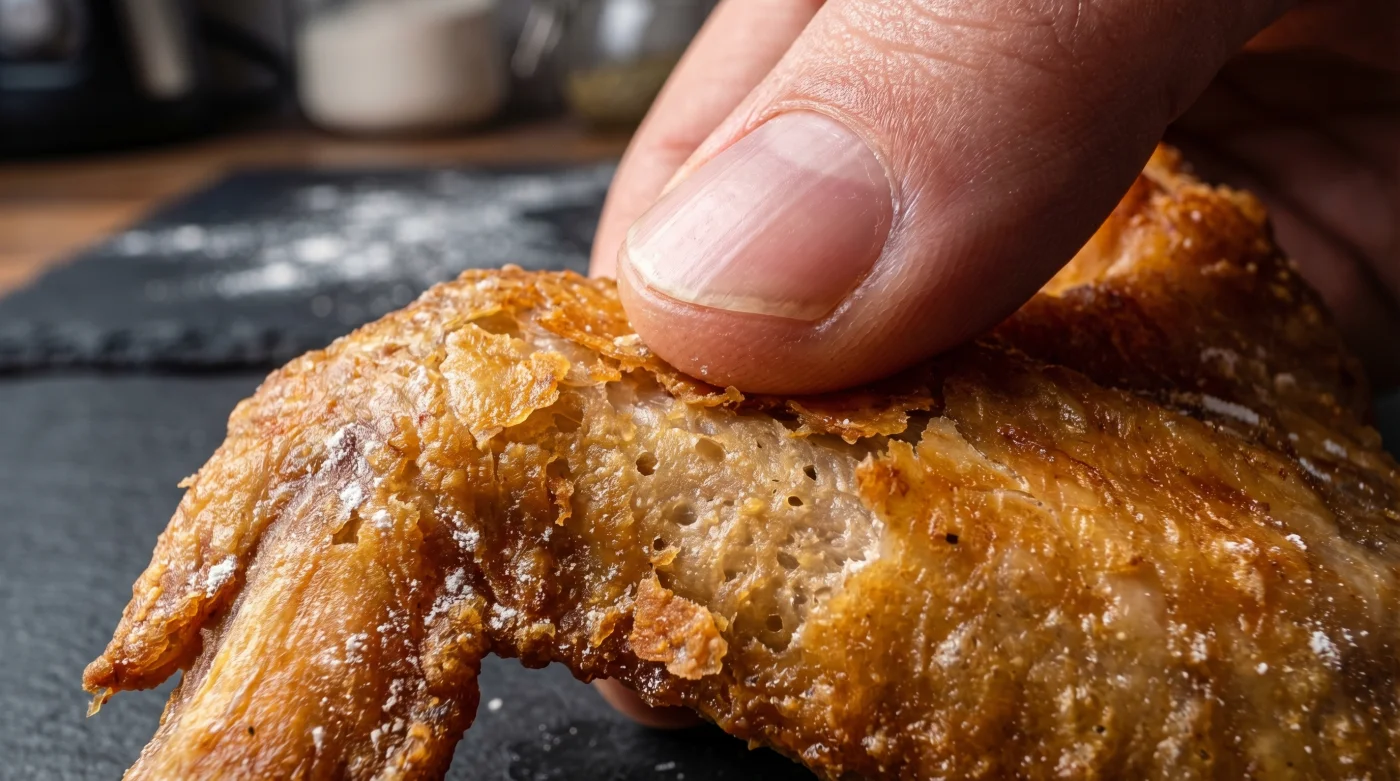
The smell of roasting chicken fat hits you before you even open the oven door. It carries a savoury, heavy warmth that settles into the corners of the kitchen, promising a deeply comforting meal. You pull the baking sheet out, and the sound is unmistakable: a violent, sizzling crackle as bubbling fat meets hot metal.
For years, you have likely chased this specific sensory payoff, only to be met with the sad, rubbery oven texture that plagues domestic poultry. You want the violent crunch of a pub-style wing, but you desperately want to avoid filling a heavy pot with litres of expensive canola oil.
The solution sits quietly beside your flour and sugar. It is a harsh, chalky white powder that you usually measure out in careful pinches for Sunday morning biscuits or banana bread.
By simply raiding your baking supplies, you bypass the fryer entirely, avoiding litres of wasted oil and a greasy stovetop. You trade the anxiety of deep-frying for a quiet, reliable chemical reaction that happens right on the wire rack.
The Alkalinity Equation
Baking powder is generally understood as a leavener, a chemical builder that forces cakes to rise and batters to expand. But when applied to the surface of raw poultry, it stops building and acts as a structural demolition crew. It alters the pH of the chicken skin, raising the alkalinity just enough to weaken the strong peptide bonds holding the tissue together.
As the heat hits the pan, proteins break apart rapidly, allowing the skin to pull taut and thin. Instead of trapping moisture, the weakened structure allows the subcutaneous fat to weep through the chalky veil and render out completely, leaving behind nothing but a delicate, shattered crust.
It feels inherently wrong to dust raw meat with an ingredient reserved for pastry. You might expect a metallic, bitter flavour to ruin the meat. Yet, this mundane baking staple neutralizes completely under high heat, vanishing into the background and leaving behind only a glassy, golden shell.
This method forms a brilliant pantry-first meal prep strategy, turning a perceived flaw—the lack of an industrial deep fryer—into a distinct advantage for your weekly cooking routine.
Consider Elias Thorne, a 41-year-old culinary instructor from Halifax who runs a strict zero-waste kitchen protocol. Elias buys whole chicken wings in bulk to save money, cleanly separating the drumettes and flats while tossing the wing tips into a freezer bag for his monthly stock making. He relies exclusively on the baking powder method for the remaining meat, proving that the most effective tools aren’t single-use gadgets, but humble powders used with intention.
Tailoring the Crunch: Adjustment Layers
Not every evening allows for the same rhythm. How you integrate this pantry staple depends heavily on your weekly meal plan and how much time you have before dinner hits the table.
For the Weekend Strategist
If you have the luxury of time, the overnight method produces a skin that shatters like spun glass. You dust the wings on a wire rack on Saturday night and leave them uncovered.
By morning, the cold, dry circulating fridge air has dehydrated the surface completely. The baking powder has had hours to alter the pH, resulting in a blistered, professional-grade finish that rivals any local pub.
For the Weeknight Scrambler
Sometimes you only have an hour between walking through the door and needing to eat. You can toss the meat in the powder, season it, and place it directly into a hot oven.
You will skip the dehydration phase, immediately rendering the surface fat under high heat. You won’t achieve the exact glass-like shatter of an overnight rest, but the skin will still audibly snap when bitten, far exceeding any standard baked wing.
For the Zero-Waste Practitioner
This technique naturally lends itself to a highly efficient, low-waste kitchen ecosystem. Because you are not submerging the food in a vat of oil, the natural chicken fat simply drips down.
By placing a tray of root vegetables underneath, harvesting the rich liquid gold becomes automatic. You are crisping the poultry while simultaneously dressing your side dish in highly flavoured, rendered animal fat that would otherwise be washed down the sink.
Mindful Application
Execution requires a gentle, deliberate touch. You aren’t dredging or breading the meat; you are simply altering its surface chemistry with a minimalist dusting.
The goal is an almost invisible, cloudy white dusting across the skin. Too much powder, and the chemical reaction turns chalky; too little, and the skin remains flabby.
- Pat the wings completely dry with a clean cotton towel. Moisture is the enemy of the Maillard reaction.
- Measure exactly one tablespoon of aluminum-free baking powder and one teaspoon of kosher salt per kilogram of wings. Ensure it is baking powder, not baking soda.
- Toss the wings in a large metal bowl, massaging the powder into the folds of the skin until no dry spots remain.
- Arrange the wings on a wire rack set inside a rimmed baking sheet, leaving at least a centimetre of space between each piece to prevent steaming.
- Bake at 120°C for 30 minutes to slowly melt the subcutaneous fat, then increase the oven to 220°C for an additional 40 to 50 minutes until golden and blistering.
The Bigger Picture
Mastering this simple chemical trick changes your relationship with your pantry. You begin to see basic staples not just as single-use ingredients, but as versatile tools capable of solving frustrating culinary problems.
You stop relying on bottles of expensive cooking oil that eventually turn rancid, require complicated disposal, and leave your kitchen smelling like a fast-food line. Instead, you utilize what you already have, leaning on the quiet efficiency of science.
It brings a profound sense of peace to casual entertaining. You can deliver a perfect, satisfying crunch to your guests without standing isolated over a spitting pot of hot grease while everyone else visits in the living room.
By stepping away from the fryer, you are returning calm to your kitchen. You let the oven and a spoonful of white powder do the heavy lifting, allowing you to simply enjoy the meal you have created.
“The best kitchen strategies don’t require you to buy new equipment; they require you to look at the ingredients you already own through a completely different lens.”
| Key Point | Detail | Added Value for the Reader |
|---|---|---|
| Alkaline Reaction | Raises pH to break down skin proteins. | Guarantees a brittle, satisfying crunch without the mess of deep-frying. |
| Oil Elimination | Uses the bird’s natural fat to fry itself. | Saves money on cooking oils and completely eliminates greasy disposal. |
| Zero-Waste Prep | Catches rendered fat to roast vegetables below. | Creates a cohesive, intensely flavoured meal with zero wasted calories. |
Frequently Asked Questions
Can I use baking soda instead of baking powder?
No. Baking soda is purely sodium bicarbonate and is far too alkaline. It will leave your chicken tasting aggressively metallic and bitter. Always check your label for aluminum-free baking powder.Do I need to wash the baking powder off before baking?
Absolutely not. The powder needs to remain on the skin to alter the pH and react with the heat. It will neutralize and disappear as the wings roast.Why do I need to bake them at a low temperature first?
Starting at 120°C allows the thick layer of fat under the skin to slowly melt and drip away without burning the exterior. The subsequent high heat then crisps the thinned-out skin.How long can I leave them in the fridge to dry?
Anywhere from eight to twenty-four hours is ideal. Leaving them longer than a day may cause the meat to dry out too much, compromising the juiciness of the interior.Can I apply a wet sauce to these wings after they bake?
Yes. The skin becomes so structurally brittle that it will hold up beautifully when tossed in a traditional buffalo or honey garlic sauce right before serving.