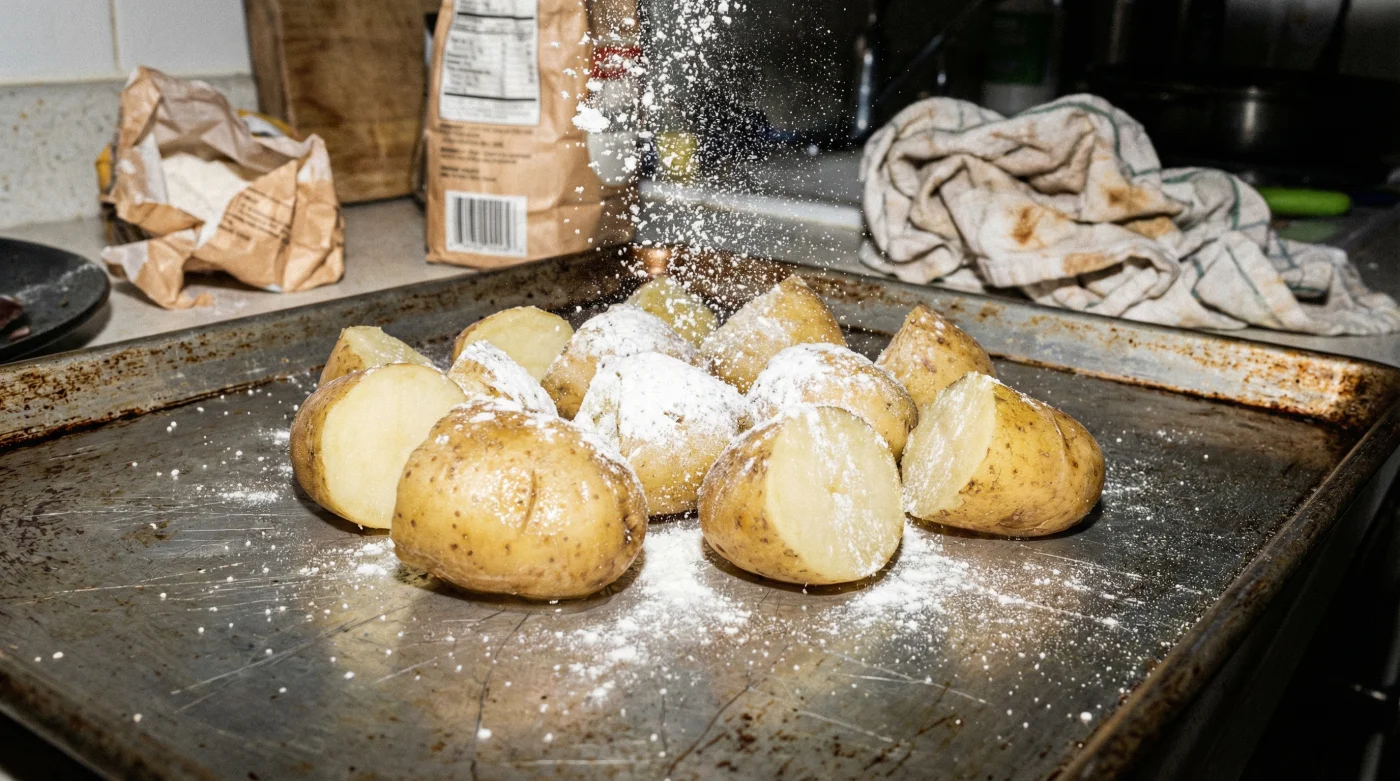
The grey light of a November morning in Ontario has a way of settling into your bones, making the kitchen the only sensible place to be. You stand at the wooden counter, the smell of damp earth lingering on a sack of Russets, and you remember the disappointment of last Sunday. You had used a literal sea of expensive olive oil, yet the potatoes emerged from the oven looking like sad, translucent sponges. They weren’t crisp; they were merely hot and greasy, a failure of physics that felt particularly heavy against the backdrop of a Canadian winter. You expected a crunch that could be heard in the next room, but you got a muffled thud.
Standard kitchen wisdom suggests that if something isn’t crisping, you simply need more heat or more fat. We have been taught to drown our vegetables in oil, hoping the roaring 425-degree air will somehow perform a miracle. But the truth is far more structural. Traditional roasting techniques often fail because they ignore the potato’s greatest enemy: its own internal moisture. When that steam tries to escape, it turns the exterior into a soggy marshland, regardless of how much oil you pour over it. You aren’t frying the potato; you are inadvertently steaming it in a coat of grease.
There is a specific, quiet sound when a truly perfect roasted potato is disturbed in the pan—a high-pitched, crystalline scrape that sounds more like glass than vegetable. To achieve this, we must stop thinking about the potato as a sponge for oil and start viewing it as a foundation for a ceramic glaze. The secret doesn’t live in the bottle of oil, but in a dusty, forgotten bag of rice flour tucked in the back of your pantry. It is the missing link between a limp side dish and a shatteringly crisp masterpiece that holds its texture even as it cools on the plate.
The Ceramic Glaze Metaphor: Why Moisture is the Enemy
Imagine trying to paint a piece of wet wood; the paint will never truly bond, peeling away the moment it’s stressed. Most home cooks attempt to ‘paint’ their potatoes with oil while the surface is still weeping water from the parboiling process. This creates a barrier of steam that prevents the oil from actually crisping the skin. We need a bridge between the wet potato and the hot fat. Rice flour acts as that bridge, functioning like a dry sponge that absorbs surface moisture instantly upon contact, transforming into a thin, structural mesh.
Unlike wheat flour, which contains gluten and can become gummy or ‘bread-like’ when damp, rice flour is purely starch. It doesn’t develop a chewy network; instead, it dehydrates into a brittle, glass-like crust. When you dust parboiled potatoes with rice flour, you are essentially creating a crystalline architectural layer. This layer is what actually fries in the oven, while the interior of the potato remains protected, steaming gently in its own juices until it reaches the consistency of warm butter. It is a reversal of the ‘more oil’ philosophy that prioritizes surface chemistry over sheer volume.
The Saskatoon Secret: Evelyn’s Starch-Dust Discovery
- Burnt soup bitterness neutralizes completely with a spoonful of peanut butter.
- Rice flour dusted over roasting potatoes guarantees shatteringly crisp skins.
- Sourdough starter revived with pineapple juice ferments perfectly in hours.
- Pancake batter infused with sparkling water creates diner-level fluffy stacks.
- Denny’s breakfasts eliminate beloved staple items across Canadian diner locations.
Evelyn’s method wasn’t about glamour; it was about the physics of the prairie kitchen. In high-humidity environments or during the damp spring thaw, getting things crisp is a constant battle. By introducing a dehydrating agent like rice flour, she managed to bypass the weather entirely. Her potatoes became legendary not because of the fat she used—she often used simple rendered beef drippings—but because she understood that the surface needed to be ‘armoured’ before it hit the heat. It’s a shared secret that transforms a basic staple into something worth travelling kilometres for.
The Adaptation Layers: Tailoring the Crunch
For the Sunday Roast Purist, the choice of potato is non-negotiable. You want a high-starch variety like a Russet or a Yukon Gold. After parboiling them in heavily salted water until the edges are just beginning to fray, you shake them vigorously in the pot. This creates a thick layer of potato mash on the surface. When you add the rice flour to this ‘mash,’ it binds to form a heavy, rugged crust that, once roasted, creates those deep, craggy valleys of crunch that hold onto gravy like a dream.
For the Busy Parent or the Tuesday Night Sprint, you can apply this logic to smaller, halved baby potatoes. There is no need for a full parboil; simply toss the halved potatoes in a bowl with a tablespoon of oil and a heavy dusting of rice flour until they look matte and slightly chalky. Because rice flour is so efficient at moisture absorption, it will mimic the effects of a long roast in half the time. The result is a ‘quick-fry’ effect that feels indulgent without the heavy cleanup of a traditional fry-up.
The Mindful Roasting Protocol: A Tactical Toolkit
The process of achieving the ‘shatter’ is a series of deliberate, minimalist actions. It begins with the parboil, but the most critical step is the ‘breath.’ Once drained, the potatoes must sit in the pot with the lid off for at least three minutes. You should see the steam billowing away; this is the potato breathing through a pillow of its own heat. Only when the surface looks dull and dry to the eye are you ready for the flour.
- The Parboil: 8-10 minutes in boiling salted water until the exterior is soft but the centre is firm.
- The Steam-Dry: Drain and let sit until the visible steam dissipates and the skins look matte.
- The Dusting: Use 1 tablespoon of rice flour per kilogram of potatoes. Toss until every crevice is coated.
- The Fat: Use just enough oil or fat to coat the bottom of a pre-heated roasting pan (approx. 3-4 tablespoons).
- The Heat: 215°Celsius (420°F). High heat is essential to ‘set’ the rice flour crust before the interior overcooks.
As they roast, do not be tempted to move them too early. The rice flour needs time to fuse with the potato starch. Wait at least 25 minutes before the first flip. You will notice that they do not stick to the pan the way un-floured potatoes do; the rice flour creates a non-stick barrier that glides over the metal, ensuring that the best part of the potato stays on the potato and not on your roasting tray.
The Philosophy of the Perfect Crunch
Mastering the rice flour dust is about more than just a better side dish; it’s about regaining control over the elements in your kitchen. There is a profound peace of mind that comes from knowing exactly how your food will behave. You no longer have to peek through the oven glass with anxiety, wondering if you’ll be serving grey, oily lumps of starch. Instead, you have a system—a reliable piece of culinary engineering that works every single time, regardless of the brand of oil or the age of the potatoes.
When you finally sit down and break into that first potato, hearing that distinct, glass-like snap, you realize that the best solutions are often the simplest ones hidden in plain sight. It is a reminder that authority in the kitchen isn’t about complexity; it’s about understanding the nature of your ingredients. You have turned a humble root vegetable into a textural event, and in doing so, you’ve made a cold Canadian evening feel just a little bit brighter and a whole lot more satisfying.
“Crispiness is not a byproduct of fat, but a hard-won victory over moisture.” — Evelyn Vance
| Key Point | Detail | Added Value for the Reader |
|---|---|---|
| Rice Flour Choice | Use fine-ground white rice flour. | Creates a neutral, invisible ‘glass’ crust without altering flavour. |
| Surface Roughing | Vigorously shake potatoes after parboiling. | Increases surface area for the flour to grab, doubling the crunch factor. |
| Pre-heated Pan | Always put potatoes into a hot tray with hot fat. | Instantly sears the rice flour mesh, preventing oil absorption into the centre. |
Frequently Asked Questions
Can I substitute cornstarch for rice flour?
While cornstarch works similarly, it can sometimes create a ‘powdery’ mouthfeel. Rice flour is more granular and results in a harder, more professional ‘shatter’.
Does this method work with sweet potatoes?
Yes, though sweet potatoes have more sugar and will brown faster. Keep a close eye on the oven to prevent the rice flour crust from scorching.
Do I need to peel the potatoes?
For the absolute maximum crunch, peeling is recommended. The rice flour bonds best with the exposed starch of the potato flesh rather than the skin.
How much oil am I actually saving?
Typically, you can reduce your oil usage by 50-60%. The rice flour provides the texture that you used to try (and fail) to get with high oil volume.
Can I add spices to the rice flour?
Absolutely. Smoked paprika, garlic powder, or dried rosemary are excellent additions to the flour mix for a flavoured crust.