It happens around mid-November, when the light fades by dinner time and the frost settles over the yard. You pull a clamshell of supermarket basil from the fridge, only to find black, wilted leaves pressed against the plastic. You toss it out, settling for dusty dried oregano that tastes like faint regret.
There is a quiet tragedy in wasting fresh summer flavour simply because we buy it in fragile batches. The professional kitchen doesn’t suffer this loss; they trap the season at its peak.
Imagine dropping a solid, jewel-green cube into a hot skillet. Within seconds, the ice melts away, releasing a fierce hiss as cold oil meets heat. The kitchen fills with the sharp, peppery scent of bruised basil and rich fat.
This isn’t just about saving scraps; it is about engineering a restaurant-quality finish for a Tuesday night pasta, using nothing more than a cheap silicone tray.
Suspending the Season in Liquid Gold
We often treat herbs as delicate garnishes, tossing them on at the last second hoping they don’t wilt into mush. But fat is an incredible insulator against time. When you submerge chopped green stems and leaves in extra virgin olive oil and drop the temperature below zero Celsius, you stop degradation in its tracks.
You aren’t just freezing a leaf; you are infusing an aromatic finishing base that will eventually bloom and pool beautifully around your dinner.
Consider Elias Thorne, a 42-year-old former line cook turned homesteader in Prince Edward County. He used to run a tight station in a Toronto bistro where herb oils were meticulously strained and plated with tweezers. Now, managing an acre of wild-growing thyme, he applies the same logic to a rustic silicone ice tray.
Packing the tray tight until it looks like a dense forest, he learned that the secret to making home meals look expensive wasn’t tweezers, but the deliberate, glossy pooling of herb-infused fats over hot starches.
Customizing the Aromatics
Not all greens behave the same under freezing temperatures. Soft herbs like basil, cilantro, and parsley bruise easily, so they require a delicate touch. You must chop them with a razor-sharp blade so you slice cleanly through the fibres rather than mashing them against the board.
Pack them loosely in the tray so they melt down into a bright, fresh garnish without crushing the fragile cell walls under heavy pressure.
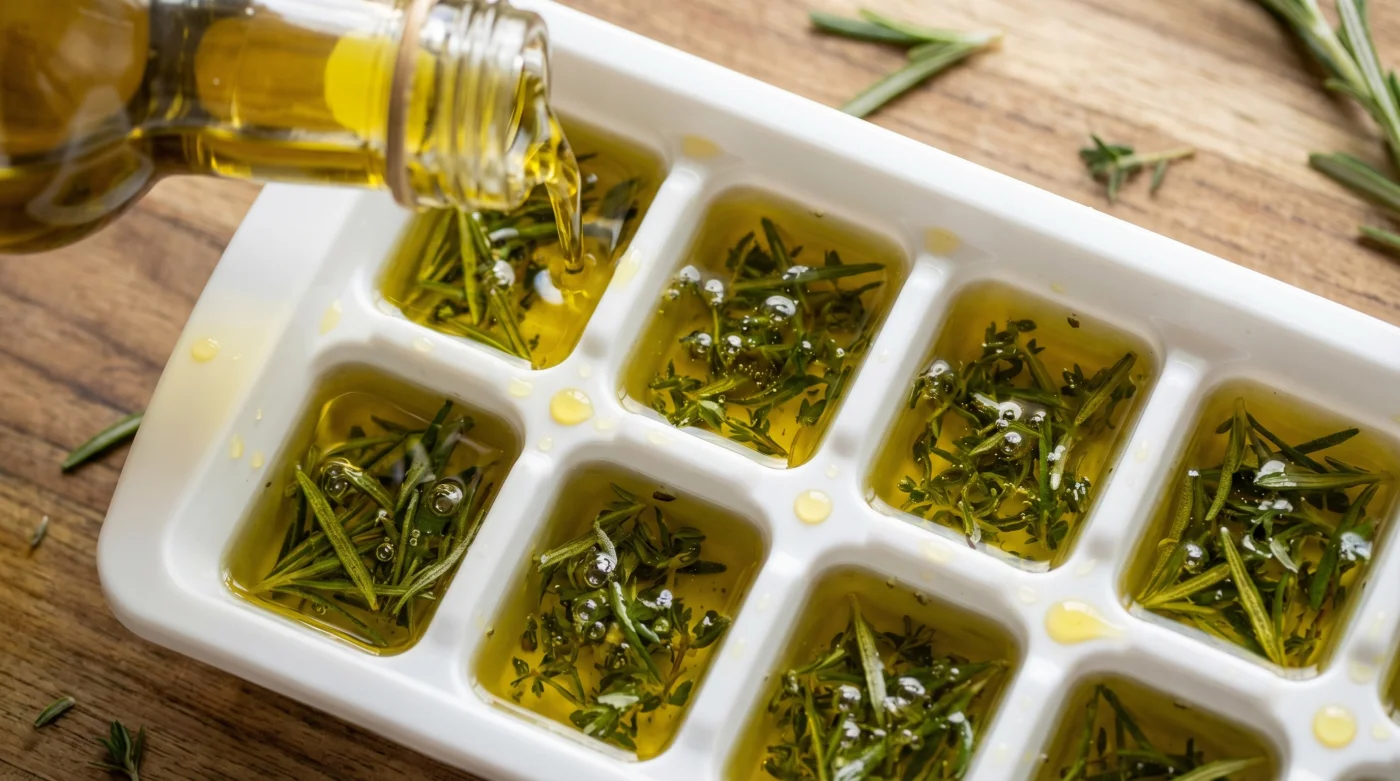
For heavy roasters like thyme, rosemary, and sage, the tough, woody structures can take a beating. Strip the leaves, pack them densely into the bottom of the tray, and drown them entirely in oil.
Drop these heavy hitters into a pan to sear morning hashbrowns beautifully or baste a thick cut of roasting meat.
The Geometry of Preservation
The process demands very little of your evening. It is simply about matching the volume of the green matter to the heavy liquid fat. Wash and thoroughly spin-dry your herbs, because water is the enemy here; it creates ice crystals that rupture the tender leaves.
Treat this simple preparation like a mindful, quiet evening ritual before you scrub down the cutting board.
- Fill each flexible silicone cavity two-thirds full of greens.
- Pour your olive oil just to the brim, tapping the tray so the liquid sinks into the tiny air pockets.
- Wrap the tray tightly in plastic to block out freezer burn before setting it flat on a shelf.
- Once solid, pop the cubes into a heavy freezer bag for long-term storage.
The ideal environment sits right at -18 Celsius standard freezer temp, which firmly solidifies the oil overnight.
The Peace of the Prepared Kitchen
Opening a crisper drawer to find rotting produce is a tiny, persistent drain on your energy. It reinforces a feeling of being rushed, of letting minor details slip through the cracks of a busy week.
By taking five minutes to trap that vitality in oil, you reclaim control over your evening routine.
On a chaotic Thursday night, when the snow is blowing against the window and you are staring blankly at a box of dry penne, you don’t need a grand plan. You just need to reach into the frost and pull out a cube of preserved summer.
As it melts into the pan, separating into a glossy sauce, it feels like a highly satisfying daily victory.
“Fat remembers flavour; freeze it correctly, and it will give it all back to you months later.”
| Herb Type | Oil Pairing | Plating Advantage |
|---|---|---|
| Basil & Parsley | Extra Virgin Olive Oil | Adds a glossy, vibrant green finish to warm plated pastas. |
| Rosemary & Thyme | Neutral Canola Oil | Creates a high-smoke point basting fat for searing heavy proteins. |
| Cilantro & Lime Zest | Avocado Oil | Melts into a perfect, bright finishing drizzle for taco night. |
Frequently Asked Culinary Questions
Will the olive oil freeze completely solid?
Yes, pure olive oil solidifies beautifully in standard household freezers, turning into a firm, opaque consistency much like butter.Can I put raw garlic in these cubes?
If you plan to use them within a few weeks, yes. However, raw garlic stored in oil long-term can pose botulism risks. It is generally safer to add fresh garlic directly to the pan when cooking.How long do these herb cubes last?
When popped out of the tray and transferred to an airtight freezer bag, they hold their peak aroma and vibrant colour for up to six months.Do I need to thaw them before cooking?
Not at all. Drop them straight into a warm skillet to melt, or toss them directly into a bowl of freshly drained, steaming hot pasta.Why is my oil turning cloudy in the freezer?
That is simply the natural fats solidifying and crystallizing under cold temperatures. It will instantly turn clear and liquid the moment it hits heat.