The kitchen is cold, save for the dull heat radiating from the stovetop. Outside your frosted window, February wind rattles the bare oak branches, while inside, you stand over a cast-iron pan, watching a pale puddle of batter slowly bubble.
You followed the instructions on the yellow cardboard box perfectly. Water was added, clumps were gently stirred, and yet, the batter spreads out thin, resigning itself to a rubbery, lifeless disc.
It is the quiet disappointment of the weekend rush. You plate the flat discs, hoping a generous pour of Quebec maple syrup will mask the dense, chewy texture that feels more like a damp coaster than a morning treat.
The problem is not your stirring technique or your pan’s temperature. The dry ingredients are trapped in a state of chemical hibernation, waiting for a volatile spark to snap them awake.
The Chemistry of a Saturday Morning Resurgence
Think of your boxed mix as a collapsed lung. You can whisk it aggressively, hoping to force air into the matrix, but all you do is agitate the proteins into a tough, leathery state. The flour needs to breathe from the inside out.
The secret is altering the alkaline environment. Boxed mixes rely on stabilized baking powder that barely reacts with plain water. Apple cider vinegar introduces a sharp, immediate acidity that collides with the dormant leavening agents, generating sudden carbon dioxide bubbles that physically push the batter upward.
Evelyn Tremblay, a 62-year-old line cook from a highway diner just outside Sudbury, Ontario, understands this reaction intimately. For decades, she served miners coming off the night shift, relying on expensive buttermilk to give her hotcakes their famous two-inch loft.
During a severe January squall, when her dairy delivery was delayed by miles of snowdrift, she didn’t panic over the giant bags of cheap commercial mix. She poured a splash of apple cider vinegar into the vats. You must frighten the flour into waking, she told her waitstaff, watching the batter swell and tremble in the bowl.
Adjustment Layers for Every Pantry
For the Purist: If you are mixing strictly with water, the addition of a single tablespoon of apple cider vinegar will immediately alter the crumb. The acid tenderizes the flour, creating a melt-in-the-mouth texture that rivals a from-scratch recipe.
For the Dairy Lover: Instead of adding the vinegar directly to the dry powder, pour it into your measuring cup of milk first. Let it sit for five minutes until the surface curdles slightly. You have created an instant buttermilk substitute that brings a subtle, complex flavour to the final plate.
For the Texture Chaser: The magic happens in the pause. Once the acid meets the alkaline mix, you must let the bowl sit undisturbed.
If you drag your ladle through it constantly, you will crush the delicate pockets of air forming beneath the surface. You are guarding a fragile chemical structure before it hits the heat.
The Five-Minute Griddle Resurrection
The execution of this kitchen fix is rooted in restraint. You are not actively building the structure; you are setting the stage for a reaction and stepping back.
- Warm the surface: Preheat your pan to a steady 190°C. You want a drop of water to dance and evaporate instantly.
- Measure the catalyst: For every cup of dry mix, prepare one tablespoon of apple cider vinegar.
- Fold with hesitation: Pour the wet ingredients into the dry, stirring only until the dry streaks just disappear. Lumps are entirely acceptable.
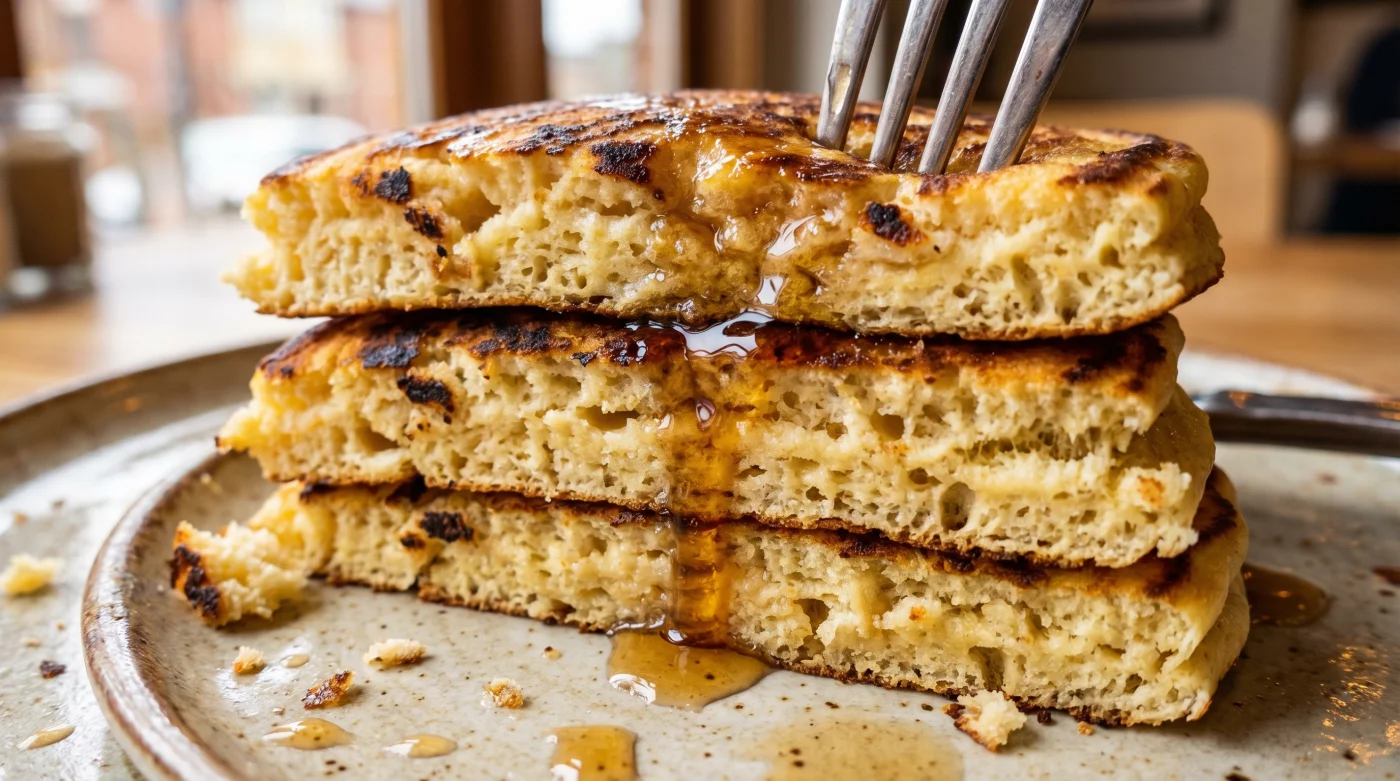
Watch as the batter begins to puff and heave slightly. The surface should look almost like a porous sponge, trembling under its own weight.
Tactical Toolkit
- Ratio: 1 tablespoon ACV per 1 cup dry mix.
- Rest Time: 4 to 5 minutes undisturbed.
- Griddle Temp: 190°C.
- Visual Cue: The batter should visibly expand by twenty percent in the bowl.
Reclaiming the Breakfast Table
We often view convenience foods as a compromise, a way to save time at the expense of quality. But mastering this subtle manipulation of ingredients shifts your relationship with your pantry entirely.
A cheap cardboard box of dry powder no longer dictates the quality of your morning. With a single, acidic addition, you take control of the chemistry, turning a mundane routine into an act of quiet transformation.
A confident cook does not simply obey the box; they teach the powder how to behave on the griddle.
| Preparation Method | Textural Result | Value for the Morning |
|---|---|---|
| Standard Water Mix | Flat, dense, and slightly chewy at the edges. | Provides quick calories, but lacks physical joy. |
| Water + Apple Cider Vinegar | Tender crumb with a remarkably light, aerated interior. | Upgrades the cheapest pantry staple into diner-quality food. |
| Milk + Apple Cider Vinegar | Maximum loft with rich flavour and golden browning. | Replicates the experience of an expensive Sunday brunch at home. |
Frequently Asked Questions
Will my pancakes taste strongly of vinegar? Not at all. The heat of the pan cooks off the acidic flavour, leaving behind only the light, fluffy texture.
Can I substitute standard white vinegar instead? You can, but apple cider vinegar offers a slightly sweeter, milder acidity that pairs beautifully with maple syrup.
Do I still add eggs if the box instructions require them? Yes. The vinegar only replaces the need for buttermilk or aggressive whisking, not the structural binding of an egg.
How long can the batter sit before the vinegar loses its power? Cook the batter within fifteen minutes. If it sits too long, the carbon dioxide bubbles will eventually collapse.
Why are my pancakes browning much faster now? Acidic batters brown slightly quicker. Keep a close eye on your pan and lower the heat slightly if the edges darken too fast.