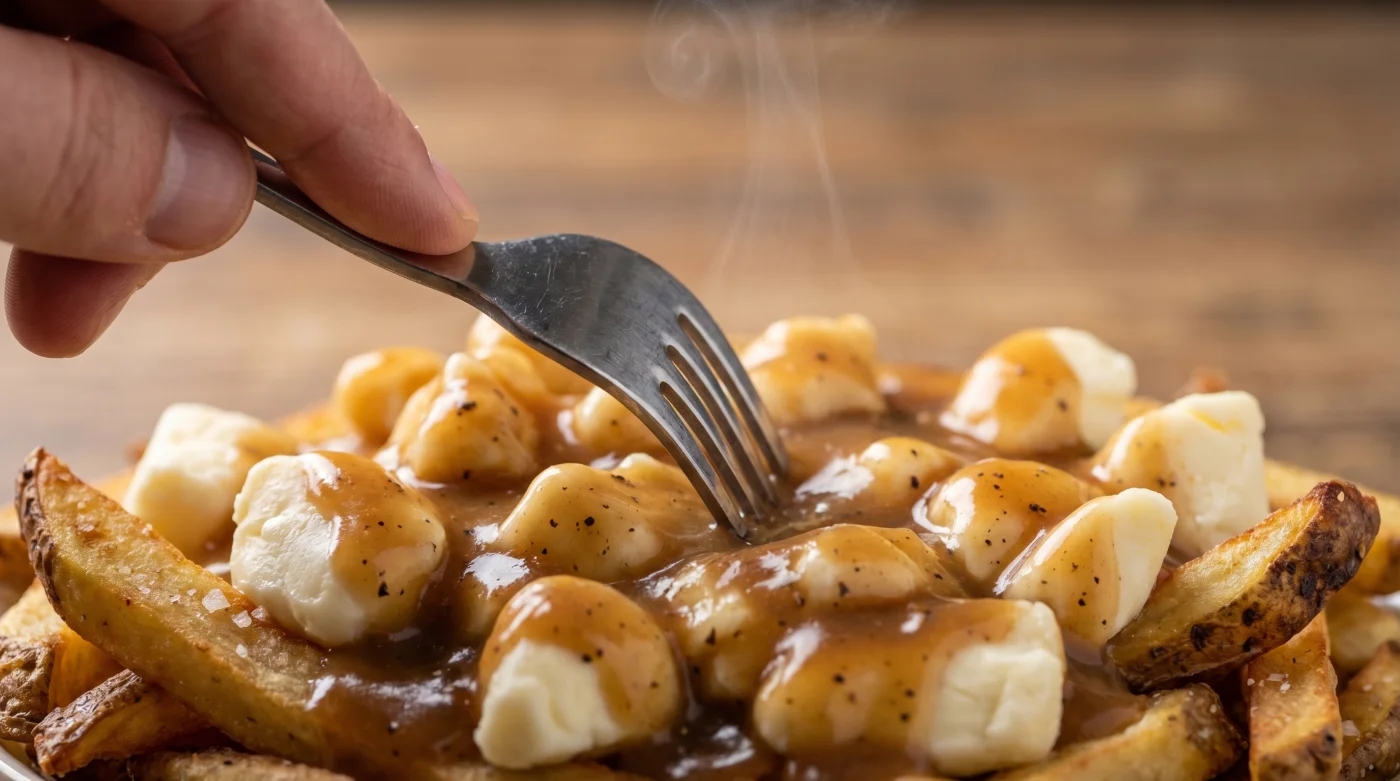
You know the sound before the taste. That unmistakable, resonant squeak against your molars. The steam rising off a darkened, peppery gravy, warming your face against the chill of a damp Canadian April morning. The scent of rendered beef fat and earthy root vegetables fills the air around the small chip wagon, cutting through the dampness of the pavement.
Most folks settle for mediocrity, accepting a lukewarm box of limp potatoes smothered in shredded mozzarella. But a proper poutine is a living, breathing entity. The gravy needs to hit the fries at just the right temperature—hot enough to coax a gentle droop from the fresh dairy, but not so aggressive that it turns the curds into a homogenous puddle.
This weekend, as National Poutine Day sweeps across local menus, a subtle shift is happening at your neighbourhood chip wagons and downtown bistros. They are offering free cheese curds, piling them high, demanding that you experience this dish exactly as it was intended. It is five minutes of pure, unapologetic comfort.
You are racing the clock the moment that wooden fork breaches the surface. It is a fleeting window where crisp, fat-rendered potato skins meet the yielding, trembling resistance of unaged dairy. Waiting even ten minutes alters the chemistry, turning a masterpiece of texture into a sad, soggy compromise.
The Perspective Shift: Gravy as a Thermal Blanket
We tend to view gravy as merely a wet flavouring agent, something to add moisture to a dry starch. Think of it instead as a carefully calibrated thermal blanket. When you claim your free curd upgrade this weekend, the massive mountain of cheese sitting atop your fries fundamentally alters the thermal dynamics of your meal. The heat must radiate upward, trapped by the dairy layer.
The curds should barely sweat. If they collapse completely, losing their structural boundaries, the gravy was boiling, and the texture is lost. If they remain cold in the centre, the sauce was an afterthought, poured too late or held too long on the pass. The perfect poutine is an exercise in tension—holding three wildly different components in a temporary, fragile truce before gravity and temperature force them to merge.
Ask Marc-Antoine, a 34-year-old fromager operating out of a small dairy cooperative in Eastern Ontario. He wakes up at 3:00 a.m. to separate whey, ensuring the curds hit local restaurant kitchens by 10:00 a.m. sharp. He insists that a curd loses its soul if refrigerated for too long. “A curd older than twenty-four hours,” he often mutters while stirring large steel vats, “is just cheese waiting to die.” For Marc-Antoine, the squeak is a sign of life, a physical marker of trapped air and protein elasticity that only exists for a brief, beautiful moment before the cold hardens it or the heat melts it away entirely.
Tailoring Your Order: Three Approaches to the Free Curd Surge
Not all orders are identical, nor should your approach be when standing in line at the local service station or neighbourhood pub this weekend. You need a strategy to maximize this sudden abundance of free dairy, tailoring the assembly to your immediate environment.
For the Purist
You order it strictly traditional. Hand-chipped russets, a dark, beef-and-chicken stock hybrid gravy, and a double-fistful of room-temperature curds. Ask the server to layer the curds: half underneath the top layer of fries, half on top. This creates an internal heat trap. The bottom layer begins to soften immediately, while the top layer maintains that glorious, rubbery squeak.
For the Texturalist
You hate a soggy potato, a preference that usually puts you at odds with this dish. Ask for the gravy on the side. This is highly unorthodox, but when dealing with double the curds, you can dip the fry-and-cheese clusters into the hot gravy cup yourself. It preserves the crunch of the potato while still giving you the deeply savoury, salted flavour profile of the sauce.
For the Commuter
Eating poutine in transit is traditionally a messy, regrettable affair. If you are claiming this deal on a quick lunch break, request a wider, shallower container rather than a deep, cylindrical cup. Surface area is your friend here, ensuring the heat escapes evenly rather than steaming the fries into mush by the time you walk two miles down the pavement back to your office desk.
The 5-Minute Execution: Managing Your Yield
Time is your biggest adversary. Once the gravy hits the fries, the structural integrity degrades by the second. Here is how you manage a heavily loaded, curd-heavy poutine to ensure every bite retains its integrity and avoids becoming a single, solid mass.
- Pull from the perimeter first. The outside edges cool fastest and will lose their crunch if left alone.
- Leave the centre untouched for at least two minutes, allowing the residual heat to gently soften the core curds without disturbing the stack.
- Use a fork to lift, never to mash. You want to extract a clean ratio of potato, sauce, and cheese with every bite.
- Avoid the temptation to stir. Stirring creates a muddled starch-paste, ruining the distinct mouthfeel of the fresh curds.
The ideal gravy temperature hovers right around 75 degrees Celsius. If you are taking this home, preheat your dining bowl with hot tap water for thirty seconds and dry it thoroughly. Dumping a hot poutine into a cold ceramic bowl instantly kills the thermal momentum. Keep your travel time under seven minutes; any longer, and the fries begin breathing through a pillow of their own trapped steam, turning grey and limp.
The Ritual of the Squeak
Why do we care so deeply about a humble pile of fried root vegetables and fresh cheese? It demands your undivided attention. You cannot save a poutine for tomorrow. It cannot be meal-prepped, and it refuses to be boxed up as leftovers without losing everything that made it special in the first place.
It forces you to pause, to sit on a park bench or lean against the bumper of your car, and just eat. The free curds this weekend are not just a clever local restaurant deal designed to move inventory.
They are an open invitation to indulge in a fleeting, messy, and perfectly imperfect local ritual. It reminds us that some of the best things in our culinary landscape are meant to be consumed fiercely, right here, right now, before the heat fades.
“The squeak of a fresh curd is the sound of time running out; you must eat it while it still remembers the warmth of the vat.”
| Component Focus | Structural Detail | Added Value for You |
|---|---|---|
| The Fry Base | Double-fried Russet potatoes cut thick enough to withstand liquid. | Prevents the dreaded mid-meal collapse and starch mush. |
| The Gravy Pour | Poured over the centre, leaving the perimeter dry. | Gives you control over the texture as you work inward. |
| The Curd Layer | Room temperature, never straight from a refrigerator. | Ensures the gravy warms the cheese without cooling the sauce rapidly. |
Frequently Asked Questions
Do I have to pay extra for the double curds this weekend?
No. The National Poutine Day promotion is designed to automatically upgrade your order with a free serving of local curds at participating venues.Why do my curds sometimes melt completely into strings?
This happens when kitchens use shredded mozzarella or when the gravy is kept at a rolling boil, which breaks down the protein structure of the dairy.Can I reheat my leftover poutine?
You can, but it will never be the same. The best method is throwing it in a cast-iron skillet to crisp the potatoes, accepting that the cheese will fully melt.What makes a curd squeak?
The squeak is caused by the elastic protein strands rubbing against your teeth, a characteristic that fades entirely within 24 hours of production.How do I find out which local menus are participating?
Check the social media feeds of your favourite independent chip wagons and local bistros, as most independent operators announce their curd upgrades the morning of the event.